Early form training
Stake young plants in their first 1–2 years and lightly tie the main stem to a sturdy stake to encourage a straight, wind-resistant framework before the wood hardens.

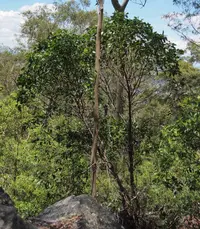
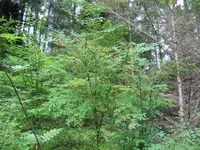
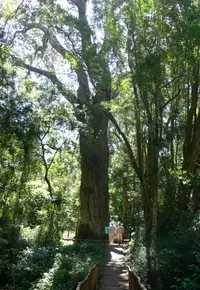
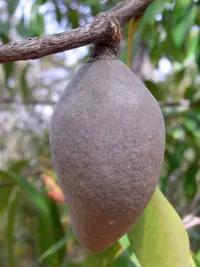
Red wattle, Acacia flavescens, is a medium to large shrub or small tree from eastern Australia, often found on coastal slopes and open forests. It usually forms a rounded crown with fine, narrow foliage and showy yellow flower clusters along the branches.
This acacia is adapted to poor, sandy or gravelly soils and often tolerates wind and brief dry periods. These traits can make it relatively straightforward to care for Red Wattle in suitable climates.
It generally prefers full sun, free-draining soil, and moderate moisture, performing best where winters are mild and frost is light or occasional.

Care Difficulty
Moderate Care

Light Preference
Full Sun

Water Requirements
Low Water

Temperature Preference
Warm Climate

Hardiness Zone
9–11

Soil Texture
Sandy, Loamy, Rocky

Soil pH
Acidic (5.5–6.5), Slightly acidic (6.5–7.0)

Soil Drainage
Well-drained

Fertilization
Minimal (feed rarely)
Scan your plant to receive care tips personalized for your specific plant
Available on iOS and Android
Acacia flavescens prefers bright, open conditions that mimic its native Australian habitat.
Acacia flavescens needs careful watering during establishment, then becomes relatively drought-tolerant.
This species prefers mild to warm conditions and does best in frost-free or only lightly frosty climates.
This species handles a wide humidity range and usually does not need special humidity management.
Acacia flavescens prefers light, fast-draining, slightly acidic to neutral soil.
This shrub can be grown in containers when provided with a deep, stable pot and efficient drainage.
Acacia flavescens generally needs minimal feeding, especially in open ground with reasonable soil.
Acacia flavescens benefits from light, timely pruning to keep a stable form and healthy canopy.
This species is more often planted in the ground, so care focuses on successful transplanting of young trees.
Propagation of Acacia flavescens is most reliable from seed under warm, bright conditions.
In mild, frost-free climates, Red Wattle generally needs little specific winter care.

Plant Health Check
Not sure what's wrong with your plant? Check your plant's health inside the app.
Acacia flavescens is naturally restricted to eastern Australia, where it is most often found in coastal and subcoastal regions of Queensland and New South Wales, usually on sandy or well-drained soils.
This species commonly colonizes disturbed or nutrient-poor sites, forming a symbiosis with nitrogen-fixing bacteria in its root nodules that allows it to grow where many other woody plants struggle.
Like many wattles, it develops phyllodes, which are flattened leaf stalks that function as leaves; these structures reduce water loss and are well adapted to its often dry, sun-exposed habitats.

Acacia flavescens is valued in some Australian reforestation and land-rehabilitation projects because its relatively fast growth and nitrogen enrichment help stabilize degraded sites and facilitate the gradual return of more diverse native vegetation.
This species is generally fast-growing, often adding 60–120 cm per year in suitable conditions. Growth slows in poor, compacted, or waterlogged soils. Young plants establish quickly, then shift energy from height to canopy thickening and root development.
Keep your plants happy and healthy with plant identification, disease detection, and easy care guidance.