had Care (Cornulaca monacantha)

Also known as: djouri, tahara
had

About had

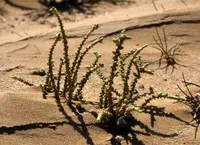
Cornulaca monacantha, often called had, is a small, tough shrub adapted to hot, dry desert and semi-desert regions of North Africa and the Middle East. It has many short, jointed, thorny branches and tiny scale-like leaves, giving it a compact, spiky appearance.

This plant is highly drought-tolerant and survives in poor, sandy or salty soils where few other species can grow. It is slow-growing and best suited to very dry, sunny conditions, so anyone who wants to care for had should be comfortable providing strong light and minimal watering.

Main Plant Requirements

Care Difficulty

Easy Care

Light Preference

Full Sun

Water Requirements

Low Water

Temperature Preference

Warm Climate

Hardiness Zone

9–11

Soil Texture

Sandy, Rocky

Soil pH

Neutral (7.0), Slightly alkaline (7.0–7.5)

Soil Drainage

Well-drained

Fertilization

Minimal (feed rarely)

Get Personalized Care Plan

Scan your plant to receive care tips personalized for your specific plant

Available on iOS and Android

How to Care for the had

Cornulaca monacantha thrives in strong, open-sun conditions typical of arid habitats, but still benefits from seasonal light management.

  • Provide 6–10 hours of direct sun daily; full sun all day is ideal in mild to hot, dry climates.
  • In very intense summer climates, give morning sun with light afternoon shade to reduce scorching, especially on young had plants.
  • If stems elongate, pale, or lean strongly, light is insufficient; move to a more open, unshaded position, especially in autumn and winter.

Cornulaca monacantha is a drought-adapted plant that needs infrequent, careful watering to avoid root problems.

  • Allow soil to dry completely between waterings; in sandy ground, check that the top 5–10 cm are bone dry before adding any water.
  • During the hottest, driest months, use deep, infrequent soakings guided by signs of stress such as slight leaf dulling or mild wilting that recovers by evening.
  • Reduce or stop watering in cool seasons; yellowing, soft tissue, or a sour smell in the root zone signals overwatering and poor drainage.

This desert species prefers hot, dry conditions and tolerates wide temperature swings when kept out of frost.

  • Aim for 70–95°F (21–35°C) during active growth, as warm air and strong sun support compact, healthy stems.
  • It can tolerate brief spikes up to about 105°F (40°C) if soil is very well drained and air is moving, but prolonged extreme heat with humidity increases rot risk.
  • Protect from frost; growth slows below 50°F (10°C) and damage occurs near or below 32°F (0°C), so provide shelter or relocation in cold snaps.

This desert shrub is adapted to very dry air and does not need elevated humidity.

  • Target 20–40% relative humidity, which matches arid indoor conditions and outdoor desert air.
  • Plant tolerates even lower humidity if soil is kept on the dry side and roots are not overwatered.
  • Humidity stress shows as root rot from excess moisture rather than dryness, so avoid humid rooms and misting.

This species needs very fast-draining, sandy mineral soil to prevent persistent root moisture.

  • Use a gritty mix of 60–70% coarse sand or fine gravel with 30–40% low-organic desert cactus mix for Cornulaca monacantha.
  • Ensure drainage is rapid so water flows through in seconds, leaving the mix barely moist, not wet or spongy.
  • Keep pH slightly alkaline to neutral, around 7.0–8.0, by avoiding peat-based mixes and using mineral components instead.
  • Avoid compacted, clay-heavy, or water-retentive substrates, which reduce aeration and quickly cause root decline.

This shrub can be grown in containers if the setup mimics its naturally dry, fast-draining conditions.

  • Choose a deep, narrow container to accommodate its taproot and prevent rocking in strong wind.
  • Select unglazed clay pots, which allow faster evaporation and reduce the risk of chronically wet substrate.
  • Raise the pot on feet or bricks outdoors so drainage holes never sit in collected runoff water.

Cornulaca monacantha grows in poor, sandy soils and usually needs only minimal feeding in cultivation.

  • Use a light application of balanced slow-release fertilizer (around 10-10-10) in early spring to support new growth.
  • Apply at most once per growing season for in-ground plants; container specimens may benefit from a second light dose.
  • Dilute any liquid feed to 25–50% strength to avoid salt buildup and root burn.
  • Stop feeding in late summer so growth hardens before cooler weather; do not fertilize in winter during natural rest.

Pruning Cornulaca monacantha is mainly corrective, aimed at maintaining a clean, compact form.

  • Carry out light pruning in late winter or very early spring before active growth resumes.
  • Remove dead, damaged, or crossing branches at the base using clean, sharp hand pruners.
  • Thin crowded interior shoots slightly to improve light penetration and airflow without over-opening the shrub.
  • Shape only the outer tips to preserve the plant’s natural outline and avoid heavy cutting into old, woody stems.

Cornulaca monacantha is typically grown in the ground, so focus on careful transplanting rather than frequent repotting.

  • Transplant in late winter or early spring when temperatures are mild and the plant is less active.
  • Look for signs such as slow growth, poor vigor, or overcrowding in a bed before deciding to move established plants.
  • Lift with a broad root ball, disturb roots as little as possible, and replant at the same depth in very free-draining soil.
  • Water thoroughly after planting, then keep only lightly moist to reduce root stress, avoiding waterlogged conditions that cause decline.

Propagation of Cornulaca monacantha is usually done on a small scale and benefits from controlled, dry conditions.

  • Use ripe seeds collected from mature plants in late summer; sow in a sandy, sharply draining mix.
  • Provide bright light, good airflow, and moderate warmth around 68–75°F to encourage germination.
  • Semi-ripe stem cuttings taken in late spring to early summer can root in a gritty, barely moist medium.
  • Minimize watering during rooting, keeping the medium just barely damp to limit rot in this desert-adapted species.

This desert shrub is best suited to mild, dry climates and needs attention in regions with cold, wet winters.

  • It tolerates light frost but may suffer damage below about 25°F, especially in prolonged freezes.
  • In marginal climates, grow in very free-draining soil or raised beds to keep roots from sitting in cold, wet conditions.
  • Container plants can be moved to an unheated, bright, frost-free space for winter, watering very sparingly.

Care Tips

Wind-hardening seedlings

If starting plants from seed, expose young plants to increasing airflow and brief, full-sun periods over 7–10 days before planting out to build sturdy, wind-resistant stems suited to arid, open sites.

Sand mound planting

In heavy or compacted soils, plant on a low, free-draining sand mound 5–10 cm above the surrounding grade to prevent water from sitting around the roots after rare rain events.

Weed pressure control

Keep a 20–30 cm weed-free zone around each plant using hand weeding or a thin gravel mulch so that shallow roots do not have to compete for the limited moisture available in dry climates.

Minimal disturbance policy

Once established, avoid cultivating the soil around the root zone and avoid frequent transplanting, as this species forms fine, fragile roots that respond poorly to mechanical disturbance.

Low-input monitoring

During very wet spells, monitor for any yellowing or soft growth and reduce nearby irrigation to keep the root zone dry, which is critical for long-term Cornulaca monacantha plant care in non-desert gardens.

Everything About had

Common Pests and Diseases

Desert scale

This pest attaches to stems and leaves, sucking sap and causing yellowing, reduced vigor, and occasional dieback on stressed desert shrubs. Symptoms include small, hard, shell-like bumps that are difficult to dislodge by hand.

Solution

Prune out heavily infested stem sections and dispose of them away from the planting area, then wipe remaining colonies with cotton pads dipped in 70% isopropyl alcohol or spray with a light horticultural oil during cooler hours to avoid leaf scorch. Reduce drought stress with slightly improved but still well-drained watering and avoid high-nitrogen fertilizer, which encourages soft, scale-susceptible growth.

Desert spider mites

These insects thrive in hot, dry, dusty conditions and feed on the undersides of stems and small leaves, causing fine stippling, bronzing, and webbing on Cornulaca shrubs. This pest can cause twig tip dieback if populations build unchecked during extended drought and heat waves.

Solution

Spray plants forcefully with water in the early morning to wash mites and dust from stems, repeating every few days during outbreaks, and avoid overhead watering during the hottest part of the day. If pressure remains high, apply an insecticidal soap or a specific miticide labeled for ornamental desert shrubs, ensuring thorough coverage of all plant surfaces and repeating according to label intervals.

Desert leaf spot

This disease appears during rare periods of unseasonal rain or prolonged irrigation, causing small tan to brown lesions on green stems and any present foliage, sometimes with a darker edge. Symptoms include scattered spotting that may coalesce into larger dead patches on young shoots.

Solution

Improve air circulation by giving plants more spacing, avoid wetting stems when watering, and allow the surface soil to dry between irrigations to limit leaf wetness duration. Remove and discard heavily spotted stems, then, in persistent wet conditions, use a copper-based fungicide as a protective spray before or just as new growth emerges, following label directions carefully.

Interesting Facts

Extreme desert specialist

This species is native to hyper‑arid parts of North Africa and the Middle East and is particularly characteristic of the Sahara, where it grows on shifting sandy and gravelly soils with minimal organic matter.

Leafless green stems

The plant has extremely reduced, almost scale-like leaves, and most photosynthesis occurs in its green, jointed stems, an adaptation that reduces water loss in intense desert heat.

Sand-binding pioneer

Its branching root and stem system helps trap and stabilize moving sand, so it often acts as a pioneer plant that helps initiate dune and sand-sheet fixation in degraded desert landscapes.

Botan icon

Did you know?

In parts of the Sahara and Arabian deserts, this species can form low, open shrublands that serve as important dry-season forage for camels and other grazing animals, making it a key component of traditional pastoral systems in some arid regions.

FAQs about had

This species can be grown in deep, free-draining containers that mimic sandy desert soil. Use a gritty mix, full sun, and minimal watering. Container culture is useful for observing Cornulaca monacantha care in non-desert climates.

Grow Healthy Plants with Botan Care

Keep your plants happy and healthy with plant identification, disease detection, and easy care guidance.

Botan plant care app — identify plants on mobile

Explore More Plants