Encourage Multi-Stems
After establishment, selectively remove 1–2 of the oldest stems at ground level every 2–3 years to maintain a dense, multi-stemmed form and stimulate vigorous new shoots.

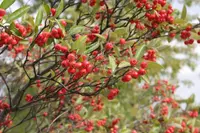
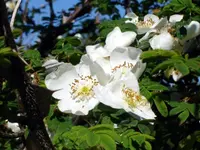
Red chokeberry, Aronia arbutifolia, is a deciduous shrub valued for its white spring flowers, bright red berries, and strong red fall color. It typically forms upright clumps with multiple stems and a dense, bushy habit.
This species is native to eastern North America, where it grows in wetlands, forest edges, and open thickets. It is generally hardy and adaptable, which makes it easier to care for red chokeberry in a range of garden conditions.
Red chokeberry tolerates cold, poor soils, and seasonal moisture changes, so it suits low-maintenance landscapes and naturalized plantings. It grows best in sunny to lightly shaded sites with moist but well-drained soil.

Care Difficulty
Easy Care

Light Preference
Full Sun

Water Requirements
Moderate Water

Temperature Preference
Cold Hardy

Hardiness Zone
4–9

Soil Texture
Sandy, Loamy, Clay

Soil pH
Acidic (5.5–6.5), Slightly acidic (6.5–7.0)

Soil Drainage
Moist but well-drained

Fertilization
Minimal (feed rarely)
Scan your plant to receive care tips personalized for your specific plant
Available on iOS and Android
Aronia arbutifolia develops best flowering and fruiting with ample direct sun exposure.
Aronia arbutifolia prefers evenly moist, well-drained soil once established.
This shrub is naturally cold hardy and adapts well to a broad outdoor temperature range.
Aronia arbutifolia tolerates a wide humidity range and usually needs no special humidity management outdoors.
Aronia arbutifolia grows best in moderately moist, well-structured mineral soil with some organic matter.
This species can be grown in containers for smaller landscapes or patios if the pot is chosen carefully.
This native shrub grows well in average soil and usually needs only light feeding to stay healthy.
Pruning helps maintain structure and flowering quality in Aronia arbutifolia without demanding intensive work.
This shrub is usually grown in the ground, so focus on careful transplanting rather than frequent repotting.
Aronia arbutifolia is commonly propagated by cuttings, division, or seeds, each with specific timing and conditions.
This shrub is cold hardy in much of North America and usually needs minimal winter care once established.

Plant Health Check
Not sure what's wrong with your plant? Check your plant's health inside the app.
Red chokeberry fruits often remain on the shrub well into winter, providing an important cold-season food source for birds when other berries have already been eaten or have decayed.
This species can resprout from its base after fire or cutting, which helps it persist in fire-prone pine barrens and wetland edges in its native eastern North American range.
Red chokeberry shows striking seasonal changes, with white spring flowers, glossy red fruits, and vivid red to orange fall foliage, so many native-plant gardeners focus on growing red chokeberry for multi-season interest in landscapes.

Red chokeberry naturally hybridizes with black chokeberry (Aronia melanocarpa) in overlapping ranges, and these wild hybrids are now recognized as a separate species, Aronia ×prunifolia, illustrating ongoing evolution within this small genus.
The fruits are edible but very astringent when raw, so most people use them cooked in jams, jellies, syrups, or juices. They are rich in antioxidants, but large amounts may cause mild stomach upset in sensitive individuals.
Keep your plants happy and healthy with plant identification, disease detection, and easy care guidance.