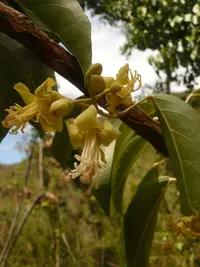
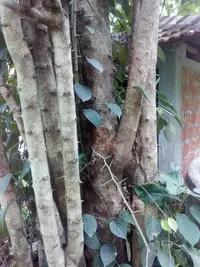
Guinea guava Care (Psidium guineense)

Also known as: Brazilian Guava
Guinea guava

About Guinea guava

Guinea guava (Psidium guineense) is a small tropical fruit tree or large shrub from the myrtle family. It typically has dense branching, smooth bark, and small, glossy green leaves. Plants often reach a compact, bushy form, making them suitable for smaller gardens and warm-climate orchards.

Native to tropical regions of the Americas, it is now grown in many warm areas for its aromatic, yellow to orange fruits. The species is generally hardy in suitable climates and can tolerate pruning, which helps manage size and shape.

It prefers sun, regular moisture, and well-drained soil. For gardeners learning how to care for Guinea guava, its resilience and moderate growth rate make it approachable once basic needs are met.

Main Plant Requirements

Care Difficulty

Moderate Care

Light Preference

Full Sun

Water Requirements

Regular Water

Temperature Preference

Tropical / Frost Sensitive

Hardiness Zone

10–12

Soil Texture

Sandy, Loamy, Organic-rich

Soil pH

Acidic (5.5–6.5), Slightly acidic (6.5–7.0)

Soil Drainage

Moist but well-drained

Fertilization

Light (every 4–6 weeks)

Get Personalized Care Plan

Scan your plant to receive care tips personalized for your specific plant

Available on iOS and Android

How to Care for the Guinea guava

This subtropical fruit shrub prefers bright light with some protection from harsh midday sun.

  • Provide 6–8 hours of direct sun daily, ideally strong morning sun with light afternoon shade, especially in hotter climates.
  • Tolerates partial shade (around 4–5 hours direct sun), but Guinea guava will flower and fruit better in higher light exposure.
  • Watch for leaf scorch, bleaching, or crispy edges as signs of excessive sun, and for lanky stems or sparse foliage as signs of insufficient light.

This shrub prefers evenly moist, well-drained soil rather than constant wetness or drought.

  • Water when the top 3–5 cm of soil feels dry, applying a deep soak so moisture reaches the full root zone, then allow excess to drain away.
  • During active growth and fruiting, expect to water more often, while in cooler seasons reduce frequency as evaporation and plant demand decrease.
  • Yellowing leaves, mushy roots, or a sour soil smell suggest overwatering, while dull, curling leaves and dry, cracking soil indicate underwatering in Psidium guineense.

This species grows best in warm, frost-free conditions with only moderate temperature swings.

  • Aim for 70–85°F (21–29°C) for strong growth and flowering, with slightly cooler nights promoting balanced development.
  • Protect from cold below 40°F (4°C); damage often occurs near 32°F (0°C), and hard frost can kill young shoots and small plants.
  • In hot spells above 95°F (35°C), provide extra water and some afternoon shade to limit heat stress, leaf scorch, and fruit drop.

This species grows well in 40–60% humidity and usually adapts to typical indoor air.

  • Tolerates short periods down to 30–35% humidity but benefits from the higher end of the range in heated homes.
  • Crisping leaf edges, stalled growth, and excessive leaf drop indicate humidity stress in Guinea guava.
  • Increase humidity locally with a pebble tray, grouping plants, or a nearby (not blowing directly) room humidifier.

Psidium guineense prefers aerated, well-drained, moderately fertile soil.

  • Use a loose loam with 40–60% organic matter and some coarse mineral material to prevent compaction.
  • Aim for slightly acidic to neutral pH, about 6.0–7.0, avoiding strongly alkaline mixes that limit nutrient uptake.
  • Combine compost or leaf mold with coarse sand or perlite to improve both nutrient content and drainage.
  • Avoid heavy clay, waterlogged spots, or peat-only mixes that either stay soggy or shrink and repel water when dry.

This species is suitable for container growing when given a stable, well-drained setup.

  • Choose a deep, wide container to accommodate its woody root system and reduce the risk of tipping in wind.
  • Use a heavier material such as ceramic to anchor the shrub as it gains height and forms a denser canopy.
  • Ensure rapid outflow of excess water through multiple drainage holes to prevent chronic saturation at the root zone.

This subtropical fruit tree benefits from modest, targeted feeding during the warm growing season.

  • Use a balanced granular or slow-release fertilizer (around 10-10-10) or well-rotted compost for Guinea guava in spring.
  • Feed every 6–8 weeks through late summer, adjusting for soil richness and plant vigor.
  • Apply at half the label rate for container plants to avoid salt buildup and root burn.
  • Stop feeding in fall and winter so growth slows naturally and tissues harden before cold.

Pruning helps Psidium guineense maintain a manageable size and productive, well-lit canopy.

  • Schedule main pruning in late winter or very early spring before vigorous new growth begins.
  • Remove dead, diseased, crossing, or inward-growing branches to improve airflow and light penetration.
  • Thin crowded interior shoots and shorten overly long branches to keep a balanced, open shape.
  • Use clean, sharp bypass pruners or loppers, making cuts just above outward-facing buds or branch junctions.

This shrub or small tree responds best to careful transplanting during warm, stable weather.

  • Look for roots circling the container, water running straight through, or slowed growth as signs it needs more space.
  • Transplant in late spring or early summer, when soil is warm and frost risk has passed, for faster root recovery.
  • Move up 1–2 pot sizes or into a permanent ground site with well-drained soil and full-sun exposure.
  • Water deeply after planting, keep soil evenly moist for several weeks, and shade temporarily in very hot, dry conditions to limit transplant shock.

New Psidium guineense plants are commonly produced from both seeds and semi-hardwood cuttings.

  • Collect fully ripe fruits, clean seeds, and sow them in warm (70–80°F), free-draining mix; light helps germination.
  • Take semi-hardwood cuttings in late spring or summer, 10–15 cm long, with 2–3 nodes each.
  • Dip cut ends in rooting hormone, place in sterile, moist medium, and maintain high humidity with bright, indirect light.
  • Provide bottom heat if possible and avoid waterlogging to reduce rot and support steady root formation.

This subtropical species has limited frost tolerance and benefits from thoughtful winter protection in cooler climates.

  • In USDA zones colder than 9, grow Psidium guineense in containers and overwinter indoors in a bright, cool room.
  • Mulch the root zone with 5–8 cm of organic material, keeping mulch slightly away from the trunk base.
  • Wrap young outdoor stems with breathable frost cloth during freezing nights to reduce tissue damage.

Care Tips

Regular fruit thinning

Once young fruits reach about 1–2 cm, remove the smallest or damaged ones so the remaining fruit sizes up better and the branches are not overburdened or snapped by excess weight.

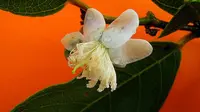
Strong framework training

During the first 2–3 years, select 3–5 well-spaced main branches and remove competing shoots to build a sturdy framework that supports heavy crops and reduces storm damage.

Wind and branch support

In exposed sites, stake young plants and use soft ties or a low trellis to keep branches from rubbing and splitting under wind or the weight of ripening fruit.

Targeted pest monitoring

From spring through late summer, inspect new growth and flower clusters weekly for scale, whiteflies, and caterpillars, and spot-treat early with horticultural oil or hand removal before infestations spread.

Seasonal container rotation

For container plants, rotate the pot by 90° every 2–3 weeks and shift it slightly with the seasons so light reaches all sides evenly, which promotes balanced branching and more uniform fruiting when growing Guinea guava.

Common Pests and Diseases

Guava moth

This pest tunnels into young fruits, causing premature fruit drop, internal rotting, and frass inside the guava. Symptoms include small dark entry holes and deformed or yellowing fruits.

Solution

Collect and destroy infested and fallen fruits, use fine insect netting around trees during flowering and early fruit set, and keep the area under the plant clean to reduce pupation sites. In high-pressure areas, pheromone traps and targeted applications of Bacillus thuringiensis (Bt) to young fruits can help disrupt the life cycle without harming beneficial insects.

Guava fruit fly

This pest lays eggs under the fruit skin, and larvae feed inside, turning the flesh soft and brown and causing fruits to drop early. Symptoms include tiny puncture marks on the peel and mushy, maggot-infested interiors.

Solution

Promptly remove and destroy infested and fallen fruits, and use baited traps or lure-and-kill stations around the planting area to suppress adult populations. Bagging developing fruits with paper or fine mesh sleeves shortly after fruit set is an effective physical barrier for growing Guinea guava in home gardens.

Guava rust

This disease causes yellow to orange powdery pustules on young leaves, shoots, and sometimes fruits, leading to distortion, defoliation, and reduced vigor. Severe infections can stunt new growth and reduce flowering and fruiting.

Solution

Prune out and dispose of heavily infected shoots, improve air circulation by thinning dense branches, and avoid overhead watering that leaves foliage wet for long periods. In areas where rust is common, protect new flushes of growth with preventive copper-based fungicides, following label directions, and maintain good nutrition to support resilient foliage.

Anthracnose

This disease produces dark, sunken lesions on fruits, young stems, and leaves, which may merge into large dead patches and cause fruit rot. Symptoms include spotting that enlarges during warm, wet weather and may develop pinkish spore masses on fruit surfaces.

Solution

Remove and discard infected fruits and twigs, prune to open the canopy for better airflow, and keep mulch and irrigation water off low-hanging fruit. In humid climates, apply a registered copper or bio-fungicide at flowering and early fruit development to protect new tissues, and avoid overhead irrigation whenever possible.

Scale insects

These insects attach firmly to stems and leaf undersides, sucking sap and excreting honeydew that encourages sooty mold growth. Symptoms include yellowing leaves, sticky residue, black moldy coating, and general decline in vigor, especially on stressed plants.

Solution

Wipe or gently scrub small infestations with a cloth or soft brush dipped in soapy water or isopropyl alcohol, and prune out heavily infested twigs. For larger plants, encourage natural predators such as lady beetles, and use horticultural oil sprays during mild temperatures to smother scales, ensuring thorough coverage of stems and leaf undersides.

Interesting Facts

Wide native range

This species is native to a broad area of tropical and subtropical Americas, from southern Mexico through much of Central America and northern South America, where it often forms part of secondary forests and disturbed vegetation.

Fruit for wildlife

The small, aromatic fruits are eaten by many birds and mammals, which disperse the seeds in their droppings and help the plant colonize new sites, especially along forest edges and open scrub.

Adapted to poor soils

Guinea guava often establishes in nutrient-poor, sandy, or degraded soils, using its deep root system and evergreen foliage to tolerate seasonal drought and repeated disturbance.

Botan icon

Did you know?

In some Pacific islands and other non-native regions, Psidium guineense has escaped cultivation and become invasive, forming dense thickets that outcompete local understory plants and alter natural regeneration patterns.

FAQs about Guinea guava

Growth is moderately fast in warm climates, typically 30–90 cm per year once established. Rate depends on light, warmth, moisture, and soil fertility. Container plants usually grow more slowly than those planted in the ground.

Grow Healthy Plants with Botan Care

Keep your plants happy and healthy with plant identification, disease detection, and easy care guidance.

Botan plant care app — identify plants on mobile

Explore More Plants