Thorn‑aware placement
Site plants where pruning, harvesting, and access are easy, keeping at least 60–90 cm clearance from paths, play areas, and work zones to avoid injury from the dense, sharp thorns.

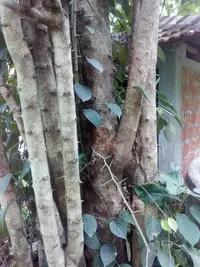
Flacourtia montana is a small to medium-sized tree from tropical Asia, often found in montane forests and hilly regions. It is mainly grown in the ground rather than as a container plant.
The tree typically has a dense crown, slender branches, and sometimes short thorns, with simple green leaves and small, inconspicuous flowers followed by berry-like fruits. It is usually cultivated in warm, frost-free climates.
This species prefers consistent moisture, well-drained soil, and exposure from partial shade to full sun, depending on local climate. Understanding these preferences helps guide how to care for Flacourtia montana and assess whether local conditions are suitable.

Care Difficulty
Moderate Care

Light Preference
Partial Sun

Water Requirements
Moderate Water

Temperature Preference
Warm Climate

Hardiness Zone
10–12

Soil Texture
Sandy, Loamy, Organic-rich

Soil pH
Acidic (5.5–6.5), Slightly acidic (6.5–7.0)

Soil Drainage
Well-drained

Fertilization
Minimal (feed rarely)
Scan your plant to receive care tips personalized for your specific plant
Available on iOS and Android
This species prefers bright outdoor conditions in warm climates with protection from harsh extremes of sun.
This small tree prefers evenly moist, well-drained soil rather than constant wetness or drought.
This species is a tropical to subtropical tree that grows best in consistently warm, frost-free climates.
This species grows well in typical outdoor humidity and usually does not need special humidity management.
Flacourtia montana grows best in moderately fertile, well-structured mineral soil with reliable drainage.
This species can be grown in containers when given enough root space and stable support.
This species is often grown in the ground and usually needs only light feeding on poor soils.
Pruning is useful to manage size, structure, and safety for this thorny tree.
This plant is usually grown in the ground, so focus on careful transplanting of young trees.
Propagation is most practical from seed, with some use of semi-hardwood cuttings in warm climates.
This is a warm-climate tree that needs protection in regions with significant frost.

Plant Health Check
Not sure what's wrong with your plant? Check your plant's health inside the app.
This species develops hard, sharp spines on its branches and sometimes even on the trunk, a physical defense that helps protect it from browsing mammals in its native habitats of South and Southeast Asia.
It produces small, dark purple to almost black berries that are eaten by birds, which then disperse the seeds and help the plant colonize new forest edges and disturbed sites.
In parts of its range, this shrub or small tree often appears in secondary forests and along clearings, where it benefits from increased light and helps form dense thickets that can influence how the forest regenerates.
This species is typically evergreen in warm, frost-free climates, holding foliage year-round. In cooler or drier areas it can become semi-deciduous, shedding part of its leaves during unfavorable seasons but leafing out again when conditions improve.
Keep your plants happy and healthy with plant identification, disease detection, and easy care guidance.