Root flare check
Ensure the top of the main root flare sits just at or slightly above soil level, brushing away excess soil from the trunk base to reduce rot risk and improve trunk stability.

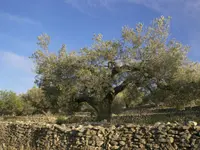
The olive tree, Olea europaea, is a long-lived evergreen tree traditionally grown for its fruits and oil. It has narrow gray-green leaves, a naturally branching crown, and a slow to moderate growth rate.
This species comes from the Mediterranean region and adapts best to bright, warm, and relatively dry conditions. It prefers well-drained, rocky or sandy soils and does not tolerate waterlogged roots.
As a container plant, it stays more compact and can be shaped by pruning, but it needs high light to stay dense and healthy. With suitable light and drainage, it is relatively straightforward to care for Olive tree at home.

Care Difficulty
Moderate Care

Light Preference
Full Sun

Water Requirements
Low Water

Temperature Preference
Warm Climate

Hardiness Zone
8–11

Soil Texture
Sandy, Loamy, Rocky

Soil pH
Slightly acidic (6.5–7.0), Slightly alkaline (7.0–7.5)

Soil Drainage
Well-drained

Fertilization
Minimal (feed rarely)
Scan your plant to receive care tips personalized for your specific plant
Available on iOS and Android
This Mediterranean species needs strong sun to produce compact, healthy growth.
This drought-tolerant tree prefers infrequent, deep watering rather than constant moisture.
This species thrives in warm, dry climates with mild winters and tolerates some cold once established.
This Mediterranean species tolerates relatively dry indoor air and rarely needs special humidity management.
Olea europaea prefers sharply drained, mineral-rich soil that mimics its native, rocky habitats.
This species is well-suited to container culture when the pot is chosen to match its woody, long-lived root system.
Olea europaea benefits from moderate, targeted feeding to support steady growth and fruiting in containers or poor soils.
Pruning supports a healthy, open crown and productive wood in Olea europaea.
Container-grown Olea europaea prefers infrequent but careful repotting or transplanting to limit stress.
Olea europaea is most reliably propagated from semi-hardwood cuttings rather than seed for named cultivars.
Winter care for Olea europaea focuses on avoiding prolonged hard freezes, especially for young or potted trees.

Plant Health Check
Not sure what's wrong with your plant? Check your plant's health inside the app.
Mature Olea europaea trees survive long dry periods by storing water in their thick, evergreen leaves and by having a deep, wide root system that can access moisture far below the soil surface.
Many cultivated olive varieties are partially self-fertile, but Olea europaea often produces larger and more reliable crops when cross-pollinated by a different compatible cultivar, which is important in commercial orchard planning.
The edible oil in Olea europaea is stored mainly in the fleshy mesocarp of the fruit, which is a drupe, and different cultivars have been selected over centuries for higher oil content or larger fruit for table use.

Well-documented individuals of Olea europaea in the Mediterranean region have been dated, using radiocarbon and growth analysis, to well over 1,000 years old, and some living trees are believed to be among the oldest cultivated plants still in agricultural use.
Yellowing leaves usually result from overwatering, poor drainage, or sudden changes in light. Check that the pot has drainage holes, let the top soil dry between waterings, and avoid abrupt moves between very different light conditions.
Keep your plants happy and healthy with plant identification, disease detection, and easy care guidance.