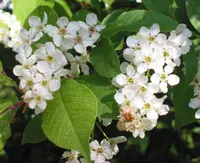
Korean mulberry Care (Morus indica)

Korean mulberry

About Korean mulberry

Korean mulberry, Morus indica, is a small to medium deciduous tree grown for its sweet edible berries and fast growth. It is commonly used as a fruit tree and for feeding silkworms.

The plant has serrated green leaves, often with a dense canopy, and bears clusters of red to dark purple fruits when mature. It naturally occurs in parts of South and East Asia, including Korea and India.

Morus indica adapts well to warm, temperate to subtropical climates and is generally considered easy to grow if given sun, moderate moisture, and well-drained soil. Understanding how to care for Korean mulberry helps maintain steady growth and reliable fruiting.

Main Plant Requirements

Care Difficulty

Easy Care

Light Preference

Full Sun

Water Requirements

Moderate Water

Temperature Preference

Tropical / Frost Sensitive

Hardiness Zone

9–11

Soil Texture

Sandy, Loamy, Organic-rich

Soil pH

Acidic (5.5–6.5), Slightly acidic (6.5–7.0)

Soil Drainage

Well-drained

Fertilization

Minimal (feed rarely)

Get Personalized Care Plan

Scan your plant to receive care tips personalized for your specific plant

Available on iOS and Android

How to Care for the Korean mulberry

Morus indica thrives in full sun but accepts light shade, especially in hotter regions.

  • Aim for 6–8 hours of direct sun daily; morning sun with light afternoon shade helps protect foliage in very hot summers.
  • The tree tolerates partial shade (around 4–5 hours of direct light), though fruiting may decrease compared with Korean mulberry in full sun.
  • In cooler seasons, allow more open exposure by pruning nearby shade and avoiding dense overhead cover that blocks midday light.

Morus indica prefers evenly moist, well-drained soil rather than constant wetness.

  • Before watering, let the top 3–5 cm of soil dry; check by pressing a finger into the ground instead of following a strict schedule.
  • During active growth and fruiting, water deeply so moisture reaches 20–30 cm depth, then allow partial drying; reduce frequency in cool or rainy periods.
  • Watch for yellowing leaves and soft roots as signs of overwatering, and for drooping, crisp leaves or early leaf drop as signs of underwatering.

This mulberry grows best in warm climates and does not tolerate hard frost.

  • Optimal growth occurs around 68–86°F (20–30°C), supporting strong shoot extension and good fruit set in most regions.
  • The tree is sensitive below about 28°F (-2°C); young plants may suffer damage, so protect from frost with covers or site selection.
  • In hot spells above 95°F (35°C), provide soil mulch and adequate moisture to reduce heat stress, especially on young or newly transplanted trees.

Morus indica grows well in moderate humidity around 40–60% and usually manages typical household air.

  • Tolerates short periods of drier air but prolonged levels below 30% can slow growth and crisp leaf edges.
  • Watch for leaf tip browning and marginal scorch as signs of humidity stress in Korean mulberry, especially in heated rooms.
  • Increase humidity locally with grouped plants, a water tray with pebbles under outdoor containers, or a nearby humidifier in very dry climates.

Morus indica prefers deep, loose, moisture-retentive but free-draining soil that allows strong root development.

  • Use a loamy mix combining roughly 50% garden loam or topsoil, 30–40% well-rotted compost, and 10–20% coarse sand or perlite for structure and drainage.
  • Aim for slightly acidic to neutral pH, around 6.0–7.0, since strongly alkaline soil can reduce nutrient availability and cause chlorosis (yellowing leaves).
  • Improve aeration in heavy clay by incorporating coarse sand, fine gravel, or pine bark fines through the top 20–30 cm, not just in the planting hole.
  • Avoid compacted, waterlogged, or highly salty sites, which increase root disease risk and stunt Morus indica growth even if light levels are adequate.

This species is suitable for container growing when the pot is large, stable, and drains efficiently.

  • Choose a deep, wide container to accommodate strong taproot and lateral root growth, which limits stress and wilting in warm weather.
  • Select a heavy material such as ceramic or thick-walled terracotta to stabilize the top-heavy canopy against wind on patios or balconies.
  • Elevate the container slightly on feet or bricks so drainage holes stay clear, allowing rapid runoff after rain or heavy irrigation to prevent root rot.

Morus indica benefits from moderate feeding to support leafy growth and fruiting, especially in containers.

  • Use a balanced granular or slow-release fertilizer around 10-10-10 or 12-12-12, or apply well-rotted compost to the root zone.
  • Feed outdoor trees once in early spring and again in mid-summer; container plants may need light feeding every 4–6 weeks in the growing season.
  • Dilute liquid fertilizers to 1/2 strength for potted Korean mulberry to avoid root burn, and water before and after feeding.
  • Stop or greatly reduce fertilization in late fall and winter when the plant is dormant.

Morus indica responds well to thoughtful pruning that manages size, light penetration, and fruiting wood.

  • Carry out main pruning in late winter or very early spring before bud break to minimize sap loss and stress.
  • Remove dead, diseased, crossing, or inward-growing branches with clean, sharp bypass pruners or a pruning saw.
  • Thin crowded interior shoots to improve airflow and light, which supports healthier foliage and fruit.
  • Shorten overly long branches to maintain a balanced canopy and strong framework, making harvest and maintenance easier.

Morus indica is most often grown in the ground, so transplanting young trees correctly is more important than frequent repotting.

  • Plan transplanting or initial planting for late winter to early spring while the tree is dormant and soil is workable.
  • Look for signs such as roots circling the pot, water running off quickly, or slowed growth in containers as cues to move up 1–2 pot sizes.
  • Loosen circling roots gently and trim damaged ones, then set the tree at the same soil level as before to limit transplant shock.
  • Water deeply after planting, apply a 5–8 cm mulch ring kept off the trunk, and shade or windbreak the tree for 1–2 weeks if conditions are harsh.

Morus indica is commonly propagated from hardwood cuttings, softwood cuttings, and sometimes seeds for breeding or rootstock.

  • Take hardwood cuttings in late winter from pencil-thick 15–20 cm shoots, then insert into moist, well-drained medium with 2–3 buds buried.
  • Use softwood cuttings in late spring to early summer under high humidity and bright, indirect light, ideally with a rooting hormone on the cut surface.
  • Sow fresh seed in fall or after cold stratification, using a free-draining mix and light cover to encourage even germination.
  • Keep propagation media evenly moist, not waterlogged, and maintain warmth around 70–75°F to encourage rapid root development.

Morus indica is moderately frost sensitive in colder regions and benefits from basic winter protection, especially when young or container-grown.

  • In areas below about 20°F, plant in a sheltered spot with good winter sun and avoid low frost pockets.
  • Apply a 5–8 cm mulch layer over the root zone in late fall to buffer soil temperature swings, keeping mulch away from the trunk.
  • Wrap young trunks with breathable tree wrap or burlap in cold climates to reduce bark splitting and sunscald.
  • Move container trees into a cool, bright, frost-free space, keeping soil just slightly moist during dormancy.

Care Tips

Root sucker management

Inspect the base of the plant 2–3 times during the growing season and promptly cut off root suckers at soil level to prevent them from diverting energy from the main trunk and reducing fruit quality.

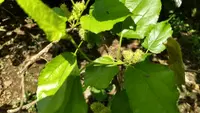
Canopy light thinning

After fruit set, selectively remove a few small interior branches that heavily shade the center of the canopy so that light and air can reach developing berries and reduce fungal problems.

Bird protection netting

Install fine, soft bird netting over the canopy before berries begin to blush, securing it firmly to stakes or a frame so birds cannot reach the fruit yet branches and leaves are not constricted.

Trunk and crotch support

On young trees with heavy crops, use padded stakes or a simple wooden prop to support low, fruit-laden branches and wide crotch angles, preventing splitting under the weight of ripening berries.

Harvest and hygiene

Lay clean tarps or sheets under the canopy before peak ripening to catch fallen berries, then remove dropped fruit and debris weekly to limit vinegar flies, wasps, and fungal spores when growing Korean mulberry.

Common Pests and Diseases

Mulberry leaf spot

This disease causes small brown to purplish spots on leaves that can merge into larger blotches, leading to early leaf yellowing and drop. Symptoms include thinning foliage and reduced vigor, especially in warm, humid conditions.

Solution

Remove and dispose of heavily spotted fallen leaves to reduce inoculum, and avoid overhead watering to keep foliage dry. Improve airflow around the canopy with light pruning, and if the problem recurs annually, apply a copper or chlorothalonil-based fungicide labeled for fruit trees at the first sign of spotting, following all label directions.

Powdery mildew

This disease appears as a white to gray powdery coating on young leaves, shoots, and sometimes fruit, causing leaves to curl or distort. Symptoms include reduced growth and a dull, dusty look to the canopy, especially in shaded, humid sites.

Solution

Prune to open the canopy and increase light and air movement, and remove severely infected shoots before the fungus overwinters. Select resistant cultivars when possible, and in persistent cases use a sulfur, potassium bicarbonate, or horticultural oil product labeled for powdery mildew on fruit trees, applied during dry, mild weather.

Bacterial blight

This disease causes dark, water-soaked spots on leaves and young shoots that turn brown to black, sometimes with a yellow halo, and can lead to dieback of tender twigs. Symptoms include scorched-looking leaf margins and small cankers on young stems following wet, cool weather.

Solution

Prune out and destroy infected twigs during dry weather, cutting 10–15 cm below visible damage and disinfecting tools between cuts with 10% bleach or 70% alcohol. Avoid overhead irrigation, limit high-nitrogen fertilization that promotes soft, vulnerable growth, and consider copper-based sprays during early spring in orchards with repeated history of infection, following label guidance for fruit trees.

Mulberry leaf roller

These caterpillars roll or fold leaves and tie them with silk, feeding inside the shelter and creating ragged, skeletonized foliage. Symptoms include rolled leaves, frass (insect droppings), and reduced leaf area, which can weaken young trees.

Solution

Handpick and crush rolled leaves harboring larvae on small trees, or prune out localized infestations before larvae spread. For heavier infestations, encourage natural predators and consider a Bacillus thuringiensis (Bt) product specifically for caterpillars, applied in the evening to young larvae on exposed leaves.

Mulberry scale

These insects form small, dome-shaped or flattened bumps on twigs and branches, sucking sap and causing yellowing leaves, dieback of fine twigs, and general decline. This pest often produces sticky honeydew that can lead to sooty mold on leaves and surfaces below the tree.

Solution

Prune out heavily infested twigs and dispose of them, and wash smaller branches with a firm stream of water to dislodge some scales. For active crawler stages, apply horticultural oil during late winter dormancy or at crawler emergence according to label directions, and support tree health with proper watering and mulching as part of broader Morus indica plant care.

Interesting Facts

Specialist silkworm host

Morus indica leaves are a primary food source for domesticated mulberry silkworms Bombyx mori in India, making this tree central to regional sericulture and silk production systems.

High leaf protein

The foliage of this species has relatively high crude protein content compared with many other tree leaves, so it is widely studied and used as a supplemental fodder for cattle, goats, and sheep in tropical and subtropical regions.

Adapted to monsoon climates

This mulberry originates from the Indian subcontinent and shows strong adaptation to monsoon patterns, tolerating high summer rainfall combined with warm temperatures and distinct dry periods better than many temperate mulberry species.

Botan icon

Did you know?

In traditional Indian sericulture, specific clones and varieties of Morus indica have been selected over generations for traits like leaf texture, moisture content, and year-round sprouting, because small differences in leaf quality can measurably affect silk yield and fiber characteristics in Bombyx mori.

FAQs about Korean mulberry

The fruits and young leaves are edible and traditionally used for food and herbal preparations. Only harvest from plants not treated with pesticides. Very unripe berries and large quantities of raw leaves may cause mild digestive upset in sensitive individuals.

Grow Healthy Plants with Botan Care

Keep your plants happy and healthy with plant identification, disease detection, and easy care guidance.

Botan plant care app — identify plants on mobile

Explore More Plants