Chayote Care (Sicyos edulis)

Also known as: pipinella, Choko, Mirliton
Chayote

About Chayote

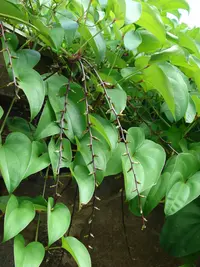
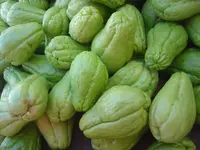
Chayote, Sicyos edulis, is a fast-growing, warm-season climbing vine cultivated mainly for its pale green, pear-shaped edible fruits. The plant produces tendrils, heart-shaped leaves, and small, inconspicuous flowers that develop into crisp fruits with mild flavor.

It originates from Mesoamerica and is now widely grown in tropical and warm-temperate regions for both home gardens and small farms. The vigorous vine habit and long growing season can make it a bit demanding in cooler climates.

It prefers plenty of sun, consistent moisture, and fertile, well-drained soil. Understanding how to care for Chayote helps gardeners support its strong growth and reliable fruiting.

Main Plant Requirements

Care Difficulty

Moderate Care

Light Preference

Full Sun

Water Requirements

Regular Water

Temperature Preference

Tropical / Frost Sensitive

Hardiness Zone

9–11

Soil Texture

Sandy, Loamy, Organic-rich

Soil pH

Acidic (5.5–6.5), Slightly acidic (6.5–7.0)

Soil Drainage

Moist but well-drained

Fertilization

Moderate (every 2–4 weeks)

Get Personalized Care Plan

Scan your plant to receive care tips personalized for your specific plant

Available on iOS and Android

How to Care for the Chayote

This vigorous vine needs strong light to flower and fruit well in most warm, frost‑free climates.

  • Provide 6–8 hours of direct sun daily, with morning sun and light afternoon shade ideal in hot regions for Chayote.
  • Tolerates light partial shade (around 4–5 hours of direct sun), but flowering and fruit set drop as shade increases.
  • In summer, protect from harsh late‑afternoon sun in very hot areas; in cooler months, avoid shading from structures or taller plants.

This fast‑growing vine prefers evenly moist, well‑drained soil rather than constant wetness.

  • Water when the top 3–5 cm of soil feel dry, applying a deep soak that reaches the root zone instead of light surface splashes.
  • During hot, active growth and fruiting, expect more frequent watering; reduce frequency in cooler weather while still preventing complete drying.
  • Signs of overwatering include yellowing, soft stems, and a sour smell from poorly drained soil; Sicyos edulis wilts, curls, and shows dry leaf edges when too dry.

This warm‑season vine grows best in consistently warm, frost‑free conditions.

  • Aim for 70–85°F (21–29°C) for strong vegetative growth and flowering throughout the main season.
  • Plant outdoors only after nights stay above 55°F (13°C); brief exposure below 45°F (7°C) can stunt growth, and frost will kill foliage and young vines.
  • Tolerates short heat spikes to 95°F (35°C) if soil moisture is maintained and roots are mulched; growth slows in prolonged heat or below 60°F (16°C).

This species prefers moderately humid, warm conditions but usually adapts to typical household humidity.

  • Aim for 40–60% humidity to support steady vine growth and reduce leaf edge browning.
  • It tolerates short dry-air spells, but prolonged humidity below 30% can cause curling, dull leaves, and slowed growth in Chayote.
  • Increase humidity with nearby open trays of water, grouped plants, or a small humidifier rather than misting, which adds only brief moisture.

Sicyos edulis grows best in deep, loose, well-drained, nutrient-rich soil.

  • Use a loamy mix with high organic matter, such as 40% garden loam, 40% compost, and 20% coarse sand or perlite for drainage.
  • Aim for slightly acidic to neutral pH around 6.0–7.0 to keep nutrient availability balanced and root function stable.
  • In heavy or clay soil, incorporate coarse sand, perlite, or fine gravel in the top 20–30 cm to improve aeration and water movement.
  • Avoid compacted, waterlogged, or very shallow soils, which promote root rot and limit the vigorous root system this vine develops.

This vigorous vine can be grown in large containers if provided with ample root space and strong support.

  • Choose a container at least 50–60 cm deep and wide so the extensive root system does not dry out or bind quickly.
  • Select a heavy, stable pot (such as thick plastic or clay) to prevent tipping as the climbing foliage and fruit add weight.
  • Position a sturdy trellis or frame directly in the container so wind does not loosen supports and stress the vine at the base.

This vigorous vine benefits from moderate, targeted feeding during the warm growing season.

  • Use a balanced NPK fertilizer (for example 10-10-10) or well-rotted compost to support vegetative growth and fruiting in Chayote.
  • Feed every 4–6 weeks during active growth, starting once the soil has warmed and vines begin to run.
  • Apply liquid fertilizer at 1/2 strength on moist soil to reduce root burn risk.
  • Stop or greatly reduce feeding in late fall and winter when growth slows or plants die back.

Pruning Sicyos edulis helps manage its vigorous growth and maintain productive vines.

  • Carry out main pruning in late winter or very early spring before strong new growth starts.
  • Remove dead, diseased, or damaged stems first, then thin crowded or tangled shoots to improve airflow and light penetration.
  • Shorten overly long vines to keep the plant on its support and focus energy on flowering and fruit set.
  • Use clean, sharp pruners and make angled cuts just above nodes to reduce infection risk and encourage branching.

This vine is usually grown in the ground, so focus on careful transplanting rather than frequent repotting.

  • Transplant seedlings outdoors in spring after frost when soil is warm and roots lightly fill starter cells or small pots.
  • Choose a sunny bed with fertile, well-drained soil and install a strong trellis or support before planting.
  • Handle roots gently; plant at the same depth, firm soil around the root ball, and water thoroughly to settle air pockets.
  • Minimize stress by transplanting on a mild, overcast day and keeping soil evenly moist for 1–2 weeks afterward.

New plants are most commonly raised from seeds taken from mature fruits.

  • Sow fresh seeds in late winter to spring, indoors or in a protected tunnel, 3–4 weeks before outdoor planting time.
  • Use a warm medium at 70–80°F, with consistent moisture and good drainage to encourage rapid germination.
  • Place 1 seed per pot, about 2–3 cm deep, and keep in bright light once seedlings emerge to prevent weak, leggy growth.
  • Harden off young plants gradually outdoors over 7–10 days before setting them into their final position.

This tender perennial is usually grown as a warm-season crop and is very sensitive to frost.

  • In regions with frost, treat plants as annuals and replant each year from seed or stored fruit.
  • Mulch the root zone with 5–8 cm of organic material in late season to moderate soil temperature and moisture.
  • For container plants, move indoors to a bright, frost-free space before temperatures drop near 40°F.

Care Tips

Install Strong Trellis

Provide a sturdy, tall trellis or wire frame before planting so the vigorous vines can be trained upward, improving airflow and reducing fruit rot on wet soil.

Direct Vine Training

As shoots lengthen, gently guide and tie main vines along the support using soft ties, which keeps the canopy open and makes harvesting easier and safer.

Flowering Season Management

During peak flowering, limit heavy nitrogen input and maintain consistent moisture so more female flowers set fruit instead of producing mainly leafy growth.

Fruit Load Control

Thin excess young fruits on overloaded vines to reduce stress, which encourages larger, better-quality chayotes and maintains plant vigor through the season.

Off-Season Storage Planting

For growing Chayote in cooler regions, start by sprouting whole fruits indoors in a ventilated tray, then transplant the sprouted fruits outdoors only after soils warm and frost risk has passed.

Common Pests and Diseases

Powdery mildew

This disease causes white, powdery patches on leaves, stems, and sometimes fruits, often starting on older foliage in warm, dry conditions with high humidity at night. Symptoms include reduced vigor, yellowing, and early leaf drop, which can lower fruit yield.

Solution

Remove heavily infected leaves, avoid overhead watering, and increase spacing or trellising to improve airflow around vines. Apply a sulfur or potassium bicarbonate fungicide labeled for cucurbits at the first sign of infection and repeat as directed, rotating products to reduce resistance.

Downy mildew

This disease produces yellow angular spots on upper leaf surfaces and gray to purple fuzzy growth on the undersides, especially in humid, cool to warm weather. Symptoms include rapid leaf blighting that can defoliate vines and expose fruits to sunscald.

Solution

Remove and discard infected leaves, avoid wetting foliage, and water early in the day so plants dry quickly. Use a copper-based or phosphonate fungicide registered for cucurbits at early symptom onset, and grow vines on trellises to promote faster drying and better air circulation when growing Chayote.

Melon aphids

These insects cluster on tender stems and the undersides of leaves, sucking sap and causing curling, yellowing, and distorted new growth. This pest also excretes sticky honeydew that can lead to sooty mold on foliage and fruits.

Solution

Dislodge colonies with a strong stream of water, and remove heavily infested shoots. Encourage or introduce natural enemies such as lady beetles, and when needed use insecticidal soap or horticultural oil, making sure to coat the undersides of leaves and repeating applications as new aphids appear.

Whiteflies

These insects are small, white, and moth-like, flying up in a cloud when vines are disturbed and feeding on leaf undersides. Symptoms include leaf yellowing, reduced vigor, and honeydew deposits that can attract sooty mold.

Solution

Use yellow sticky traps to monitor and reduce adult populations, and regularly inspect leaf undersides. For significant infestations, apply insecticidal soap or horticultural oil in the early morning or late evening, repeating at intervals to target newly emerged nymphs while protecting beneficial insects as much as possible.

Anthracnose

This disease produces dark, sunken spots with defined margins on leaves, stems, and fruits, often enlarging and coalescing under warm, wet conditions. Symptoms include shot-hole lesions in leaves and blemished or cracked fruits that may rot on the vine.

Solution

Prune and destroy affected leaves and fruits, avoid overhead watering, and rotate away from other cucurbit crops for at least 2–3 years. Apply a labeled fungicide such as a copper product or chlorothalonil at the first sign of spotting, and maintain good sanitation by removing plant debris after harvest to reduce future inoculum.

Interesting Facts

Single-seeded fruit

Each chayote fruit develops from a single large seed that fills most of the interior, and the entire fruit, including the immature seed, is usually eaten as a vegetable.

Edible plant parts

In this species, not only the fruits but also young shoots, tendrils, and leaves are commonly eaten as greens, and the tuberous roots are also edible and starchy.

Perennial climbing vine

The plant forms a long-lived perennial root system that can resprout each growing season, sending out vigorous climbing stems that may reach several meters in length under suitable conditions.

Botan icon

Did you know?

The chayote vine was widely cultivated in pre-Columbian Mesoamerica, and archaeological and historical evidence suggests it was an important indigenous food crop long before European contact, later spreading globally through colonial-era trade routes.

FAQs about Chayote

Poor flowering usually comes from insufficient warmth, short day length, low light, or nutrient imbalance. Ensure a long warm season, consistent moisture, and balanced fertilization. Excess nitrogen promotes foliage at the expense of flowers and fruit.

Grow Healthy Plants with Botan Care

Keep your plants happy and healthy with plant identification, disease detection, and easy care guidance.

Botan plant care app — identify plants on mobile

Explore More Plants