Provide climbing support
Install a sturdy trellis, fence, or wire mesh before planting so the vine can twine naturally, and loosely tie new shoots with soft ties to guide them without damaging the stems.

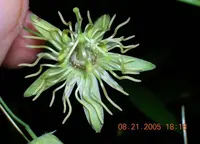
Yellow passionflower (Passiflora lutea) is a small, twining vine native to the central and southeastern United States. It often scrambles over shrubs, fences, or low vegetation rather than forming a large, woody structure.
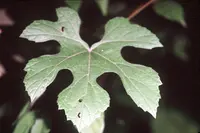
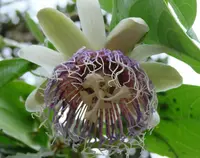
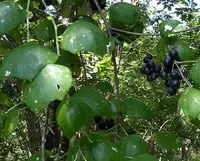
The plant has delicate, 3-lobed leaves and small, pale yellow to greenish flowers that are more subtle than those of many tropical passionflowers. These flowers are followed by small, dark berries that attract wildlife.
Passiflora lutea is generally considered a low-maintenance species once established, especially in suitable climates. For those learning how to care for yellow passionflower, it tends to do best in bright light, with moderately moist, well-drained soil.

Care Difficulty
Easy Care

Light Preference
Partial Sun

Water Requirements
Moderate Water

Temperature Preference
Cold Hardy

Hardiness Zone
5–9

Soil Texture
Sandy, Loamy, Clay

Soil pH
Acidic (5.5–6.5), Slightly acidic (6.5–7.0)

Soil Drainage
Moist but well-drained

Fertilization
Minimal (feed rarely)
Scan your plant to receive care tips personalized for your specific plant
Available on iOS and Android
Passiflora lutea grows best in bright outdoor conditions with protection from harsh afternoon sun.
Passiflora lutea prefers evenly moist, well-drained soil that never stays saturated for long periods.
This species is a hardy North American vine that tolerates a fairly wide outdoor temperature range once established.
This species handles a wide humidity range but grows best with moderate ambient moisture.
This vine prefers loose, well-drained soil that stays evenly moist but not saturated.
This species is suitable for container growing when the pot is prepared to support its climbing habit.
Passiflora lutea grows in fairly lean soils but responds well to light feeding in containers or poor ground.
Passiflora lutea benefits from modest structural pruning to manage size and maintain flowering wood.
This species is most often grown in-ground, so focus on careful transplanting rather than frequent repotting.
Yellow passionflower is usually propagated by seeds or softwood cuttings taken in the warm season.
This vine is cold hardy through much of its native range and usually needs only minimal winter care outdoors.

Plant Health Check
Not sure what's wrong with your plant? Check your plant's health inside the app.
The tiny flowers are pollinated mainly by small bees, including sweat bees, whose body size matches the narrow floral structures and helps transfer pollen efficiently.
Its leaves serve as a food source for several passionflower-specialist butterfly larvae, including the zebra longwing and gulf fritillary, even though this species has much smaller and less conspicuous flowers than many cultivated passionflowers.
Unlike many passionflower relatives that need full sun, this vine naturally thrives in woodland edges and partial shade in its native range across the eastern and central United States.

Passiflora lutea is one of the few passionflower species that is reliably cold-hardy through much of USDA zone 5, surviving typical winter temperatures in many temperate regions where more tropical Passiflora species cannot persist outdoors.
This species is a twining vine that climbs using tendrils, wrapping around nearby stems, fences, or trellises. Without support it sprawls along the ground, forming a loose mat rather than standing upright on its own.
Keep your plants happy and healthy with plant identification, disease detection, and easy care guidance.