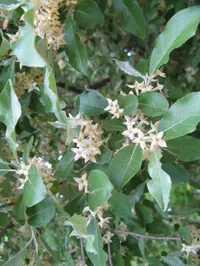
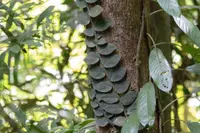
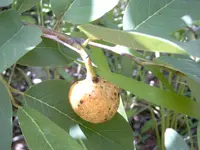
Wire support system
Install a sturdy trellis or 2–3 horizontal wires spaced 30–45 cm apart and train the strongest shoots along them early in the season to create a permanent framework that can carry the vine’s mature weight.

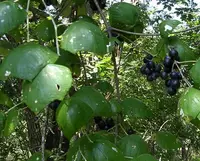
Mustang grape, Vitis mustangensis, is a vigorous woody vine native to the south-central United States, especially Texas and surrounding areas. It often climbs fences, trees, or trellises and can form dense, leafy screens.
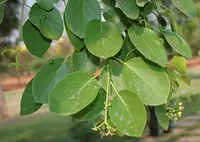
The plant has large, often fuzzy leaves and produces clusters of small, dark purple grapes with thick skins and a strong, tart flavor. Its robust growth and tolerance of heat and poor soils make it relatively forgiving outdoors, though it needs space and support.
Understanding how to care for mustang grape starts with knowing it prefers full sun, well-drained soil, and moderate moisture, but it adapts fairly well once established.

Care Difficulty
Easy Care

Light Preference
Full Sun

Water Requirements
Moderate Water

Temperature Preference
Warm Climate

Hardiness Zone
6–9

Soil Texture
Sandy, Loamy, Clay

Soil pH
Acidic (5.5–6.5), Slightly acidic (6.5–7.0)

Soil Drainage
Well-drained

Fertilization
Minimal (feed rarely)
Scan your plant to receive care tips personalized for your specific plant
Available on iOS and Android
This vigorous vine thrives in strong outdoor light typical of its native southern US range.
This species prefers deep, infrequent watering once established, supported by well-drained soil.
This warm-climate vine handles substantial heat but still benefits from a defined cool season.
This species is tolerant of a wide humidity range and humidity control is rarely critical outdoors.
Vitis mustangensis prefers well-drained, moderately fertile mineral soils that do not stay waterlogged.
This vine can be grown in containers, but only with careful attention to root space and stability.
Vitis mustangensis usually grows well in native soils with minimal added nutrition, but light feeding benefits young or container-grown vines.
Pruning Vitis mustangensis helps manage size, encourage strong framework, and improve fruiting wood.
This native grape is most often grown in-ground, so focus on careful transplanting rather than frequent repotting.
Vitis mustangensis is commonly propagated from cuttings or seeds, with stem cuttings preferred for consistent traits.
This grape is generally cold hardy in its native range and needs minimal winter care once established.

Plant Health Check
Not sure what's wrong with your plant? Check your plant's health inside the app.
The berries of this species contain unusually high levels of tartaric acid, which gives them an intense sour, astringent flavor that can irritate skin and mouths when eaten fresh in quantity.
Mustang grape serves as a key larval host plant for several native North American butterflies, including pipevine swallowtails and gulf fritillaries, which rely on the vine’s foliage for their caterpillars to develop.
This vine is naturally associated with hot, thin, calcareous soils in central and south Texas, where its roots tolerate high pH and drought conditions that stress many other grape species.

In parts of its native range, the vine often climbs high into oak and other hardwood trees to form dense summer canopies, creating important shaded microhabitats that moderate temperature and light for birds, insects, and understory plants beneath it.
This species is best suited to outdoor conditions, where it has space, strong light, and seasonal temperature changes. Mustang grape indoor care is challenging because vines quickly outgrow typical rooms and suffer from low light and poor air circulation.
Keep your plants happy and healthy with plant identification, disease detection, and easy care guidance.