sinkwa towelsponge Care (Luffa acutangula)

Also known as: angled luffa, Chinese Okra, Ribbed Gourd, dish cloth gourd, ridged gourd, sponge gourd
sinkwa towelsponge

About sinkwa towelsponge

Sinkwa towelsponge, Luffa acutangula, is a fast-growing annual vine in the cucumber family, valued for its fibrous, sponge-like mature fruits. It climbs using tendrils and produces yellow flowers followed by long, ridged green gourds that dry into natural bath or kitchen sponges.

This species is native to tropical Asia but is now cultivated in many warm regions for food when young and as a household sponge when fully mature. It can be moderately demanding, since it needs warm temperatures, a long growing season, and sturdy support. Gardeners who understand how to care for sinkwa towelsponge usually succeed if they provide full sun, regular moisture, and well-drained, fertile soil.

Main Plant Requirements

Care Difficulty

Moderate Care

Light Preference

Full Sun

Water Requirements

Regular Water

Temperature Preference

Tropical / Frost Sensitive

Hardiness Zone

9–11

Soil Texture

Sandy, Loamy, Organic-rich

Soil pH

Acidic (5.5–6.5), Slightly acidic (6.5–7.0)

Soil Drainage

Moist but well-drained

Fertilization

Moderate (every 2–4 weeks)

Get Personalized Care Plan

Scan your plant to receive care tips personalized for your specific plant

Available on iOS and Android

How to Care for the sinkwa towelsponge

This fast-growing vine needs strong sun to produce full-sized sponges and healthy growth.

  • Provide 6–8 hours of direct sun daily; in hot climates, prioritize morning sun with light afternoon shade to reduce leaf scorch.
  • Plants tolerate light partial shade (around 4–5 hours direct sun), but sinkwa towelsponge yields fewer, smaller fruits in low light.
  • In cooler months or short-day seasons, choose the sunniest, south-facing spot and avoid shading from taller crops or structures.

This plant prefers consistently moist but not waterlogged soil, especially during rapid vine and fruit development.

  • Water when the top 3–5 cm of soil feels dry, applying a deep soak at the root zone rather than frequent light sprinkles.
  • Ensure loose, well-drained soil so excess water can escape; soggy conditions cause yellowing leaves, soft stems, and root rot in Luffa acutangula.
  • In hot, dry weather, expect to water more often; dull, drooping leaves signal thirst, while constantly wet soil signals the need to reduce watering.

This warmth-loving vine thrives in stable, hot conditions and reacts poorly to cold or sudden chills.

  • Aim for 75–90°F (24–32°C) for strong growth and flowering; vines slow noticeably below 70°F (21°C).
  • Avoid planting outdoors until nights stay above 60°F (16°C); brief drops to 50–55°F (10–13°C) may stunt growth, and any frost can kill the plant.
  • In extreme heat above 95°F (35°C), provide mulch and soil moisture to protect roots, as stress can cause blossom drop and smaller fruits.

Humidity is rarely critical for this vigorous vine when grown outdoors in typical garden conditions.

  • Target 40–60% humidity; normal outdoor air in most regions falls comfortably within this range for sinkwa towelsponge.
  • This species tolerates brief dry air periods, but prolonged hot, very dry winds can cause faster leaf water loss and edge browning.
  • Increase humidity around young plants in very arid climates by using windbreaks and light mulching to reduce evaporation from soil and foliage.

Luffa acutangula needs deep, loose, well-drained soil that holds moisture yet stays aerated.

  • Aim for a loamy, organic-rich structure using roughly equal parts garden loam, compost, and coarse sand or perlite.
  • Soil should drain freely within minutes after thorough watering; standing water or sticky, heavy clay causes root stress and poor growth.
  • Keep soil slightly acidic to neutral, around pH 6.0–7.0, to support nutrient availability and healthy root activity.
  • Improve aeration by incorporating coarse organic matter such as composted bark and avoiding compaction from frequent walking or heavy containers.

This species can be grown in large containers if given enough root volume and strong structural support.

  • Choose a container at least 40–50 cm deep and wide so the extensive root system can support vigorous vine and fruit development.
  • Use a heavy or weighted pot, such as thick terracotta or a stabilized plastic tub, to prevent tipping as the vine climbs and fruits enlarge.
  • Position the container so the trellis or support structure is anchored outside the pot, avoiding root disturbance and keeping the container stable in wind.

Luffa acutangula is a fast-growing, heavy-feeding vine that benefits from consistent but moderate nutrition during the warm growing season.

  • Apply a balanced liquid fertilizer (such as 10-10-10) at 1/2 strength every 2–3 weeks once vines begin vigorous growth.
  • Work in mature compost or a slow-release organic fertilizer before planting to enrich the root zone.
  • Stop feeding or reduce to once a month at very low strength as growth slows in late fall or winter.
  • Good sinkwa towelsponge yields depend on avoiding overfeeding, which can cause excessive foliage with fewer fruits.

Pruning helps manage Luffa acutangula vines, improves airflow, and can increase fruit quality on home trellises or fences.

  • In late spring and summer, remove dead, diseased, or storm-damaged shoots with clean, sharp pruners.
  • Thin congested side shoots to reduce tangling and improve light penetration, guiding main vines along the support.
  • Pinch or trim overly long leaders to keep the vine on the trellis and encourage lateral flowering shoots.
  • After harvest, cut back spent vines at the base and discard debris to reduce pest and disease carryover.

This vine is usually grown from seed then transplanted outdoors rather than long-term container culture.

  • Start seeds in small pots and transplant when roots lightly fill the container and night temperatures stay above 55°F.
  • Move seedlings outdoors in late spring once frost risk is past, choosing a sunny, sheltered site with strong support.
  • Handle root balls gently, disturbing roots as little as possible; water thoroughly to settle soil and reduce transplant shock.
  • If grown in a pot, shift to a 1–2 in larger container only when roots circle the pot or growth becomes stunted.

New Luffa acutangula plants are almost always raised from seed, which gives reliable and vigorous vines.

  • Sow seeds in late spring when soil reaches 70–80°F, either in small pots indoors or directly outdoors in warm regions.
  • Scarify hard seed coats lightly with sandpaper and soak for 12–24 hours to speed and even out germination.
  • Use a loose, well-drained seed mix, keep moisture even, and maintain warmth until seedlings appear in 7–21 days.
  • Provide bright light and gentle air movement for seedlings, then harden off for 7–10 days before planting outside.

This plant is a frost-tender annual in most climates, so the focus is on protecting the current season’s crop and saving seeds rather than overwintering vines.

  • Kill occurs around 32°F or below, so harvest mature fruits before the first hard frost date.
  • In cooler regions, grow in containers that can be moved into a bright, frost-free space for a few extra ripening weeks.
  • Mulch the soil lightly in fall to keep roots warmer and maintain moisture during the final stages of fruit development.
  • Allow selected fruits to dry on the vine before frost, then finish drying indoors for seed saving and sponge use.

Care Tips

Early trellis training

Install a sturdy vertical trellis or netting before vines reach 20–30 cm, then gently weave new growth through the support every few days to prevent tangling and improve airflow around the developing fruits.

Hand pollination boost

On cool or low-insect days, use a small paintbrush to transfer pollen from freshly opened male flowers to female flowers (identified by the tiny fruit behind the petals) during early morning hours to increase fruit set and uniform luffa development.

Fruit thinning practice

If many small fruits set at once, remove the weakest or most crowded ones so that 3–5 fruits per vine can mature fully, giving longer, denser sponges with better fiber quality.

Timed harvest for sponges

For high-quality sponges, leave selected fruits on the vine until the skin turns yellow-brown and feels light, then cut and peel promptly so the inner fiber dries evenly without molding.

Rotation and sanitation

Rotate planting areas every 3–4 years and remove old vines, fallen leaves, and rotting fruits at season’s end to reduce buildup of fungal diseases and pests, which is essential when growing sinkwa towelsponge repeatedly in the same garden.

Common Pests and Diseases

Red pumpkin beetle

This pest chews holes in young leaves, flowers, and tender fruits, often skeletonizing foliage and weakening vines. Symptoms include irregular leaf damage and bronzed or ragged young growth, especially early in the season.

Solution

Handpick adults in the early morning, destroy egg clusters on the undersides of leaves, and use floating row covers to protect young vines until flowering. Keep the area free of weedy cucurbits, and if needed, apply a targeted insecticide such as neem or spinosad to young plants, following label directions carefully.

Fruit fly maggots

These insects lay eggs in developing fruits, where maggots tunnel through the flesh causing internal rot, premature yellowing, and fruit drop. Symptoms include small puncture marks on the rind, soft spots, and collapsing fruits on the vine.

Solution

Collect and destroy infested fruits, including those on the ground, to break the life cycle. Use fruit fly traps and bait stations around the planting area, bag young fruits with fine mesh sleeves, and harvest fruits promptly once they reach usable size to reduce infestation levels when trying to grow Luffa acutangula.

Powdery mildew

This disease appears as white or gray powdery patches on upper leaf surfaces, often starting on older leaves and spreading rapidly in warm, dry conditions with high humidity at night. Symptoms include yellowing, leaf distortion, and premature leaf drop that reduces fruiting and sponge quality.

Solution

Remove and discard heavily infected leaves and improve airflow by spacing vines and training them on a trellis. Water at the base in the morning, avoid wetting foliage, and use sulfur, potassium bicarbonate, or horticultural oil sprays labeled for cucurbits at the first sign of infection.

Downy mildew

This disease causes yellow angular leaf spots bounded by veins on the upper surface and grayish-violet fuzzy growth underneath, typically in cool, humid, or rainy weather. Symptoms include rapid leaf blighting and collapse of foliage that can severely reduce yield.

Solution

Remove affected leaves early and dispose of them away from the garden, and improve air circulation by pruning excess foliage and using vertical supports. Water at soil level, avoid overhead irrigation, and in regions with a history of disease use preventive copper or other labeled fungicides when conditions favor outbreaks.

Virus complex (mosaic viruses)

This disease group causes mottled light and dark green patches, leaf distortion, blistering, and stunted vines, often leading to misshapen or undersized fruits. Symptoms include reduced vigor and irregular fruit skin patterns that do not match normal ribbing or color changes with maturity.

Solution

Promptly remove and destroy symptomatic plants to limit spread, and control sap-sucking insects such as aphids that act as virus vectors by using reflective mulches, strong water sprays, or targeted insecticidal soaps. Avoid handling plants when wet, disinfect cutting tools, and use clean seed from reputable suppliers while rotating cucurbit crops each year.

Interesting Facts

Distinct angular fruits

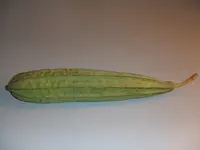
The fruits develop with 10 prominent longitudinal ridges, which is why the species is called the angled or ridged luffa, and this ribbed structure influences how the fibrous sponge forms inside the mature fruit.

Edible when immature

Unlike the fully fibrous mature gourds, young fruits of this species are widely eaten as a tender vegetable in South and Southeast Asian cuisines, where they are cooked similarly to zucchini or okra.

Cross-pollination specialists

The plant produces separate male and female flowers on the same vine and depends mainly on insect pollinators such as bees for successful fruit set, so isolated plants with poor pollinator access often yield few or no sponges.

Botan icon

Did you know?

Archaeobotanical and historical evidence indicate that this species was domesticated in South and Southeast Asia and spread along trade and migration routes across the Indian Ocean, eventually reaching Africa and other tropical regions as both a vegetable and a natural source of bath and household sponges.

FAQs about sinkwa towelsponge

Immature fruits are edible when still tender and green, commonly used in stir-fries and soups. Older fruits become fibrous and inedible, but the dried interior is used as a natural sponge rather than food.

Grow Healthy Plants with Botan Care

Keep your plants happy and healthy with plant identification, disease detection, and easy care guidance.

Botan plant care app — identify plants on mobile

Explore More Plants