Queen Bolete Care (Boletus regineus)

Queen Bolete

About Queen Bolete

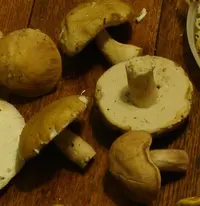
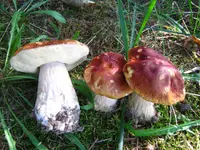
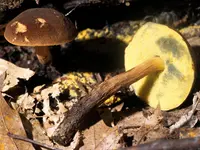
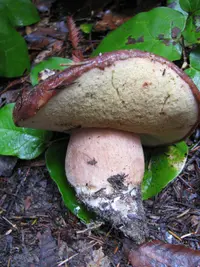
Queen bolete, Boletus regineus, is a wild mycorrhizal mushroom that forms a close partnership with tree roots rather than growing as a typical potted plant. It produces stout, pale to golden brown caps with a thick, club-shaped stem and a pore surface instead of gills underneath. In nature it is found in Western North America, especially in mixed hardwood and conifer forests.

This fungus is considered choice for eating when correctly identified, but it is not easy to cultivate at home. It depends on a healthy host tree and undisturbed soil, so attempts to care for Queen Bolete focus mainly on protecting suitable habitat rather than conventional indoor culture.

Main Plant Requirements

Care Difficulty

Hard Care

Light Preference

Partial Shade

Water Requirements

Keep Soil Moist

Temperature Preference

Cool Climate

Hardiness Zone

Unknown

Soil Texture

Loamy, Silty, Organic-rich

Soil pH

Acidic (5.5–6.5), Slightly acidic (6.5–7.0)

Soil Drainage

Moist but well-drained

Fertilization

Minimal (feed rarely)

Get Personalized Care Plan

Scan your plant to receive care tips personalized for your specific plant

Available on iOS and Android

How to Care for the Queen Bolete

This ectomycorrhizal fungus prefers stable woodland light rather than open, exposed sun.

  • Provide bright, dappled shade under mature oaks or similar trees, with 1–3 hours of gentle morning sun and no harsh afternoon sun to prevent drying of the forest floor.
  • Ensure partial shade year-round; dense summer canopy is ideal, while 3–5 hours of low winter sun is acceptable if soil moisture stays stable for Queen Bolete.
  • Avoid full, unfiltered sun in open clearings, which overheats and desiccates the leaf litter, reducing fruiting and stressing the underground mycelium.

This woodland mushroom relies on consistently moist, not saturated, soil around its tree partners.

  • Aim for evenly moist top soil and leaf litter, allowing the upper 2–3 cm to start drying slightly between natural rain events or supplemental irrigation.
  • Increase moisture support during hot, dry periods by deep, infrequent soaking that drains well, rather than light, frequent sprinkling that promotes surface crusting.
  • Watch for signs of overwatering such as soggy, anaerobic soil and mushroom absence, or underwatering indicated by powder-dry litter and shrinking, brittle Boletus regineus fruiting bodies.

This species fruits best in mild, stable woodland temperatures without extremes of heat or frost.

  • Target a cool to mild range of 55–70°F (13–21°C) for reliable fruiting, with underground mycelium remaining active slightly outside this range if moisture is stable.
  • Protect habitat from hard frost; short dips to 28–32°F (-2–0°C) may damage fruiting bodies, though the mycelium often survives brief cold if soil is insulated by leaf litter.
  • Limit exposure to hot, dry conditions above 80–85°F (27–29°C), which accelerate substrate drying and can halt fruiting until cooler, moister fall weather returns.

Humidity is not a practical care factor because Boletus regineus forms outdoor mycorrhizal relationships rather than growing as a managed potted specimen.

Boletus regineus depends on specific outdoor forest soils rather than conventional potting mixes.

  • This species fruits in loose, well-drained, moderately moist, organic-rich forest soil, usually under oak or related trees.
  • Soil should be crumbly and aerated, with abundant leaf litter and well-rotted wood increasing structure and water-holding without becoming waterlogged.
  • Aim for slightly acidic to neutral conditions around pH 5.5–7.0, avoiding compacted clay and areas where water stands after rain.
  • Do not add excessive fertilizers or high-salt amendments, which can disrupt the tree–fungus association essential for Boletus regineus care.

This species is not suitable for container growing because it relies on complex mycorrhizal partnerships with trees in undisturbed soil.

This ectomycorrhizal fungus grows best with minimal direct fertilization, relying mainly on its tree hosts.

Boletus regineus does not require pruning, as it is a wild ectomycorrhizal mushroom rather than a traditional garden plant.

This species is seldom grown in containers, so care focuses on establishing and maintaining suitable host trees in stable ground conditions.

  • Avoid disturbing established host tree roots, since the fungus depends on fine root associations for nutrition and water exchange.
  • If a young host tree must be moved, transplant only in cool, moist seasons such as early spring or fall to limit stress.
  • Water transplanted trees deeply and maintain even soil moisture so the mycorrhizal partnership can re-establish in the new location.
  • Do not lift or shift soil blocks specifically for the fungus, as disruption of the root–fungus interface often reduces fruiting.

In gardens, direct propagation of Boletus regineus is unreliable and considered advanced, so it is rarely attempted by home growers.

This wild bolete is naturally adapted to seasonal climates and usually needs no special winter care in the ground.

Care Tips

Host tree selection

Establish the fungus only near compatible host trees such as oaks or conifers and avoid heavily disturbed lawns or compacted soil, since the mycorrhizal partnership forms best in stable, low-traffic sites.

Minimal soil disturbance

Once a patch is established, avoid digging, tilling, or frequent raking over the root zone, as undisturbed soil structure supports the fine fungal threads that produce fruiting bodies.

Targeted organic mulching

Apply a thin, patchy layer (1–3 cm) of leaf litter or wood chips under host trees rather than a thick, uniform blanket, to mimic forest duff while still allowing gas exchange and mushroom emergence.

Careful harvest technique

Cut mushrooms at the base with a clean knife instead of pulling them out, and gently cover any exposed mycelium with leaf litter to reduce desiccation and protect future flushes when growing Queen Bolete.

Seasonal moisture monitoring

During dry spells in the typical fruiting season, monitor soil moisture 5–10 cm deep around host tree roots and, if necessary, provide deep but infrequent irrigation to maintain lightly moist, not soggy, conditions for mycelial activity.

Common Pests and Diseases

Mycoparasitic molds

This disease appears as fast‑spreading cottony or powdery mold that overgrows and deforms the mushroom fruiting body, often starting at damaged tissue or the pore surface.

Solution

Carefully remove and discard affected mushrooms without disturbing nearby soil, avoid handling caps with dirty tools, and harvest promptly when mature to reduce exposure time. In foraging or semi‑managed settings, avoid collecting seriously overgrown specimens and do not use them for spore propagation or culinary purposes.

Fungal fly larvae

This pest causes internal tunneling in caps and stems, with soft or discolored areas that collapse when pressed due to maggots feeding inside the tissue.

Solution

Harvest mushrooms early in the day when infestation levels tend to be lower, trim and discard visibly tunneled portions in the field, and avoid leaving overmature or damaged fruiting bodies on the ground, which helps limit breeding sites for future generations.

Slugs and snails

These pests leave large irregular bites, slime trails, and rapid destruction of young or soft caps, often overnight after wet weather.

Solution

Hand‑remove slugs and snails during damp evenings or early mornings, collect only intact mushrooms with minimal chewing damage, and avoid leaving cut stems and spoiled caps on site, which can attract additional grazing pressure around productive mycelial areas.

Bacterial soft rot

This disease leads to wet, foul‑smelling, slimy patches on caps and stems, often following insect damage, heavy rain, or warm, humid conditions.

Solution

Do not harvest or consume mushrooms showing soft, slimy, or foul‑smelling areas, and avoid placing healthy specimens in the same basket or container as suspect ones. In areas where this occurs frequently, harvest slightly earlier and store in breathable containers to limit moisture buildup and reduce bacterial spread during transport and holding.

Interesting Facts

California oak specialist

This species forms mycorrhizal partnerships with several California oaks, especially coast live oak (Quercus agrifolia) and interior live oak (Quercus wislizeni), and is most often found in mixed evergreen oak woodlands rather than conifer forests.

Dark, viscid cap

Mature fruiting bodies develop a smooth, dark brown to almost black cap surface that becomes distinctly sticky or viscid when moist, a feature that helps separate it in the field from similar edible boletes.

Recently clarified identity

Long treated informally as part of the Boletus edulis complex, this taxon was only relatively recently recognized and described as a distinct species based on consistent morphological traits and geographic restriction to western North America.

Botan icon

Did you know?

Molecular and morphological studies indicate that this species belongs to the western North American "regineus" clade of porcini-like boletes, which is evolutionarily distinct from the classic European porcini group even though the mushrooms can look quite similar to foragers.

FAQs about Queen Bolete

This mushroom is considered a choice edible when correctly identified and in good condition. Only harvest firm, bug-free specimens, cook thoroughly, and always confirm identification with a reliable regional field guide or expert mycologist.

Grow Healthy Plants with Botan Care

Keep your plants happy and healthy with plant identification, disease detection, and easy care guidance.

Botan plant care app — identify plants on mobile

Explore More Plants