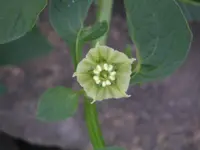
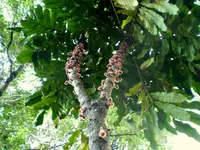
dotted hawthorn Care (Crataegus punctata)

dotted hawthorn

About dotted hawthorn

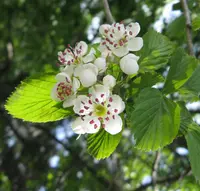
Dotted hawthorn, Crataegus punctata, is a hardy deciduous shrub or small tree known for its white spring blossoms and bright red fruits dotted with pale specks. It usually develops a dense, rounded crown with thorny branches that provide strong structure and shelter for wildlife.

This species is native to eastern North America, where it grows in open woods, hedgerows, and well-drained slopes. It adapts well to a range of soils, though it prefers sun and moderate moisture.

Once established, dotted hawthorn is relatively low-maintenance but needs space for its thorns and mature size. Understanding how to care for dotted hawthorn starts with choosing a sunny, well-drained site and allowing good air flow around the canopy.

Main Plant Requirements

Care Difficulty

Easy Care

Light Preference

Full Sun

Water Requirements

Moderate Water

Temperature Preference

Cold Hardy

Hardiness Zone

4–7

Soil Texture

Loamy, Sandy, Clay

Soil pH

Acidic (5.5–6.5), Slightly acidic (6.5–7.0)

Soil Drainage

Moist but well-drained

Fertilization

Minimal (feed rarely)

Get Personalized Care Plan

Scan your plant to receive care tips personalized for your specific plant

Available on iOS and Android

How to Care for the dotted hawthorn

This species grows best in open, bright conditions that mimic a sunny woodland edge.

  • Provide 6–8 hours of direct sun daily; morning sun with light afternoon shade helps reduce leaf scorch in hot summers.
  • The tree tolerates light partial shade, but flowering and fruiting of dotted hawthorn decline if daily sun drops below about 4–5 hours.
  • In regions with intense summer sun, use nearby taller trees or structures to cast filtered afternoon light and reduce heat stress on foliage.

Crataegus punctata prefers evenly moist but not saturated soil once established outdoors.

  • Allow the top 3–5 cm of soil to dry before watering; the soil below should feel slightly moist but never soggy when checked by hand or a simple probe.
  • During the first 1–2 growing seasons, monitor rainfall and irrigate deeply after dry spells, then reduce watering as the root system matures and becomes more drought-tolerant.
  • Watch for yellowing, soft leaves or persistent wet soil as signs of overwatering, and for dull, folding leaves and dry, cracked soil as signs of underwatering.

This hardy species thrives in climates with cold winters and moderate summers.

  • Active growth is strongest around 60–75°F (16–24°C), with good performance in typical spring and early summer conditions in temperate regions.
  • Established trees tolerate winter lows near -20°F (-29°C), and brief dips lower, making them suitable for many cold-winter areas.
  • In hot spells above 90°F (32°C), doted hawthorn benefits from mulched soil and some afternoon shade to limit root stress and canopy heat load.

This species is adapted to outdoor conditions and does not have special humidity requirements.

Crataegus punctata thrives in moderately fertile, well-structured mineral soils with reliable drainage.

  • Use a loamy or sandy-loam soil with moderate organic matter to support root development without becoming waterlogged.
  • Aim for a slightly acidic to neutral pH around 6.0–7.0, adjusting with elemental sulfur or lime if tests show strong deviation.
  • In heavy clay, incorporate coarse sand and well-rotted compost into the top 20–30 cm to improve aeration and drainage.
  • Avoid compacted, permanently wet, or peat-heavy media that stay saturated and increase risk of root decline.

This hawthorn can be grown in containers for the short to medium term, but it is naturally better suited to open ground.

  • Choose a deep, heavy container that resists wind tipping and allows a sturdy root system to anchor the tree.
  • Select a potting mix that drains faster than garden soil yet still holds some moisture, such as loam with coarse sand and bark fines.
  • Position the container where runoff cannot pool around the base, since confined roots are more sensitive to prolonged saturation.

Native dotted hawthorn grows well in average soil and needs only modest fertilization in cultivation.

  • Apply a light layer of compost or well-rotted manure around the root zone in early spring to boost soil organic matter.
  • Use a balanced slow-release fertilizer (around 10-10-10) once in spring for young or nutrient-poor-site trees.
  • Avoid mid- to late-summer feeding to prevent soft growth; do not fertilize during winter dormancy.
  • Reduce strength by using about half the label rate, especially on established trees in reasonably fertile soil.

Crataegus punctata responds well to light, targeted pruning that maintains structure and health.

  • Carry out main pruning in late winter or very early spring before new growth starts.
  • Remove dead, diseased, crossing, or inward-growing branches first to improve airflow and reduce disease risk.
  • Thin crowded shoots to open the canopy and maintain a balanced, rounded tree shape.
  • Use clean, sharp bypass pruners or a pruning saw, making small angled cuts just outside the branch collar.

This hawthorn is usually field-grown or planted directly in the landscape, so care focuses on timely transplanting rather than frequent repotting.

  • Transplant young trees in late fall or early spring when soil is workable and the plant is dormant.
  • Look for signs such as roots circling the pot, poor drainage, or slowed growth in container plants before shifting to a larger size.
  • Move up only 1 pot size, loosen circling roots gently, and keep the original soil level at the same depth in the new hole or container.
  • Water thoroughly after transplanting, then maintain even moisture and a light mulch layer to limit root stress and encourage quick establishment.

Crataegus punctata is usually propagated from seed or by grafting, which requires patience and careful handling.

  • Collect ripe berries in fall, clean off pulp, and stratify seeds in moist medium at 34–41°F for 3–6 months.
  • Sow stratified seeds in a well-drained, sandy mix and keep evenly moist; germination may be slow and staggered.
  • Use semi-hardwood cuttings in midsummer with rooting hormone, high humidity, and bottom heat to improve rooting chances.
  • Grafting onto compatible hawthorn rootstocks in late winter is common in nurseries to control vigor and uniformity.

This hawthorn is cold hardy and generally needs minimal winter care once established in the landscape.

  • In cold regions, apply a 5–8 cm mulch layer around the root zone in late fall, keeping it a few cm away from the trunk.
  • Young or newly planted trees benefit from trunk guards or wraps to reduce sunscald and rodent damage.
  • For container-grown plants in very cold areas, move pots into an unheated garage or sheltered spot to prevent root freezing.

Care Tips

Wind-firm training

During the first 3–4 years, leave a low, evenly spaced scaffold of 3–5 main branches and lightly head back long, whippy shoots so the tree develops a compact, wind-resistant crown that is less likely to split in storms.

Trunk borer monitoring

From late spring to midsummer, inspect the lower trunk for sawdust-like frass and small ooze spots, then promptly cut out and destroy any infested twigs or branches to limit spread of borers and other wood-boring insects.

Scab and rust hygiene

In autumn, rake and remove fallen leaves and mummified fruits from under the canopy to reduce overwintering spores of apple scab and rust fungi, which are common on dotted hawthorn in humid regions.

Understory competition control

Keep a 60–90 cm grass-free mulch ring around the base, topped up annually, to reduce root competition and mechanical damage from lawn equipment while still keeping mulch pulled 5–8 cm back from the trunk.

Wildlife fruit management

If heavy fruit drop attracts unwanted wildlife near walkways or patios, net selected branches or thin developing fruit clusters in early summer so most fruit forms higher in the canopy and away from high-traffic areas while still supporting birds.

Common Pests and Diseases

Hawthorn leaf spot

This disease causes small purple to brown spots on leaves that may merge, leading to yellowing and early leaf drop, especially in humid weather.

Solution

Prune to improve air circulation, rake and remove fallen leaves promptly, and avoid overhead watering; in recurrent or severe cases, an appropriate fungicide labeled for hawthorn leaf spots can be applied in spring as new foliage emerges, following local guidelines.

Cedar-hawthorn rust

This disease produces bright orange to rust-colored spots on leaves and may cause deformed fruit, often appearing when hawthorn grows near junipers that host the alternate life stage of the fungus.

Solution

Remove and destroy heavily infected leaves and fruit, increase spacing and airflow, and avoid planting hawthorn close to junipers; in areas with a history of rust, preventive fungicide sprays in early spring can reduce infection levels.

Fire blight

This disease causes sudden blackening and wilting of blossoms and young shoots, which often look scorched and may form a characteristic shepherd’s crook at the tip.

Solution

Prune 20–30 cm below visible symptoms during dry weather, sterilizing pruning tools between cuts, and remove all infected material from the site; avoid high‑nitrogen fertilization that promotes soft, susceptible growth and consult local extension advice for any antibiotic or copper-based spray programs if the disease is common in the area.

Hawthorn leaf miner

These insects tunnel within leaves, creating winding, pale blotches that can make foliage look scorched and reduce vigor when infestations are heavy.

Solution

Prune and dispose of infested leaves before adults emerge in late spring to reduce future generations, and encourage natural predators by maintaining plant diversity nearby; in persistent severe cases, timing a systemic insecticide to coincide with adult egg‑laying can provide control if used according to label directions.

Aphids

These insects cluster on young shoots and leaf undersides, sucking sap and causing distorted growth, sticky honeydew, and sometimes sooty mold on hawthorn foliage.

Solution

Spray colonies off with a firm stream of water, prune and discard heavily infested shoot tips, and use insecticidal soap or horticultural oil on remaining clusters; supporting beneficial insects such as lady beetles and lacewings helps keep aphid populations low and simplifies Crataegus punctata care overall.

Interesting Facts

Distinctively dotted fruit

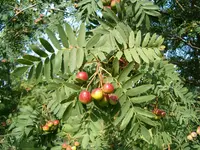
The small red pomes of this species are covered with pale raised dots (lenticels), which give the fruit a speckled appearance that helps distinguish it from many other hawthorns.

Thorny wildlife refuge

Its dense branching and stout thorns create effective nesting and shelter sites for small birds, which gain protection from predators among the spines.

Native to eastern North America

This hawthorn is naturally found from parts of eastern Canada down through the northeastern and midwestern United States, where it typically grows in open woods, thickets, and along field edges.

FAQs about dotted hawthorn

This species is very attractive to pollinators. The spring flowers provide nectar and pollen for bees, flies, and some beetles, while the fruit supports birds and small mammals later in the season, increasing garden biodiversity.

Grow Healthy Plants with Botan Care

Keep your plants happy and healthy with plant identification, disease detection, and easy care guidance.

Botan plant care app — identify plants on mobile

Explore More Plants