Sturdy Support System
Install a robust trellis, wires, or pergola before planting and loosely tie new shoots with soft ties so the vine can climb securely without stems snapping in wind or under flower weight.

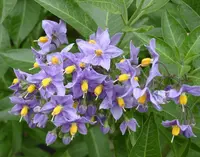
Chilean potato vine, Solanum crispum, is a fast-growing, woody climber grown for its clusters of star-shaped purple-blue flowers with yellow centers. It typically scrambles over fences, walls, or trellises, forming a dense, leafy screen in mild climates.
This species is native to Chile and Peru, where it grows in relatively mild, frost-free areas. In gardens, it is valued for its long flowering season and vigorous habit, which makes it rewarding but in need of regular pruning to keep it in bounds.
It prefers a sunny, sheltered spot with moist, well-drained soil, and benefits from support to climb. Understanding how to care for Chilean Potato Vine helps gardeners manage its strong growth and encourage reliable flowering.

Care Difficulty
Moderate Care

Light Preference
Full Sun

Water Requirements
Moderate Water

Temperature Preference
Cool Climate

Hardiness Zone
7–10

Soil Texture
Loamy, Sandy, Organic-rich

Soil pH
Acidic (5.5–6.5), Slightly acidic (6.5–7.0)

Soil Drainage
Moist but well-drained

Fertilization
Light (every 4–6 weeks)
Scan your plant to receive care tips personalized for your specific plant
Available on iOS and Android
This vigorous climber thrives in bright, direct light for strong flowering and dense growth.
This plant prefers consistently moist but not saturated soil, with brief drying between waterings.
This climber grows best in mild, frost-free or only lightly frosty climates.
This vine handles a wide humidity range but prefers moderate outdoor air moisture.
Solanum crispum grows best in loose, moisture-retentive yet free-draining soil.
This species can be grown successfully in containers when given enough root space and stability.
Solanum crispum benefits from light, consistent feeding during the main growing season.
Pruning helps maintain size, structure, and flowering performance in Solanum crispum.
This vine is most often grown in the ground, so focus on good transplanting rather than frequent repotting.
Solanum crispum is commonly propagated from cuttings and sometimes from seed.
Mature plants are fairly cold hardy in mild to moderate climates but benefit from some winter preparation.

Plant Health Check
Not sure what's wrong with your plant? Check your plant's health inside the app.
This climbing shrub is native to Chile and Peru, where it grows in scrub and forest margins in relatively cool, moist conditions rather than hot, dry habitats often associated with other nightshades.
Its violet-blue, star-shaped flowers closely resemble miniature potato blossoms, reflecting its close relationship within the nightshade family Solanaceae, which also includes tomato, potato, and eggplant.
After flowering, it produces small yellowish to whitish berries that are ornamental but considered poisonous if eaten, a trait shared with many ornamental Solanum species.

In mild coastal climates, this species can be semi-evergreen or nearly evergreen, retaining foliage through winter and forming long-lived, woody frameworks that can be trained over walls, arches, or pergolas for many years.
Poor flowering is usually linked to insufficient light, heavy pruning at the wrong time, or excess nitrogen fertilizer. Focus on balanced feeding, avoid cutting new growth in late spring, and ensure strong sun exposure for reliable blooms.
Keep your plants happy and healthy with plant identification, disease detection, and easy care guidance.