Indian Birthwort Care (Aristolochia acuminata)

Also known as: Dutchman's Pipe
Indian Birthwort

About Indian Birthwort

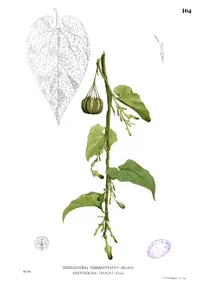
Indian birthwort, Aristolochia acuminata, is a woody, twining vine known for its unusual pipe-shaped flowers and lush green foliage. It tends to climb over nearby supports, forming a dense cover when conditions are suitable.

This species occurs naturally in tropical and subtropical regions of Asia and northern Australia, often in forest edges and thickets. It is moderately challenging to grow, since it prefers warm, frost-free climates and consistent moisture.

The plant does best in bright, filtered light and well-drained, humus-rich soil. Gardeners who want to learn how to care for Indian Birthwort should focus on stable warmth and protection from strong, drying winds.

Main Plant Requirements

Care Difficulty

Moderate Care

Light Preference

Partial Shade

Water Requirements

Regular Water

Temperature Preference

Tropical / Frost Sensitive

Hardiness Zone

10–12

Soil Texture

Loamy, Sandy, Organic-rich

Soil pH

Acidic (5.5–6.5), Slightly acidic (6.5–7.0)

Soil Drainage

Moist but well-drained

Fertilization

Light (every 4–6 weeks)

Get Personalized Care Plan

Scan your plant to receive care tips personalized for your specific plant

Available on iOS and Android

How to Care for the Indian Birthwort

This tropical vine prefers bright, indirect light with some protection from harsh midday sun.

  • Provide 3–5 hours of gentle morning sun with dappled or filtered light for the rest of the day, especially in warm climates.
  • It tolerates partial shade, but dense shade leads to weak, elongated growth and fewer flowers on Indian Birthwort.
  • In hot summers, shield from intense afternoon sun to prevent leaf scorch, and in cooler seasons allow a bit more direct light to support active growth.

This vine prefers evenly moist, well-drained soil without long dry or waterlogged periods.

  • Water when the top 2–4 cm of soil feel dry, allowing moisture to penetrate 15–20 cm deep, then let excess drain completely.
  • In warm growing seasons, expect to water more often; in cooler or rainy periods, extend intervals to avoid stagnant, saturated soil around Aristolochia acuminata roots.
  • Watch leaves for cues: limp, dull, or curling edges suggest underwatering, while yellowing lower leaves and persistent wet soil indicate overwatering or poor drainage.

This species grows best in consistently warm, frost-free conditions.

  • Aim for 70–85°F (21–29°C) during active growth; it continues to grow, though more slowly, around 65°F (18°C).
  • Avoid temperatures below 50°F (10°C); brief dips to 45°F (7°C) may be tolerated, but frost can kill young shoots and damage mature stems.
  • In hot regions, it tolerates short periods near 95°F (35°C) if soil moisture is stable and roots are mulched to reduce heat and evaporation stress.

This twining vine prefers moderately humid air but tolerates typical indoor levels if not too dry.

  • Aim for 50–70% humidity; brief dips lower are tolerated if watering is consistent.
  • Crisp leaf edges, stalled growth, and buds dropping indicate air that is too dry.
  • Raise humidity with a nearby humidifier, grouped plants, or a wide pebble tray under Indian Birthwort without letting the pot sit in water.

Aristolochia acuminata grows best in loose, moisture-retentive but freely draining soil.

  • Use a loamy mix with high organic matter, such as 2 parts compost or leaf mold, 1 part garden loam, and 1 part coarse material.
  • Incorporate perlite, pumice, or coarse sand to keep the mix airy and prevent waterlogging around the roots.
  • Target a slightly acidic to neutral pH around 6.0–7.0, avoiding strongly alkaline or saline substrates that can limit nutrient uptake.
  • Avoid heavy clay, compacted ground, or pots that stay soggy, which encourages root rot and weak vine growth.

This species adapts well to container culture when the pot supports its vigorous climbing habit.

  • Choose a deep, wide container so the root system can anchor the vine and balance the top-heavy growth on supports.
  • Select a heavier material such as ceramic or clay to reduce tipping risk once the plant is on a trellis or arbor.
  • Position the container so a sturdy trellis or railing can be fixed directly to the pot or immediately behind it for secure climbing support.

This tropical climber benefits from light, steady feeding during active growth but does not need heavy fertilization.

  • Use a balanced liquid fertilizer (around 10-10-10) at 1/2 strength every 4–6 weeks in spring and summer for Indian Birthwort in containers.
  • On outdoor plants, apply a thin layer of mature compost around the root zone once each spring.
  • Avoid high-nitrogen lawn fertilizers near the vine to prevent weak, overly leafy growth with fewer flowers.
  • Stop feeding in fall and winter so the plant can rest and avoid soft, cold-sensitive growth.

Thoughtful pruning keeps Aristolochia acuminata manageable, encourages flowering wood, and maintains safe support coverage.

  • Best time is late winter or early spring before strong new growth begins.
  • Remove dead, damaged, or rubbing stems first, then thin out the most crowded vines to improve air flow.
  • Shorten overly long shoots to maintain the desired size and shape on trellises or fences.
  • Use clean, sharp bypass pruners and make cuts just above a healthy bud or side shoot.

This vigorous vine is usually grown in the ground but can be managed in large containers with occasional repotting or careful transplanting.

  • Check containers every 2–3 years; repot when roots circle the pot, growth slows, or watering frequency increases.
  • Aim to transplant or repot in early spring, choosing a pot only 1–2 sizes larger with drainage holes.
  • Handle the root ball gently, loosening only the outer circling roots to reduce stress.
  • Water thoroughly after moving and keep in bright, indirect light for 7–10 days while the plant re-establishes.

Aristolochia acuminata is commonly propagated from seeds or semi-ripe cuttings under warm, humid conditions.

  • Sow fresh seeds in spring in a warm (70–77°F), bright spot, using a sterile, well-drained seed mix.
  • Lightly cover seeds, keep evenly moist, and allow several weeks for germination.
  • Take semi-ripe stem cuttings in late spring or early summer with 2–3 nodes each.
  • Dip cut ends in rooting hormone, place in a moist, airy medium, and enclose in high humidity until rooted.

This species prefers frost-free or very mild climates and needs protection in regions with cold winters.

  • In-ground plants in marginal climates benefit from 5–8 cm of organic mulch over the root zone in late fall.
  • Expect top growth to die back with light frost; new shoots may resprout from the base if roots stay above freezing.
  • Move container plants indoors or into a greenhouse before temperatures drop below 40°F, giving bright, cool conditions.
  • Water sparingly in winter, keeping the soil slightly moist but never saturated to prevent root rot.

Care Tips

Provide sturdy support

Install a robust trellis, wire mesh, or fence before planting so the vine can attach early and develop evenly spaced, well-supported stems as it gains weight over time.

Guide young stems

As new shoots appear, loosely tie or clip them to the support using soft ties, redirecting any wandering stems so the vine covers the structure uniformly and avoids tangling on nearby plants.

Manage aggressive spread

Inspect the plant several times each growing season and cut back or remove stems that invade trees, gutters, or other plants to keep growth contained and maintain airflow.

Monitor host butterflies

In regions where pipevine swallowtail or related butterflies use this vine as a host, expect some leaf loss from caterpillars and balance aesthetic pruning with leaving enough foliage for wildlife.

Prevent root disturbance

Avoid frequent digging or planting right at the vine’s base, and apply a light mulch layer instead, as stable, undisturbed roots help when growing Indian Birthwort for long-term coverage.

Common Pests and Diseases

Aristolochia swallowtail caterpillars

These insects are larvae of swallowtail butterflies that specialize on Aristolochia species and can defoliate vines rapidly. Symptoms include chewed leaf edges, missing sections, and clusters of fleshy caterpillars on young growth.

Solution

Hand-pick caterpillars and relocate them away from the plant, focusing on tender shoots and the underside of leaves, or protect key vines with fine insect netting during peak egg-laying periods. Encourage natural predators such as birds and parasitic wasps by avoiding broad-spectrum insecticides and maintaining nearby habitat plants, accepting a moderate level of leaf loss as part of growing Indian Birthwort.

Leafminers

These insects create pale, winding tunnels inside the leaves as larvae feed between the leaf surfaces. Symptoms include serpentine trails, blotchy patches, and premature yellowing of affected foliage.

Solution

Prune and dispose of leaves showing fresh mines to remove larvae before they mature, and avoid leaving pruned material on the ground. For ongoing problems, use yellow sticky traps to monitor adult flies and apply a spinosad-based spray to the foliage in the evening, targeting young larvae while protecting pollinators.

Spider mites

These pests thrive in hot, dry conditions and suck sap from the undersides of leaves. Symptoms include fine stippling, dull or bronzed foliage, and delicate webbing between stems and leaves.

Solution

Rinse vines thoroughly with a strong but gentle stream of water, paying attention to leaf undersides, and repeat every few days to disrupt the population. If needed, follow with horticultural oil or insecticidal soap, applied in the early morning or late afternoon, and increase humidity and airflow to make conditions less favorable for mites.

Anthracnose leaf spots

This disease is caused by several fungi that infect thin, soft leaves of Aristolochia species in warm, wet weather. Symptoms include small water-soaked spots that enlarge into tan or dark lesions, often along leaf veins or edges, sometimes leading to distorted or dropped leaves.

Solution

Remove and discard affected leaves as soon as symptoms appear and avoid overhead watering that keeps foliage wet for long periods. Improve spacing and airflow, and in humid climates protect new growth with a copper-based or chlorothalonil fungicide at the start of the rainy season, following label directions closely.

Powdery mildew

This disease appears in crowded or shaded plantings with poor air movement. Symptoms include white, powdery patches on upper leaf surfaces that can lead to yellowing, leaf distortion, and reduced vigor if severe.

Solution

Thin dense growth to improve light and airflow around the vine and promptly remove heavily infected leaves. When conditions favor spread, apply a sulfur-based or potassium bicarbonate fungicide to both leaf surfaces at the first sign of infection, and avoid high-nitrogen fertilizers that stimulate overly soft, susceptible growth.

Interesting Facts

Specialized fly pollination

The flowers produce a faint scent and trap small flies temporarily inside the tubular perianth, using downward-pointing hairs, then release them dusted with pollen once the hairs wilt.

Larval host for birdwings

In parts of South and Southeast Asia, its leaves serve as a food plant for caterpillars of large birdwing butterflies such as Troides helena, supporting their life cycle in forest edges and secondary growth.

Hooked vine growth

This woody climber uses slender, twining stems and small hooks at leaf bases to anchor itself onto nearby shrubs and trees, allowing it to reach better light in lowland tropical forests.

Botan icon

Did you know?

The plant accumulates aristolochic acids in its tissues, which make the leaves unpalatable or toxic to many herbivores, yet some specialized butterfly larvae have evolved to tolerate and even sequester these compounds for their own defense.

FAQs about Indian Birthwort

Lack of flowers often comes from insufficient maturity, low light, or stress from pruning at the wrong time. Flowers form on new growth. Avoid heavy pruning in early spring and keep the vine consistently supported and healthy.

Grow Healthy Plants with Botan Care

Keep your plants happy and healthy with plant identification, disease detection, and easy care guidance.


Botan plant care app — identify plants on mobile

Explore More Plants