Deep root establishment
For young plants, water less often but deeply enough that moisture penetrates at least 30–40 cm to encourage a strong taproot that will better tolerate short dry spells later in life.

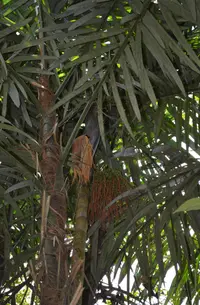
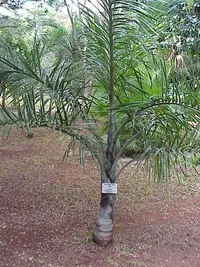
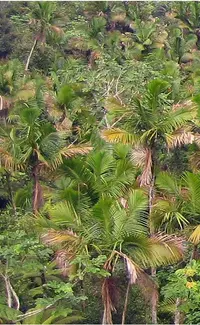
Oenocarpus bacaba is a tall, clustering palm tree native to the Amazon rainforest and other humid lowland regions of northern South America. It is mainly grown for its dark purple, oil-rich fruits and for its ornamental value in large tropical gardens and agroforestry systems. The crown carries many long, feather-like fronds, giving it a graceful, arching silhouette when mature. This species prefers warm, consistently moist conditions and deep, well-drained soil, and it does not tolerate frost or prolonged drought. For hobby growers, it is considered a challenging species outside true tropical climates, so it is important to understand how to care for Oenocarpus bacaba before planting it.

Care Difficulty
Hard Care

Light Preference
Partial Shade

Water Requirements
Keep Soil Moist

Temperature Preference
Tropical / Frost Sensitive

Hardiness Zone
11–12

Soil Texture
Sandy, Loamy, Organic-rich

Soil pH
Acidic (5.5–6.5), Slightly acidic (6.5–7.0)

Soil Drainage
Moist but well-drained

Fertilization
Minimal (feed rarely)
Scan your plant to receive care tips personalized for your specific plant
Available on iOS and Android
This palm prefers bright, warm, tropical light conditions similar to its native rainforest edges.
This species favors consistently moist but not waterlogged soil in warm climates.
This palm thrives in stable, warm tropical to subtropical temperatures without frost exposure.
This palm prefers consistently high humidity to mimic its rainforest origin.
This species needs deep, moist, well-aerated soil that drains efficiently but never turns waterlogged.
This tall palm is only moderately suitable for container growing and usually for juvenile stages or short-term display.
This palm benefits from moderate feeding to support steady growth in cultivation.
This species needs minimal structural pruning, mainly to remove unhealthy or spent fronds.
This palm is usually field-grown, so focus on careful transplanting rather than frequent repotting.
This species is mainly propagated from seeds, which require warmth and patience to germinate.
This tropical palm is frost-sensitive and needs protection in climates with cool winters.

Plant Health Check
Not sure what's wrong with your plant? Check your plant's health inside the app.
The bacaba palm produces small dark-purple fruits whose pulp is rich in polyphenols and anthocyanins, compounds known for their strong antioxidant activity and widely studied in food science.
In parts of the Brazilian Amazon, the fruit pulp is traditionally processed into a thick, nourishing beverage similar in use to açaí, and serves as an important seasonal energy and fat source for local communities.
Its fruiting clusters provide an important food resource for birds, primates, and other mammals in lowland Amazon forests, and these animals in turn help disperse the seeds over long distances, supporting forest regeneration.

Studies of traditional Amazonian agroforestry systems show that this palm is often deliberately maintained or encouraged in fallows and homegardens, where it functions as a multipurpose species providing fruit, oil-rich seeds, and construction-quality palm hearts within the same plant.
Growth is moderate for a large palm. In favorable tropical conditions, it may add roughly 30–60 cm of trunk per year once established, but early growth from seedling to juvenile stage is noticeably slower.
Keep your plants happy and healthy with plant identification, disease detection, and easy care guidance.