Thorn‑aware placement
Site plants at least 1–1.5 m from high‑traffic paths and play areas, and use long sleeves and sturdy gloves when working around the dense spines to avoid injury and accidental stem breakage.

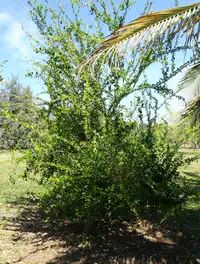
Koshum, Dovyalis abyssinica, is an evergreen shrub or small tree valued for its dense foliage and small, acidic fruits. It typically has a bushy, branching habit with fine, often thorny stems and small green leaves.
This species is native to East African highlands, where it grows in woodland edges, hedgerows, and cultivated fields. It is generally hardy and tolerant of pruning, which makes it useful as a hedge or windbreak.
Its toughness and moderate growth rate make it reasonably straightforward to grow if its basic needs are met. To care for koshum, provide sun to light shade, moderately moist but well-drained soil, and protection from severe frost.

Care Difficulty
Moderate Care

Light Preference
Full Sun

Water Requirements
Moderate Water

Temperature Preference
Warm Climate

Hardiness Zone
10–12

Soil Texture
Sandy, Loamy, Organic-rich

Soil pH
Acidic (5.5–6.5), Slightly acidic (6.5–7.0)

Soil Drainage
Well-drained

Fertilization
Minimal (feed rarely)
Scan your plant to receive care tips personalized for your specific plant
Available on iOS and Android
This shrub fruits best in full sun but tolerates some light shade, especially in hotter regions.
Dovyalis abyssinica prefers evenly moist, well‑drained soil rather than constant wetness or drought.
This species performs best in warm, frost‑free climates with only modest temperature swings.
This species tolerates a wide humidity range but grows best with moderate, stable air moisture.
Dovyalis abyssinica prefers a well-aerated, free-draining mineral-rich substrate that does not stay wet.
This species can be grown in containers if the pot is chosen and managed for strong roots and stable growth.
This drought-tolerant fruit tree benefits from modest feeding but often manages on poor soils once established.
Dovyalis abyssinica responds well to light structural pruning to keep it safe, productive, and accessible.
This species is usually grown in the ground, with transplanting more common than long-term container culture.
New Dovyalis abyssinica plants are most often raised from seeds or semi-hardwood cuttings.
This plant has moderate frost tolerance but benefits from simple winter precautions in colder regions.

Plant Health Check
Not sure what's wrong with your plant? Check your plant's health inside the app.
This species is an evergreen, multi-stemmed shrub or small tree armed with sharp axillary spines, which help protect its fruits from browsing animals in its native East African habitats.
It naturally occurs in moist montane forests and forest edges, often between mid- to high elevations in Ethiopia and neighboring regions, where it contributes to understory structure and hedgerow thickets.
The plant produces small orange to reddish, sour fruits with multiple seeds that are eaten by local people and a range of birds and mammals, aiding in seed dispersal across fragmented forest landscapes.

This species is frequently planted as a living fence in parts of East Africa because its dense, spiny growth habit forms an effective natural barrier that can also provide edible fruits and wildlife habitat.
This shrub is generally evergreen in frost-free climates, holding foliage year-round, but may behave semi-evergreen or briefly deciduous in cooler or drought-prone areas. Leaf retention depends strongly on temperature, water availability, and overall plant health.
Keep your plants happy and healthy with plant identification, disease detection, and easy care guidance.