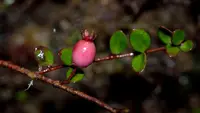
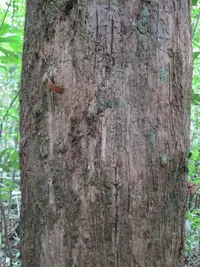
Alder-leaved Whitebeam Care (Alniaria alnifolia)

Alder-leaved Whitebeam

About Alder-leaved Whitebeam

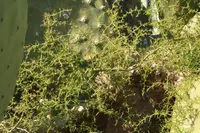
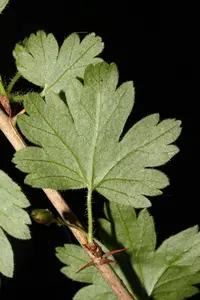
Alder-leaved whitebeam, Alniaria alnifolia, is a small deciduous tree or large shrub valued for its neat form and seasonal interest. It typically has rounded, serrated leaves with a pale underside, giving the canopy a soft, two-toned look in the wind.

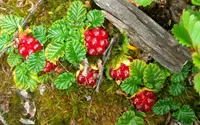
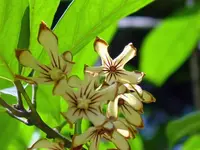
In spring it carries clusters of white flowers, followed by small reddish fruits that attract birds. The species is native to parts of Europe and western Asia, where it grows in woodlands, rocky slopes, and open hillsides.

Its moderate growth rate, good cold tolerance, and general toughness make it relatively straightforward for gardeners who want to care for Alder-leaved Whitebeam. It prefers a sunny to lightly shaded position with reasonably well-drained soil.

Main Plant Requirements

Care Difficulty

Easy Care

Light Preference

Full Sun

Water Requirements

Moderate Water

Temperature Preference

Cold Hardy

Hardiness Zone

3–7

Soil Texture

Loamy, Sandy, Clay

Soil pH

Acidic (5.5–6.5), Slightly acidic (6.5–7.0)

Soil Drainage

Moist but well-drained

Fertilization

Minimal (feed rarely)

Get Personalized Care Plan

Scan your plant to receive care tips personalized for your specific plant

Available on iOS and Android

How to Care for the Alder-leaved Whitebeam

This hardy small tree prefers bright, open conditions but will also handle light shade.

  • Provide 6–8 hours of direct sun daily; in hotter regions, prioritize morning sun with light afternoon shade to reduce leaf scorch.
  • Young trees benefit from some dappled or filtered light during the first 2–3 summers while roots establish.
  • In dense shade, Alder-leaved Whitebeam develops thinner foliage, fewer flowers, and a sparser crown, so avoid planting under deep overstory canopies.

This species prefers evenly moist but not saturated soil, especially while establishing.

  • In the first 2–3 years after planting, water when the top 5–7 cm of soil feels dry, applying a slow deep soak rather than light surface sprinkling.
  • Once established, Alniaria alnifolia usually manages on natural rainfall, but in dry periods with no rain for 10–14 days, check soil and water if it is dry below 5 cm.
  • Watch for stress signs: yellowing soft leaves and constant wet soil suggest overwatering or poor drainage; crisp browning leaf edges indicate drought stress.

This cold-hardy tree suits temperate climates with cool to cold winters.

  • Optimal growth occurs around 55–75°F (13–24°C), typical of spring and early summer in many temperate regions.
  • Mature trees tolerate winter lows near -20°F (-29°C) when fully dormant, provided soil drains well and roots are not waterlogged in freezing periods.
  • In summer, healthy trees handle brief heat up to about 90°F (32°C); during hot, dry spells, extra water and mulch help reduce heat and drought stress.

Humidity is not a major factor for Alniaria alnifolia, which adapts well to typical outdoor conditions in temperate regions.

Alniaria alnifolia prefers stable, moderately moist soil that drains freely yet retains some organic matter.

  • Use a loamy or sandy-loam structure with 30–50% organic matter from compost or well-rotted leaf mold.
  • Ensure drainage is moderate to fast; avoid sites that stay waterlogged or frozen-wet in winter.
  • Aim for slightly acidic to neutral pH, roughly 5.5–7.0, as strongly alkaline soil can reduce nutrient uptake.
  • Improve heavy clay by incorporating coarse sand or fine gravel plus compost to increase aeration and percolation.

This species can be grown in large containers for several years, though it ultimately does best in the ground.

  • Choose a tall, heavy container to prevent tipping as the woody canopy becomes larger and more wind-exposed.
  • Select a potting mix that combines tree/shrub compost with 20–30% pine bark or grit to keep the root zone well-aerated.
  • Position the container where wind exposure is reduced, since raised root systems dry more quickly and the plant is less anchored.

This hardy native tree usually grows well in average soil and needs only light feeding in cultivated settings.

  • Apply a balanced slow-release fertilizer (e.g., 10-10-10) once in early spring for established Alder-leaved Whitebeam in poor or depleted soils.
  • Use a thin layer of compost around the root zone instead of frequent granular feeding, keeping it away from the trunk.
  • During active growth, avoid overfeeding; use products at 1/2 label strength if using liquid fertilizer.
  • Do not fertilize in late fall or winter, to prevent soft growth that is vulnerable to cold damage.

Alniaria alnifolia benefits from light structural pruning to maintain a healthy, open crown.

  • Carry out main pruning in late winter to very early spring, before bud break, in dry weather.
  • Remove dead, diseased, crossing, or storm-damaged branches first, cutting back to sound wood or the branch collar.
  • Thin congested interior shoots to improve light penetration and airflow, which supports better flowering and fruiting.
  • Use clean, sharp bypass pruners or a pruning saw, making smooth cuts to reduce infection risk.

This species is usually grown in the ground, so care focuses on correct transplanting rather than frequent repotting.

  • Transplant young trees in early spring or early fall, when soil is moist and temperatures are mild.
  • Look for signs such as circling roots in nursery containers or slow, stunted growth indicating the need for a larger planting space.
  • Dig a wide planting hole, gently tease out circling roots, and set the root flare level with the soil surface.
  • Water thoroughly after planting, mulch 5–8 cm deep around the root zone, and keep soil evenly moist during the first 1–2 growing seasons to limit stress.

Alniaria alnifolia is most often propagated by seed, which needs specific conditions for good germination.

  • Collect ripe berries in late summer to early fall, clean off pulp, and sow seeds in a free-draining seed mix.
  • Provide cold stratification by keeping moist seeds at 34–41°F for about 90–120 days to break dormancy.
  • Place trays in bright, indirect light at cool to moderate temperatures once stratification ends, keeping the medium just moist.
  • Heel or semi-hardwood cuttings are possible but root slowly; use rooting hormone and a well-aerated medium with high humidity.

This is a cold-hardy, deciduous tree that usually needs minimal winter care once established in the landscape.

  • Mature plants tolerate typical winter frost in many temperate regions, especially in well-drained soil.
  • Apply a 5–8 cm mulch layer over the root zone in late fall, leaving a gap around the trunk to reduce rot risk.
  • For young or container-grown trees in colder zones, wrap the container or move it to a sheltered, unheated but frost-moderated area.

Care Tips

Formative framework pruning

During the first 3–5 years, select 3–5 well-spaced main branches and remove competing, crossing, or very low shoots in late winter to build a strong, open framework that resists storm damage and improves airflow.

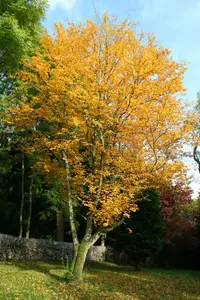
Managing root suckers

Inspect the base and surrounding soil annually and cut root suckers cleanly at their origin with sharp pruners, rather than just mowing them, to prevent an unwanted thicket and keep energy focused on the main tree.

Mulch for shallow roots

Apply a 5–8 cm ring of bark or woodchip mulch over the root zone, keeping it 5–10 cm away from the trunk, to buffer soil temperature, retain moisture, and protect this shallow-rooted species from mower and string trimmer damage.

Encouraging fruiting

For reliable fruit set, plant at least 2 genetically different individuals within 10–15 m, avoid heavy nitrogen feeding, and keep the canopy moderately open so pollinating insects can access the flowers easily.

Fire blight hygiene

In areas where fire blight occurs on rosaceous trees, inspect shoots after flowering and prune out any wilted or blackened tips 20–30 cm into healthy wood, disinfecting tools between cuts, as part of responsible Alniaria alnifolia care.

Common Pests and Diseases

Pear and cherry slug

This pest is the sawfly larva that skeletonizes leaves, leaving only the veins and giving foliage a scorched appearance. Symptoms include slimy, dark green to black larvae feeding on upper leaf surfaces in summer.

Solution

Prune out and destroy heavily infested shoots and rinse foliage with a strong jet of water to dislodge larvae. For persistent problems, use horticultural soap or spinosad sprayed directly on the larvae in the evening, and encourage birds and predatory insects by maintaining plant diversity nearby.

Aphids

These insects cluster on young shoots and leaf undersides, sucking sap and causing leaf curl, distortion, and sticky honeydew that can lead to sooty mold. This pest is most noticeable on tender spring growth and flower clusters.

Solution

Spray affected shoots with a firm stream of water to knock aphids off, then use insecticidal soap or neem oil to coat new growth and leaf undersides. Removing heavily infested shoot tips and avoiding excessive nitrogen fertilization helps reduce recurring outbreaks when growing Alder-leaved Whitebeam.

Fire blight

This disease causes sudden blackening and shriveling of blossoms and young shoots, which often bend into a characteristic shepherd’s crook. Symptoms include leaves that appear scorched but remain attached to the branch.

Solution

Promptly prune out infected shoots at least 20–25 cm below the last visible symptom, disinfecting pruning tools between each cut with 70% alcohol or a 10% bleach solution. Avoid heavy late-spring fertilization and overhead watering, and select resistant cultivars or rootstocks where fire blight is common locally.

Rust

This disease produces orange to rust-colored spots on leaves and sometimes small raised pustules on the undersides, which can lead to early leaf drop. Symptoms include scattered lesions that may merge on heavily infected foliage.

Solution

Collect and discard fallen leaves in autumn to reduce overwintering spores and improve airflow by thinning crowded branches. If rust recurs severely, apply a labeled copper or sulfur fungicide at bud break and repeat as directed, focusing on protecting young expanding leaves.

Leaf spot

This disease shows as small brown or purple spots on leaves that may enlarge and cause yellowing and premature leaf drop, especially in humid weather. Symptoms include scattered lesions that are more pronounced on lower, shaded branches.

Solution

Remove and dispose of infected leaves from the tree and ground, and thin inner branches to increase light and air movement. In sites with repeated issues, use a preventive fungicide spray (such as chlorothalonil or copper) at leaf emergence and follow label intervals during extended wet periods.

Interesting Facts

North American origin

This species is native to northeastern North America, where it typically grows on rocky slopes and open woodlands rather than in dense forest, showing a natural preference for well-drained, often calcareous soils.

Distinctive alder-like leaves

The leaves resemble those of alders, with a broadly ovate shape and shallow lobing near the tip, which led to its common name alder-leaved whitebeam even though it belongs to the rose family, not the birch family.

Frost-hardy whitebeam

This shrub or small tree tolerates cold climates and is adapted to areas with long, cold winters, making it one of the hardier whitebeams used in ornamental plantings in cool temperate regions.

FAQs about Alder-leaved Whitebeam

The small red fruits are generally considered edible when fully ripe, though flavor is mild and somewhat mealy. They are more often used cooked in jellies or preserves. As with any wild-style fruit, introduce them to diets gradually.

Grow Healthy Plants with Botan Care

Keep your plants happy and healthy with plant identification, disease detection, and easy care guidance.

Botan plant care app — identify plants on mobile

Explore More Plants