Grey orchid Care (Vanda tessellata)

Also known as: Checkered Vanda
Grey orchid

About Grey orchid

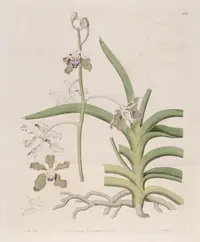
The grey orchid, Vanda tessellata, is a tropical epiphytic orchid that usually grows attached to trees rather than in soil. It forms long, upright stems with strap-like leaves and showy, patterned flowers in shades of grey, cream, yellow, or brown.

This species occurs naturally in parts of South Asia, often in warm, bright, and humid habitats. It prefers strong light, good air movement, and frequent moisture around the roots, which influences how to care for Grey orchid in home conditions.

The plant can be moderately challenging for beginners, mainly due to its need for stable warmth, high humidity, and careful watering to avoid root stress.

Main Plant Requirements

Care Difficulty

Hard Care

Light Preference

Partial Sun

Water Requirements

Regular Water

Temperature Preference

Tropical / Frost Sensitive

Hardiness Zone

11–12

Soil Texture

Sandy, Organic-rich

Soil pH

Acidic (5.5–6.5)

Soil Drainage

Well-drained

Fertilization

Heavy (weekly, diluted)

Get Personalized Care Plan

Scan your plant to receive care tips personalized for your specific plant

Available on iOS and Android

How to Care for the Grey orchid

This sun-loving orchid thrives in strong, filtered light with careful protection from harsh extremes.

  • Provide 6–8 hours of very bright, filtered light daily; morning sun with light shade after 11 a.m. suits Grey orchid well.
  • Outdoors, use 40–60% shade cloth or dappled tree cover; indoors, place near an east or bright south window with sheer curtains.
  • Yellowing or scorched patches indicate too much direct sun, while dark, floppy leaves and poor flowering signal insufficient light.

This orchid prefers frequent moisture on its roots but also needs abundant air flow and fast drainage.

  • Water when exposed roots turn silvery-white and feel dry, often once daily in hot weather and every 2–3 days in mild conditions.
  • Use thorough drenching, then let water drain completely; avoid standing water around roots to reduce rot risk for Vanda tessellata.
  • Crisp, wrinkled roots and limp leaves indicate underwatering, while blackened root tips, a sour smell, or mushy roots point to overwatering.

This species thrives in consistently warm conditions and reacts poorly to cold snaps or extreme heat.

  • Aim for 70–85°F (21–29°C) by day and 60–70°F (16–21°C) at night for strong growth and flowering.
  • Protect from temperatures below 55°F (13°C); prolonged exposure near 40–45°F (4–7°C) can cause chilling injury and leaf drop.
  • In hot spells above 90°F (32°C), increase shade and humidity and boost air movement to prevent heat stress and leaf scorch.

This orchid needs sustained high humidity to grow and flower well.

  • Aim for 60–80% humidity, as Vanda tessellata has exposed aerial roots that lose moisture quickly.
  • Tolerates brief dips to 40–50%, but prolonged dry air causes shriveling roots, limp leaves, and stalled growth.
  • Increase humidity with daily misting of roots, nearby water trays, or a humidifier, ensuring strong air movement to prevent rot in Grey orchid.

Vanda tessellata is usually grown without conventional soil and instead needs a very open, fast-draining support medium.

  • Use a coarse, airy mix such as large bark chunks, charcoal, and a little coconut husk or perlite to anchor roots while keeping plenty of air spaces.
  • Ensure water drains away within minutes; roots should dry quickly between waterings to prevent suffocation and fungal problems.
  • Maintain a slightly acidic to neutral root zone (around pH 5.5–7) by avoiding heavy garden soil, peat-only mixes, or limestone-rich materials.
  • For basket culture, line slatted containers lightly with chunky bark, leaving roots partly exposed so they can photosynthesize and ventilate well.

This species is well suited to container and basket culture when roots receive ample air and quick drainage.

  • Use a heavy hanging basket or weighted pot to counter the plant’s top-heavy growth and reduce swinging in wind or drafts.
  • Choose a slatted wooden or plastic basket with wide gaps so aerial roots can grow out freely and dry rapidly after watering.
  • Select a narrow, deep container only for young plants, allowing vertical root run while preventing stagnant water pockets at the base.

Vanda tessellata benefits from frequent, light feeding during active growth to sustain flowering.

  • Use a balanced water-soluble orchid fertilizer (around 20-20-20) diluted to 1/4–1/2 strength for Grey orchid indoor care.
  • Apply fertilizer every 1–2 weeks in spring and summer, alternating with plain water to flush salts.
  • Reduce feeding to 1× month or stop in winter or any cool, low-light resting period.
  • Avoid slow-release pellets buried in media; instead, apply solution over bare roots or in a soak, then let them dry.

Pruning Vanda tessellata focuses on hygiene and maintaining a manageable plant size.

  • Best timing is after a flowering cycle, during warm, active growth so wounds heal quickly.
  • Remove dead, yellow, diseased, or broken leaves and completely spent flower spikes with sterilized scissors or pruners.
  • Cut only back to healthy green tissue, keeping the main stem and actively growing root tips intact.
  • Light thinning of crowded, non-productive spikes can redirect energy into stronger flowering and neater shape.

Vanda tessellata is usually grown in baskets or open containers and dislikes frequent disturbance.

  • Repot or move only when roots are severely crowded, circling tightly, or growth slows despite good care.
  • Plan any transplanting for late spring to early summer, once temperatures are stable and growth is active.
  • Typical frequency is every 2–4 years, mainly to refresh the basket or hardware and improve air flow around roots.
  • Soak roots in lukewarm water before shifting, handle them gently, and secure the plant firmly to reduce movement and stress.

Propagation of Vanda tessellata is mainly done by stem keikis and division, not by casual cuttings.

  • Best season is late spring to summer, when warmth and high humidity support rooting.
  • Separate keikis only when they carry several roots at least 5–7 cm long.
  • Use a sterile blade to detach offsets, dust cuts with fungicidal powder if available, and mount in a well-ventilated basket.
  • Provide bright, filtered light, 70–80% humidity, and frequent misting until new roots and leaves show steady growth.

Vanda tessellata is frost sensitive and needs warm, protected conditions through winter in most climates.

  • Move basket-grown plants indoors or into a heated greenhouse before temperatures drop below 55°F.
  • Maintain 60–70°F days, with only a slight night drop, and provide bright, filtered light.
  • Reduce watering slightly but do not allow roots to stay bone-dry for long periods.
  • In mild climates, ensure plants grown outdoors are under cover, shielded from cold winds and radiational chill.

Care Tips

Secure basket roots

Use soft ties or orchid clips to anchor new aerial roots to the basket or mount so they harden in a stable position and support the plant’s long-term structure without breaking.

Rotate for even spikes

Turn the plant 90° every 1–2 weeks so light reaches all sides evenly, which encourages straighter flower spikes and more balanced growth rather than a lopsided plant.

Use moving air

Position a small oscillating fan to create gentle, constant air movement around the leaves and roots to reduce fungal issues and help thick roots dry properly between water applications.

Quick‑drain dunking

Instead of misting, briefly submerge the root mass in a clean container of water, then let it drain completely, which hydrates thick roots efficiently while avoiding constantly wet crowns and leaf axils.

Seasonal light shielding

In midsummer, add a layer of 40–60% shade cloth only during the brightest weeks to prevent leaf scorch while still keeping enough high light for growing Grey orchid vigorously.

Common Pests and Diseases

Spider mites

This pest thrives on Vanda foliage in warm, dry air and can be a serious problem on plants grown in bright, high-heat conditions. Symptoms include fine webbing, dull or stippled leaves, and gradual yellowing, especially on the undersides of leaves.

Solution

Increase humidity and airflow, then rinse leaves thoroughly with a firm, lukewarm water spray, focusing on leaf undersides. For persistent infestations, use insecticidal soap or a horticultural oil labeled for orchids every 7–10 days, treating all nearby plants and reducing heat stress by avoiding hot, stagnant spots.

Scale insects

These insects attach to leaves, stems, and flower spikes as small brown, tan, or whitish bumps and feed on sap, weakening the plant. Symptoms include sticky honeydew, sooty mold growth on leaves, and reduced flowering.

Solution

Physically remove scale with a cotton swab dipped in isopropyl alcohol, working along leaves and stems, then rinse the plant. Follow up with repeated applications of horticultural oil or insecticidal soap at 7–10 day intervals, and improve Vanda tessellata care instructions by providing strong air movement so new crawlers are less likely to settle.

Mealybugs

This pest hides in leaf axils, on roots, and around flower spikes as white, cottony clusters that suck sap. Symptoms include distorted new growth, sticky residue, and gradual decline in vigor.

Solution

Isolate the plant, then wipe or brush off visible mealybugs with alcohol-dampened cotton and rinse the plant thoroughly, including exposed roots. Repeat inspections weekly and apply insecticidal soap or a systemic insecticide suitable for orchids if the infestation persists, paying special attention to tight crevices and basket or mount junctions.

Bacterial brown spot

This disease causes water-soaked, translucent patches on Vanda leaves that quickly turn brown to black and may emit a foul odor. Symptoms include rapidly expanding lesions that can spread along the leaf and into the crown if moisture stays on the plant.

Solution

Immediately remove affected leaf sections with a sterile blade and keep cuts dry, then improve air movement and avoid water standing on leaves or in the crown, especially overnight. Disinfect tools, keep foliage dry during cooler times of day, and if allowed by the label, apply a copper-based bactericide carefully, protecting roots from direct contact.

Anthracnose leaf spot

This disease appears as small, sunken brown or black spots on leaves, often with yellow halos, which may merge into larger dead areas under warm, humid conditions. Symptoms include slow but progressive spotting on older leaves, especially on plants grown with poor air circulation.

Solution

Remove and discard affected leaves or leaf sections, then increase spacing and use a fan to keep air moving around plants. Water in the morning so foliage dries quickly, avoid overhead misting onto leaves, and if the problem recurs, apply a fungicide labeled for anthracnose on orchids following label directions and rotating products if used more than once.

Interesting Facts

Distinct tessellated petals

The flowers show a characteristic checkered or tessellated pattern on the petals and sepals, created by differential pigment distribution in the epidermal cells, which helps distinguish this species from many other vanda orchids.

Fragrant monsoon bloomer

In its native range in the Indian subcontinent, this species typically flowers around the monsoon season, producing strongly fragrant yellow to brownish flowers that attract insect pollinators during humid, warm weather.

Adapted to exposed habitats

Vanda tessellata often grows as an epiphyte on exposed tree trunks or as a lithophyte on rocks in dry, open forests, using thick, succulent leaves and robust aerial roots to cope with high light and intermittent water availability.

Botan icon

Did you know?

Historical records from the 18th and 19th centuries show that this species was one of the early Asian orchids described and traded to Europe, where its distinctive tessellated flowers helped fuel the period of intense orchid collecting often called the orchid craze.

FAQs about Grey orchid

Lack of flowering usually comes from insufficient light, too little temperature difference between day and night, or nutrient imbalance. Older, crowded roots in a tight basket can also reduce spikes. Adjust these factors before expecting blooms again.

Grow Healthy Plants with Botan Care

Keep your plants happy and healthy with plant identification, disease detection, and easy care guidance.

Botan plant care app — identify plants on mobile

Explore More Plants