Early structural training
In the first 2–3 years, select 3–4 strong scaffold branches and remove low, crowded side shoots to form an open, vase-like canopy that supports heavier fruit loads later without branch breakage.

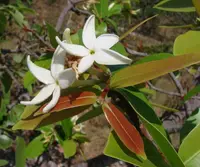
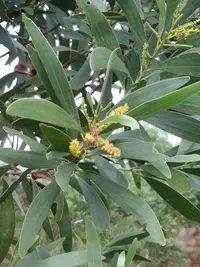
Mangabeira (Hancornia speciosa) is a small to medium tropical fruit tree from South America, especially common in Brazil’s cerrado savannas. It has a rounded crown, simple leathery leaves, and produces fragrant white flowers followed by sweet, latex-rich fruits.
In its native range it grows in full sun and well-drained, often sandy or poor soils, showing good drought tolerance once established. These traits make it relatively adaptable but it still needs warmth and protection from frost.
For gardeners, it is most practical in warm climates or protected structures, where basic knowledge of how to care for mangabeira helps support steady growth and fruiting.

Care Difficulty
Moderate Care

Light Preference
Full Sun

Water Requirements
Moderate Water

Temperature Preference
Tropical / Frost Sensitive

Hardiness Zone
10–12

Soil Texture
Sandy, Loamy, Organic-rich

Soil pH
Acidic (5.5–6.5), Slightly acidic (6.5–7.0)

Soil Drainage
Well-drained

Fertilization
Minimal (feed rarely)
Scan your plant to receive care tips personalized for your specific plant
Available on iOS and Android
Hancornia speciosa prefers strong light typical of subtropical fruit trees and responds best to consistent sun exposure.
Hancornia speciosa benefits from steady soil moisture without prolonged saturation.
This species thrives in consistently warm, frost-free climates typical of tropical to subtropical regions.
This species benefits from moderately humid air but adapts to many home conditions.
Hancornia speciosa prefers deep, well‑structured soil that drains freely yet holds steady moisture.
This species can be grown in containers if the pot allows enough depth and stable drainage.
Hancornia speciosa benefits from moderate, balanced nutrition during active growth but does not need heavy feeding.
Pruning Hancornia speciosa is mainly used to maintain structure, remove weak growth, and support healthy fruiting wood.
Hancornia speciosa is usually grown in the ground, so transplanting young trees at the right stage is more important than frequent repotting.
Hancornia speciosa is most often propagated from seed, with vegetative methods used less frequently for home growers.
This tropical species has low frost tolerance and needs protection in regions with cool or freezing winters.

Plant Health Check
Not sure what's wrong with your plant? Check your plant's health inside the app.
This species is a small fruit tree from the Brazilian cerrado that produces both edible fruits and a milky latex used locally as a natural rubber substitute.
Its leaves and latex can accumulate relatively high levels of calcium, which has attracted research interest in plant mineral nutrition and potential food use of its fruit pulp.
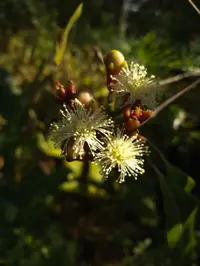
The tubular, pale flowers open mainly in the evening and are adapted to pollination by nocturnal sphingid moths, which are attracted by their scent and nectar.

The species shows notable drought tolerance and is considered a key native fruit tree for ecological restoration projects in degraded cerrado areas, helping reestablish both plant and animal communities that rely on its fruits.
The fruit is edible, with sweet aromatic pulp used fresh, in juices, and in sweets. The latex-rich bark and leaves appear in traditional medicine, but only the ripe fruit is recommended for regular home consumption.
Keep your plants happy and healthy with plant identification, disease detection, and easy care guidance.