Use clean substrate
Prepare a pasteurized or properly composted wood-rich substrate and handle it with clean tools and containers to reduce competing molds that easily overtake this fungus.

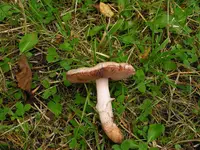
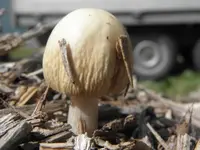
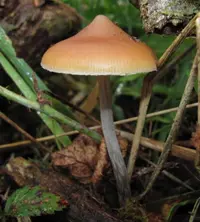
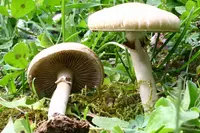
Scaly wood mushroom (Agaricus langei) is a wood-inhabiting fungus rather than a leafy plant, forming fleshy caps on decaying conifer or mixed woodland debris. The cap surface typically shows brown scales on a paler background, with a sturdy stalk and crowded gills underneath.
This species occurs mainly in temperate regions of Europe, often appearing in small groups on rotting wood or woody litter. It can be challenging to cultivate at home because it relies on specific wood-based substrates and stable, cool, moist conditions. Those wanting to learn how to care for Scaly Wood Mushroom should understand its need for shaded locations, consistent moisture, and clean, low-contamination growing conditions.

Care Difficulty
Hard Care

Light Preference
Partial Shade

Water Requirements
Keep Soil Moist

Temperature Preference
Cool Climate

Hardiness Zone
Unknown

Soil Texture
Organic-rich, Loamy

Soil pH
Acidic (5.5–6.5)

Soil Drainage
Moist but well-drained

Fertilization
Minimal (feed rarely)
Scan your plant to receive care tips personalized for your specific plant
Available on iOS and Android
This woodland mushroom prefers cool, shaded conditions that mimic a forest floor.
Moist, not waterlogged, substrate is essential for healthy development of Agaricus langei.
Stable, cool temperatures support reliable mycelium growth and fruiting.
This mushroom requires consistently high humidity to fruit reliably in cultivation.
Agaricus langei needs a loose, organic-rich substrate rather than typical garden soil.
This species can be grown in shallow containers or trays under controlled conditions.
In natural woodland settings Agaricus langei gains nutrients from decaying organic matter and usually needs no additional fertilizer.
Agaricus langei is a wild mushroom species and is not managed with pruning in the same way as ornamental or woody plants.
This fungus is typically left in situ, but basic transplanting principles help when moving inoculated substrate.
Reproduction of Agaricus langei is mainly handled by spores and mycelial spread rather than conventional garden propagation.
This woodland mushroom is naturally cold hardy in its native range and generally needs no special winter care when left outdoors.

Plant Health Check
Not sure what's wrong with your plant? Check your plant's health inside the app.
When the flesh or gills are bruised, this species often develops a characteristic dull purple or vinaceous discoloration, which helps distinguish it from several similar white Agaricus species that yellow instead.
This mushroom typically fruits on soil in mixed or coniferous woodland rather than in lawns or pastures, reflecting a preference for forest litter and humus-rich substrates in temperate Europe.
Fresh basidiocarps often have a pleasant almond-like or aniseed odor, caused by aromatic compounds, which is a key field character used by mycologists to separate it from closely related species with phenolic or inky smells.

Agaricus langei was named in honor of the Danish mycologist Jakob Emanuel Lange, whose detailed studies and illustrations of European agarics in the early 20th century significantly advanced the modern understanding and classification of this group.
This species is considered edible by some sources but is easily confused with toxic Agaricus relatives. Identification requires expert knowledge of cap scales, gill color changes, and odor. For safety, avoid consumption unless verified by an experienced mycologist.
Keep your plants happy and healthy with plant identification, disease detection, and easy care guidance.