Staggered sowing
Sow small batches of seed every 2–3 weeks in spring instead of all at once to extend the harvest window for both roots and leaves.

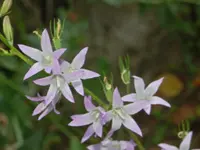
Rampion, Campanula rapunculus, is a cool-season biennial herb grown for its edible roots and leaves as well as its ornamental value. It belongs to the bellflower group and typically forms a low rosette in the first year, then sends up slender, flowering stems with pale violet, bell-shaped blooms in the second year.
This species is native to parts of Europe and western Asia, where it grows in open grasslands, light woodland edges, and cultivated fields. It tends to be relatively easy to grow where winters are cool and soils are loose and well drained.
Gardeners who care for rampion appreciate its tolerance of poor to moderately fertile soils, provided the site has good light and does not stay waterlogged for long periods.

Care Difficulty
Moderate Care

Light Preference
Full Sun

Water Requirements
Moderate Water

Temperature Preference
Cool Climate

Hardiness Zone
4–8

Soil Texture
Sandy, Loamy, Organic-rich

Soil pH
Acidic (5.5–6.5), Slightly acidic (6.5–7.0)

Soil Drainage
Well-drained

Fertilization
Minimal (feed rarely)
Scan your plant to receive care tips personalized for your specific plant
Available on iOS and Android
This biennial prefers full sun but tolerates light shade, especially in warmer regions.
This species prefers consistent soil moisture without staying saturated.
This cool‑season biennial tolerates a wide outdoor temperature range but dislikes extreme heat and severe frost without protection.
This species grows well in average home humidity but reacts if air is extremely dry.
This plant prefers loose, well-aerated mineral soil that drains quickly yet holds moderate moisture.
This species is suitable for container growing when the pot is chosen to match its deep taproot and upright growth.
Campanula rapunculus benefits from modest feeding to support leafy growth and flowering in poor soils.
Pruning Campanula rapunculus is simple and mainly focused on tidying and encouraging continued flowering.
Campanula rapunculus is more often grown in beds than pots, so focus on careful transplanting rather than frequent repotting.
Campanula rapunculus is most commonly propagated from seed, which maintains natural growth traits.
Campanula rapunculus is generally hardy in temperate climates and needs only minimal winter attention in the ground.

Plant Health Check
Not sure what's wrong with your plant? Check your plant's health inside the app.
This species was historically cultivated in Europe for its fleshy white taproot and tender leaves, both eaten raw or cooked as a vegetable similar to mild radish or spinach.
Before the wider adoption of crops like carrot, this bellflower was a common root vegetable in medieval and early modern European kitchen gardens, especially in Germany and surrounding regions.
It typically grows as a biennial, forming a leaf rosette in the first year and flowering in the second, and it strongly prefers open, sunny habitats such as field margins, light soils, and fallows rather than shaded woodland.

The plant is widely believed to be the original "rapunzel" of German folk tradition, inspiring the name of the fairy-tale character whose story starts with her parents craving its roots and leaves from a neighboring garden.
Yes. The fleshy taproot is edible and historically used like a mild radish or parsnip, eaten raw or cooked. Young leaves can be added to salads or cooked greens. Avoid harvesting from polluted or treated areas.
Keep your plants happy and healthy with plant identification, disease detection, and easy care guidance.