Sheep's Burr Care (Acaena echinata)

Sheep's Burr

About Sheep's Burr

Sheep's burr, Acaena echinata, is a low, spreading perennial groundcover known for its fine, fern-like foliage and distinctive prickly burrs that follow small, inconspicuous flowers. It typically forms dense mats that can soften the edges of paths, rock gardens, or open sunny spaces.

This species is native to Australia, where it grows in open, often dry grasslands and light scrub, which explains its good drought tolerance once established. It adapts to poor, well-drained soils and can cope with moderate foot traffic, but may spread aggressively in ideal conditions.

Sheep's burr prefers sun to light shade and modest moisture, and its toughness and resilience make it relatively simple for gardeners who want to learn how to care for Sheep's Burr.

Main Plant Requirements

Care Difficulty

Moderate Care

Light Preference

Full Sun

Water Requirements

Moderate Water

Temperature Preference

Cool Climate

Hardiness Zone

8–10

Soil Texture

Sandy, Loamy, Rocky

Soil pH

Slightly acidic (6.5–7.0), Neutral (7.0)

Soil Drainage

Well-drained

Fertilization

Minimal (feed rarely)

Get Personalized Care Plan

Scan your plant to receive care tips personalized for your specific plant

Available on iOS and Android

How to Care for the Sheep's Burr

This mat-forming perennial prefers bright, cool conditions with some protection from harsh midday sun.

  • Provide 4–6 hours of direct morning sun, then light shade or filtered light in the afternoon to prevent leaf scorch on Sheep's Burr.
  • In cooler coastal or northern climates, it can tolerate full sun all day if soil stays slightly moist and does not dry out completely.
  • In hot summers, shift exposure toward dappled shade, and watch for pale, sparse foliage as a sign of insufficient light or harsh exposure.

This species prefers evenly moist but not saturated soil, with brief dry periods between waterings once established.

  • Outdoors in free-draining soil, water when the top 2–4 cm feels dry, allowing deeper roots of Acaena echinata to remain slightly moist.
  • Reduce watering in cool seasons, especially fall and winter, as growth slows and the soil takes longer to dry.
  • Improve drainage with gravelly or sandy soil; yellow, limp foliage often indicates overwatering, while crisping leaf edges suggest underwatering.

This groundcover is cool-temperate and handles moderate cold better than intense heat when soil moisture is stable.

  • Optimal growth occurs around 55–70°F (13–21°C), especially in spring and early summer with consistent moisture and light sun.
  • It tolerates brief drops to about 15–20°F (-9 to -6°C) once established, though young plants benefit from mulch in hard frost.
  • In hot regions, extended periods above 85°F (29°C) can stress plants; provide afternoon shade and avoid heat-reflecting sites near pavement.

This groundcover tolerates a wide humidity range, so humidity management is rarely critical.

This species prefers lean, well-drained soil that never stays waterlogged.

  • Use a sandy or gritty loam with 20–30% coarse sand or fine gravel to keep the structure open.
  • Incorporate a small amount of compost for nutrients, but avoid heavy, peat-rich mixes that hold persistent moisture.
  • Aim for slightly acidic to neutral pH around 6.0–7.0, which suits most Acaena echinata plants.
  • If soil feels dense or compacts after watering, blend in extra grit or perlite to improve aeration and drainage.

This species adapts well to container growing outdoors, especially in sunny, free-draining setups.

  • Choose a wide, shallow pot to allow lateral spread while preventing deep, soggy soil around the roots.
  • Use a heavy terracotta or stone container if wind exposure is high, as the spreading mat can catch wind and shift lightweight pots.
  • Elevate the pot slightly on feet or bricks so drainage holes stay clear and runoff leaves the container quickly.

Acaena echinata grows well in lean soils and usually needs only light feeding in containers or very poor ground.

  • Use a balanced, slow-release fertilizer or thin layer of compost in early spring for container or nutrient-poor plantings.
  • Apply at low strength, about 1/2 label rate, to avoid lush, weak growth that reduces drought tolerance.
  • Feed once at the start of the growing season; a second light dose in midsummer is enough if growth is pale or stunted.
  • Stop feeding Sheep's Burr in late summer so new growth hardens before cold weather.

Acaena echinata benefits from light, periodic pruning to keep the mat dense and tidy.

  • Best time is late winter or early spring, before strong new growth begins.
  • Shear back spent flower stems and lightly trim straggly runners to maintain a compact, even carpet.
  • Remove dead, damaged, or overly crowded sections with clean hand shears to improve air flow.
  • Light trimming after flowering stimulates fresh foliage and helps prevent the plant from invading nearby areas.

This groundcover is more often transplanted in the garden than repotted, as it forms a spreading mat.

  • Transplant or divide in early spring or early fall, when temperatures are mild and soil is moist.
  • Look for roots circling a pot, slow growth, or a crowded patch lifting from the soil as signs it needs moving or division.
  • Lift clumps with a trowel, keep as much root and attached soil as possible, and replant at the same depth in well-drained ground.
  • Water gently after transplanting and shade from strong sun for a few days to limit transplant shock.

Acaena echinata is commonly propagated by division, runners, or seed when expanding a groundcover area.

  • Divide established clumps in early spring or fall, ensuring each piece has roots and several healthy shoots.
  • Pin down creeping runners into loose, gritty soil; once rooted, cut them from the parent and transplant.
  • Sow fresh seed in trays outdoors in fall or late winter, allowing natural cold to break dormancy.
  • Keep propagation media evenly moist, bright, and well-drained to reduce rot and encourage steady rooting or germination.

This species is generally cold hardy in temperate climates and needs only modest winter care in the ground.

  • In regions with frost, apply a light mulch around the root zone to moderate soil temperature and moisture swings.
  • Avoid heavy, wet mulch directly over the crown to reduce risk of rot.
  • Move container-grown plants to a sheltered, unheated area where soil stays cool but not waterlogged.
  • Water sparingly in winter, keeping soil just slightly moist so roots do not dry out completely.

Care Tips

Control Ground Spread

Edge planting areas with a shallow trench or physical barrier 5–8 cm deep to keep this creeping groundcover from invading lawns or adjacent beds while still allowing good surface runoff.

Encourage Dense Cover

Lightly pinch back or shear new stolon tips in early spring to trigger side shoots, which helps form a thicker, more weed-suppressing mat over time.

Manage Burr Production

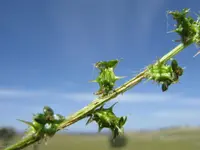
If the spiny seed heads are unwanted around pets or pathways, shear or hand-snip the flowering stems just after bloom so burrs do not fully develop or disperse.

Use Gravel Mulch

Apply a 1–2 cm layer of fine gravel or grit around plants instead of organic mulch to keep foliage dry at the crown, reduce rot risk, and maintain the lean surface conditions this species prefers.

Plan For Renewal

Every 3–4 years, lift and replant the healthiest outer sections of the mat into freshly prepared soil and discard the bare, woody center to keep the planting vigorous when growing Sheep's Burr.

Common Pests and Diseases

Aphids

This pest feeds on young shoots and undersides of leaves, causing distortion, curling, and sticky honeydew that can attract sooty mold. Heavy infestations can weaken mats and slow spreading of the groundcover.

Solution

Rinse colonies off the foliage and stems with a firm stream of water, then spot-treat remaining clusters with insecticidal soap or a ready-to-use neem oil spray, repeating every 5–7 days until under control. Encourage predators such as lady beetles by avoiding broad-spectrum insecticides and reducing excess nitrogen fertilization that promotes very soft growth.

Slugs and snails

These insects and mollusks chew irregular holes in leaves and young stems, often leaving slime trails on and around the plant. Damage is most visible after wet weather or overnight, especially in dense groundcover plantings.

Solution

Hand-pick slugs and snails in the evening, use iron phosphate slug pellets around but not on the foliage, and reduce hiding spots such as dense debris or boards near the planting. Improving drainage and avoiding constant surface wetness also makes the area less favorable for these pests.

Spider mites

This pest appears in hot, dry conditions and causes fine speckling, dull foliage, and very fine webbing on the plant. Symptoms include gradual thinning of leaf coverage and a grayish or dusty look to the mat-forming growth.

Solution

Increase humidity around the planting by occasional overhead rinsing, then wash foliage thoroughly with water to remove mites and webbing. For continued issues, apply insecticidal soap or horticultural oil to both sides of the leaves, repeating every 7–10 days while monitoring closely as part of Acaena echinata plant care.

Leaf spot

This disease causes small brown, purple, or black spots on the leaflets, which can merge into larger blotches under prolonged humidity. Severe cases may lead to premature leaf drop and thinning patches in the groundcover.

Solution

Remove and discard affected foliage to reduce the source of infection, and water at soil level rather than over the top to keep leaves dry. Improve air movement through the planting, and if spotting progresses, use a labeled ornamental foliar fungicide according to directions, focusing on new growth.

Interesting Facts

Hooked burr structure

This species produces spherical flower heads that develop into dense burrs covered with stiff, hooked spines, allowing the fruits to latch onto animal fur and clothing for seed dispersal.

Australian grassland native

It is naturally distributed in dry open habitats and grasslands of southern Australia, where it grows as a low, spreading perennial herb that can form loose ground-covering mats in disturbed sites.

Sheep fleece problem

The clinging burrs are known to tangle in the wool of grazing sheep, which is the origin of the common name sheep’s burr and has made the plant a minor nuisance species in some pastoral areas.

FAQs about Sheep's Burr

This species spreads by creeping stems and self-seeding, forming a dense mat over time. In suitable conditions it can edge into surrounding areas, so use edging, regular trimming, or removal of unwanted seedlings to contain it.

Grow Healthy Plants with Botan Care

Keep your plants happy and healthy with plant identification, disease detection, and easy care guidance.

Botan plant care app — identify plants on mobile

Explore More Plants