Utricularia alpina Care

Utricularia alpina

About Utricularia alpina

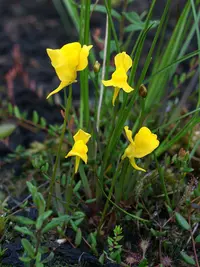
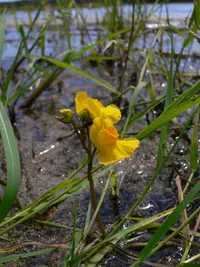
Utricularia alpina is a carnivorous plant from the tropical highlands of the Caribbean and northern South America. It naturally grows as a lithophyte or epiphyte on moist rocks and trees, rather than in typical soil. The plant forms compact rosettes with fleshy leaves and produces distinctive white to pale lavender flowers on slender stalks. Below the surface, tiny bladder traps capture microscopic prey in water-filled pockets, supplying extra nutrients in low-mineral environments. Due to its need for constant moisture, pure water, and airy, nutrient-poor media, it is considered challenging for beginners. Understanding how to care for Utricularia alpina helps keep it stable in indoor collections or specialized terrarium setups.

Main Plant Requirements

Care Difficulty

Hard Care

Light Preference

Bright Indirect Light

Water Requirements

Keep Soil Moist

Temperature Preference

Tropical / Frost Sensitive

Hardiness Zone

Unknown

Soil Texture

Peaty, Organic-rich

Soil pH

Strongly acidic (4.5–5.5)

Soil Drainage

Waterlogged tolerant

Fertilization

Minimal (feed rarely)

Get Personalized Care Plan

Scan your plant to receive care tips personalized for your specific plant

Available on iOS and Android

How to Care for the Utricularia alpina

This highland bladderwort prefers bright, gentle light that mimics a cool, misty mountain environment.

  • Provide 3–5 hours of soft morning sun with bright, filtered light the rest of the day, avoiding harsh midday and afternoon sun.
  • Grow Utricularia alpina in bright shade in summer; use 30–50% shade cloth or dappled canopy light to prevent leaf burn and dehydration.
  • Watch foliage color and growth; pale, elongated leaves indicate too little light, while bronzing or crisp edges suggest excessive direct sun exposure.

Moisture should stay consistently high without waterlogging the delicate, airy substrate.

  • Use low-mineral water and keep the medium evenly moist, never allowing it to dry out more than the very surface 0.5–1 cm.
  • Ensure the mix is very open and fast-draining; standing water around the crown or rhizomes leads to rot and fungus growth.
  • In cooler, darker seasons slightly reduce watering volume but not frequency, and watch for wilting or dull, limp leaves as early signs of underwatering.

Stable, cool to mild temperatures support steady growth and healthy trap formation.

  • Aim for 60–75°F (16–24°C) as the primary range, which suits this highland species and encourages reliable flowering.
  • Protect from frost; sustained exposure below 40°F (4°C) can damage foliage and underground structures, especially in containers.
  • In hot spells above 80°F (27°C), increase shade and air movement, avoid hot, stagnant air, and never let the root zone overheat in direct sun.

This species needs consistently high humidity to form healthy leaves and bladders.

  • Aim for 70–90% humidity; growth slows and traps dry out below about 60%.
  • Dry indoor air causes brown leaf tips, stalled new growth, and fewer or misshapen bladders.
  • Use a closed terrarium, greenhouse case, or humidity dome rather than misting to keep Utricularia alpina evenly humid.

This carnivorous species needs a very airy, nutrient-poor, water-retentive mix rather than standard potting soil.

  • Use a mix of 2 parts live or long-fiber sphagnum moss to 1 part perlite or coarse sand for moisture retention with air spaces.
  • Keep the medium constantly moist but never stagnant; excess standing water encourages rot in underground organs.
  • Maintain slightly acidic conditions around pH 4.5–5.5, which supports nutrient uptake adapted to bog-like habitats.
  • Avoid any fertilizer, compost, bark-based, or peat-free houseplant mixes, which add minerals and can burn the roots and traps.

This species adapts well to container culture when moisture and stability are controlled carefully.

  • Choose a relatively deep pot so the underground stolons have room to spread without compacting the wet medium.
  • Use plastic or glazed ceramic containers, which slow evaporation and help keep the bog-style substrate evenly moist.
  • Place the pot in a watertight tray that allows a shallow water layer, then let it drain down slightly to avoid stagnant conditions.

This species grows in very nutrient-poor conditions, so Utricularia alpina needs only very light feeding under cultivation.

  • Use a highly diluted balanced liquid fertilizer (around 1/8–1/4 strength) formulated for carnivorous or epiphytic plants, never standard-strength houseplant feed.
  • Apply during the active growing season only, about every 4–6 weeks, and flush the pot with pure water between feedings to limit salt buildup.
  • Avoid composts or slow-release pellets, which release too many minerals and can damage the delicate stolons and bladder traps.
  • Stop feeding during cool, low-light winter periods or any semi-dormant phase, maintaining only clean, low-mineral water.

Pruning needs for Utricularia alpina are minimal and focus on hygiene rather than shaping.

  • Trim dead or yellowing leaves and old flower stalks at the base throughout the growing season using small, sharp scissors or fine snips.
  • Remove any rotting, algae-covered, or moldy material on the medium surface to maintain good air flow and reduce fungal problems.
  • Thin out dense, tangled stolons only if they smother new growth, which helps light reach younger leaves and encourages flowering.
  • Disinfect tools before and after use with alcohol to limit transmission of fungal spores or bacteria between plants.

Container-grown plants of this species benefit from infrequent but careful repotting to refresh the low-mineral medium and protect sensitive roots.

  • Plan to repot Utricularia alpina every 1–2 years, or when growth slows, the medium compacts, or water drains poorly.
  • Choose late winter to early spring, just before strong new growth, so the plant has an entire season to recover and re-establish.
  • Move carefully, keeping the loose root mass, stolons, and attached medium intact; avoid teasing or washing roots, which causes shock.
  • Place into a slightly larger pot with fresh, airy carnivorous-plant mix, water gently with pure water, and keep humidity high for 1–2 weeks to reduce stress.

Most growers propagate this species by careful division rather than seed, which demands very stable, specialized conditions.

  • Divide Utricularia alpina in late winter or early spring when repotting, separating sections that have healthy stolons, leaves, and tuberous bases if present.
  • Use a fine, low-mineral carnivorous-plant mix, keep it evenly moist with pure water, and maintain high humidity and bright, filtered light.
  • Handle divisions gently and plant them shallowly; avoid compressing the medium so new stolons can spread and form traps.
  • Seed propagation requires very clean, low-nutrient media, stable warmth, and consistent moisture, and is generally reserved for experienced growers.

This tropical species is frost-sensitive and needs mild, stable winter conditions, especially in container culture.

  • Maintain indoor or greenhouse temperatures around 60–75°F in winter and avoid exposure to frost or near-freezing drafts.
  • Move outdoor containers indoors before night temperatures drop below 50°F, using bright, indirect light and high humidity.
  • Do not mulch heavily over the crown; instead, focus on stable temperatures, clean water, and slightly reduced watering in low light.

Care Tips

Refresh Water Trays

Use shallow trays with 0.5–1 cm of low-mineral water and fully empty and refill them every 2–3 days to prevent buildup of algae and bacteria that can damage fine feeder stolons.

Divide Tuber Clumps

Every 1–2 years, gently lift and divide crowded tuber clumps at the start of active growth, replanting each section with at least a few stolons to maintain vigor and reduce rot in the center of the pot.

Use Layered Medium

Create a 2-layer medium with a more open, airy lower zone and a slightly finer upper zone so that stolons can spread easily near the surface while deeper roots stay well aerated.

Check Mineral Load

If growth slows or leaf tips brown despite correct watering, test tap water for total dissolved solids and switch to rainwater, distilled, or RO water below about 50 ppm to avoid mineral stress when growing Utricularia alpina.

Rotate Pots Regularly

Rotate the pot 90° every 1–2 weeks during active growth so flower scapes develop evenly and the plant does not lean or crowd one side of the container.

Common Pests and Diseases

Rhizome crown rot

This disease causes browning and collapse of the thick rhizome and the base of leaves, often starting where the plant sits against constantly soggy, poorly aerated media. Symptoms include a soft, mushy texture, blackened tissue, and a sour smell from the affected areas.

Solution

Remove all affected rhizome and foliage with sterile tools, discard the rotten material, and repot healthy sections into fresh, airy carnivorous-plant mix with good drainage. Reduce watering so the medium stays evenly moist rather than waterlogged, improve air movement around the pot, and keep temperatures in the recommended range for Utricularia alpina care instructions.

Botrytis (gray mold)

This disease appears in cool, humid, low-airflow conditions as gray, fuzzy mold on old flowers, leaf tips, and damaged tissue. Symptoms include soft, water-soaked spots that quickly turn brown and develop a dusting of gray spores.

Solution

Promptly remove all affected tissue and any spent flowers, and dispose of them outside the growing area. Increase air circulation, reduce leaf wetness, space plants so leaves do not touch, and if needed apply a targeted fungicide labeled for Botrytis, keeping it off the potting medium as much as possible for a carnivorous species.

Spider mites

These pests thrive in warm, dry air and feed on the undersides of leaves, causing fine stippling, a dull appearance, and in severe cases webbing on delicate foliage. This pest can stunt growth and cause yellowing or distortion of new leaves.

Solution

Shower the plant gently with lukewarm water to remove mites and webbing, then increase humidity and avoid hot, dry air, which favors outbreaks. For persistent infestations, use repeated applications of a mild insecticidal soap or neem-based spray on leaf surfaces, avoiding over-spraying the traps and always testing on a small area first.

Fungus gnat larvae

These insects breed in constantly wet media and their larvae can damage fine stolons and new root-like structures, leading to slow decline and weak growth. Symptoms include tiny black flies hovering near the pot surface and reduced vigor despite apparently adequate conditions.

Solution

Allow the top layer of the potting mix to become just slightly less saturated between waterings while still keeping it safely moist, and use yellow sticky traps to catch adult gnats. For heavier infestations, apply a biological control such as Bacillus thuringiensis israelensis (BTi) as a soil drench, following label rates, to target larvae without harming the plant.

Leaf spot fungi

This disease shows as small, round to irregular dark spots on leaves that may enlarge, merge, and cause partial leaf death under persistently wet foliage conditions. Symptoms include spots often with a darker margin and sometimes a yellowish halo around affected tissue.

Solution

Remove and discard leaves with extensive spotting, and avoid overhead watering or long periods of water sitting on the foliage. Improve air circulation, keep humidity high but not stagnant, and if spots continue to spread, consider a gentle, broad-spectrum fungicide suitable for delicate ornamentals, applied lightly and only to the foliage.

Interesting Facts

Epiphytic carnivorous habit

This species often grows as an epiphyte on mossy tree trunks or on humus-filled rock ledges in cloud forests, capturing nutrients with tiny underwater-like bladder traps instead of roots in soil. Its carnivorous lifestyle helps it survive in nutrient-poor, acidic substrates typical of high-altitude tropical forests.

Bladder suction traps

The plant bears microscopic bladder traps on its threadlike stolons that actively pump out water to create negative pressure, then snap open to suck in small prey such as protozoa when trigger hairs are touched. This is one of the fastest movements in plants, occurring in milliseconds.

Large orchid-like flowers

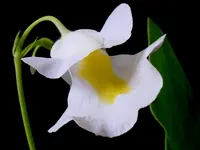
In bloom, it produces relatively large, showy, white to pale-lilac flowers with a prominent spur, which can resemble small orchids. These flowers are held on upright scapes above the foliage, an unusual display for a carnivorous plant and important for attracting pollinators without risking trapping them.

Botan icon

Did you know?

This species is native to high-elevation cloud forests of the Caribbean, especially on islands such as Jamaica and Trinidad, where it grows in cool, misty environments that combine high humidity with intense but filtered mountain light, making its natural habitat quite different from that of most other carnivorous plants.

FAQs about Utricularia alpina

Lack of blooms often comes from insufficient light, coolness, or a weak root system. Provide bright but gentle light, stable warmth, and consistent moisture. Avoid frequent disturbance of the tuber-like rhizomes so flower buds can form.

Grow Healthy Plants with Botan Care

Keep your plants happy and healthy with plant identification, disease detection, and easy care guidance.

Botan plant care app — identify plants on mobile

Explore More Plants