Long-leaved Pyrrosia Care (Pyrrosia longifolia)

Long-leaved Pyrrosia

About Long-leaved Pyrrosia

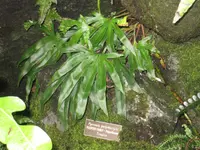
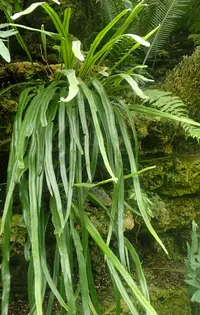
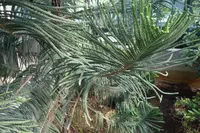
Long-leaved pyrrosia (Pyrrosia longifolia) is an evergreen fern often found growing on trees or rocks as an epiphyte in tropical forests. It forms arching, strap-shaped fronds that create a dense, cascading clump.

This species is native to parts of tropical Asia, where it benefits from warm temperatures, filtered light, and constant air moisture. Its thick, leathery fronds store some water, which makes it more forgiving of short dry spells than many other ferns.

For those learning how to care for Long-leaved Pyrrosia, its main needs are stable warmth, moderate humidity, and a loose, well-drained medium rather than regular potting soil.

Main Plant Requirements

Care Difficulty

Moderate Care

Light Preference

Partial Shade

Water Requirements

Moderate Water

Temperature Preference

Tropical / Frost Sensitive

Hardiness Zone

11–12

Soil Texture

Loamy, Peaty, Organic-rich

Soil pH

Acidic (5.5–6.5), Slightly acidic (6.5–7.0)

Soil Drainage

Moist but well-drained

Fertilization

Light (every 4–6 weeks)

Get Personalized Care Plan

Scan your plant to receive care tips personalized for your specific plant

Available on iOS and Android

How to Care for the Long-leaved Pyrrosia

This epiphytic fern prefers bright, filtered light similar to dappled forest shade.

  • Provide 4–6 hours of bright, indirect light each day, such as under a shade tree or beneath 30–50% shade cloth.
  • Tolerates light early-morning sun but avoid harsh midday and afternoon sun, which can scorch fronds and cause pale, crispy patches on Long-leaved Pyrrosia.
  • In deeper shade, growth becomes sparse and fronds stretch; move gradually to a brighter, filtered position, especially in winter when outdoor light levels drop.

Moist but not waterlogged conditions suit this fern best.

  • Water when the top 2–3 cm of the planting medium feel barely dry, using thorough soaking rather than frequent light splashes.
  • Ensure very sharp drainage; excess water should drain away within a few minutes to prevent rhizome rot in Pyrrosia longifolia.
  • In cooler months reduce watering as growth slows, watching for limp, curling fronds as a sign of underwatering and black, mushy roots or sour smell as signs of overwatering.

This species prefers warm, frost-free conditions throughout the year.

  • Aim for 65–80°F (18–27°C) for steady growth, with slight night drops improving vigor if not sudden or extreme.
  • Protect from cold below 45°F (7°C); brief dips to 40°F (4°C) may be tolerated, but freezing conditions can kill fronds and damage rhizomes.
  • In hot spells above 90°F (32°C), increase shade and airflow and avoid heat-reflective surfaces, as excessive heat stress leads to browning tips and stalled growth.

This epiphytic fern prefers moderately humid air but tolerates typical indoor conditions if not too dry.

  • Aim for 50–70% humidity to keep fronds lush and reduce browning of tips.
  • Plant away from heating vents and strong drafts, which dry fronds and cause crisp edges or curling.
  • Use a pebble tray or group plants to raise local humidity rather than misting heavily, which can promote leaf spotting.

This species needs a loose, airy substrate that mimics its natural epiphytic habitat.

  • Use a mix of roughly 40% fine orchid bark, 30% peat or coco coir, and 30% perlite or pumice for a fibrous, open structure.
  • Ensure very sharp drainage so water runs through quickly and the mix never stays waterlogged around the rhizomes.
  • Aim for slightly acidic to neutral pH, around 5.5–7.0, which suits most epiphytic ferns like Pyrrosia longifolia.
  • Avoid dense, heavy garden soil; add extra bark and perlite whenever the mix feels compacted or stays wet for more than 2–3 days.

This fern is well suited to container growing, including mounted or slatted baskets.

  • Choose a shallow, wide pot or basket that allows rhizomes to spread horizontally rather than forcing deep root growth.
  • Use a slatted or porous container such as a wooden basket or breathable plastic to let excess moisture escape rapidly.
  • Secure the container firmly if hung, as the spreading fronds can create a top-heavy, unbalanced weight over time.

This fern benefits from light feeding but grows acceptably in low-nutrient conditions when organic matter is present.

  • During spring–summer, apply a balanced liquid fertilizer at 1/4–1/2 strength every 4–6 weeks to Long-leaved Pyrrosia.
  • Use a balanced NPK product or organic compost extract suitable for foliage plants.
  • Avoid feeding in late fall and winter, when growth slows, to prevent soft, weak fronds.
  • Flush the potting mix with plain water every few months to limit salt buildup around the roots.

Pyrrosia longifolia needs only light pruning to maintain tidy, healthy fronds.

  • Best timing is late winter or early spring, before active growth resumes.
  • Remove dead, yellowing, diseased, or torn fronds cleanly at the base using sharp, disinfected scissors or pruners.
  • Thin out badly crowded fronds to improve air flow and reduce fungal issues.
  • Limit pruning to damaged material so the natural arching habit and frond length remain intact.

This fern tolerates being slightly root-bound and resents frequent disturbance.

  • Repot every 2–3 years in spring when roots circle the pot, escape drainage holes, or growth slows despite correct care.
  • Choose a shallow, slightly larger container and use a chunky, well-drained epiphytic mix with bark, perlite, and fibrous organic matter.
  • Gently tease and trim only severely circling roots to reduce stress, keeping the root ball largely intact.
  • Water thoroughly after repotting, then keep in bright, shaded, humid conditions for 1–2 weeks to allow recovery.

This species is most reliably multiplied by division rather than from spores for home growers.

  • Divide established clumps in spring when new rhizome tips and fronds start to emerge.
  • Lift the plant, then separate rhizome sections bearing several healthy fronds and active roots using a clean, sharp knife.
  • Plant divisions into a loose, moisture-retentive but free-draining mix and keep humidity high with moderate shade.
  • Maintain evenly moist media, 65–80°F temperatures, and good air movement until new fronds confirm successful establishment.

This fern is frost-sensitive and needs protection in regions with cold winters.

  • In climates below 40°F, grow Pyrrosia longifolia in containers that can be moved indoors or to a greenhouse for winter.
  • Maintain indoor winter temperatures around 55–70°F with bright, indirect light and stable humidity above 40%.
  • Reduce watering slightly in winter, keeping the mix barely moist, and avoid cold drafts or direct heater airflow.

Care Tips

Use mountable slabs

Mount the fern on cork bark, hardwood, or tree fern fiber instead of keeping it in a deep pot to encourage natural creeping rhizomes and better airflow around the roots.

Secure rhizomes gently

When attaching divisions, pin the rhizomes with soft plant ties or biodegradable string rather than burying them, keeping the rhizome surface exposed while the roots anchor into the substrate.

Provide textured anchor

Add a thin layer of long-fiber sphagnum moss between the rhizome and mounting surface to maintain brief moisture while still allowing fast drainage and good oxygen supply.

Seasonal moisture adjustment

Reduce misting and allow longer dry intervals over winter, then resume slightly more frequent watering and misting in spring when new fronds begin to extend.

Routine frond grooming

Trim only dead or badly damaged fronds at the base and lightly brush away dust or debris from healthy fronds to keep the leaf surface clear for efficient photosynthesis while caring for Long-leaved Pyrrosia.

Common Pests and Diseases

Scale insects

This pest attaches firmly to fronds and rhizomes, sucking sap and causing yellowing, speckling, and general decline. Symptoms include sticky honeydew on fronds and sooty mold growth on older infestations.

Solution

Remove heavily infested fronds and gently scrape or wipe scales from remaining tissue with a cotton pad dipped in 70% isopropyl alcohol or insecticidal soap, taking care not to damage the frond surface. Improve air movement, avoid excess nitrogen fertiliser, and repeat treatments every 7–10 days until no new scales appear.

Mealybugs

These insects hide in leaf bases and along rhizomes, appearing as white, cottony masses and causing stunted growth and yellowing. Honeydew production may lead to black sooty mold on nearby surfaces.

Solution

Isolate the plant, then dab visible mealybugs with a cotton swab soaked in 70% isopropyl alcohol and rinse fronds with lukewarm water to dislodge hidden insects. For larger infestations, apply an insecticidal soap or ready-to-use neem oil spray to both sides of the fronds and rhizomes every 7–10 days until no new insects are seen as part of systematic Pyrrosia longifolia care.

Rhizoctonia leaf spot

This disease causes irregular brown lesions on fronds, often starting where water sits on the leaf surface, and can lead to dieback of frond tips. Symptoms include tan to dark-brown patches with slightly sunken or dry centers.

Solution

Remove and discard all affected fronds, then reduce overhead watering and keep foliage dry, especially in cool conditions. Improve spacing and air circulation, water at the base, and if new spots continue to appear, use a fungicide labeled for ornamental ferns according to package directions.

Bacterial blight

This disease produces water-soaked, translucent spots that quickly enlarge and turn brown, sometimes with a yellow halo and soft tissue collapse. Symptoms include rapid spread along the midrib of fronds in warm, humid, poorly ventilated conditions.

Solution

Promptly cut off and discard infected fronds with sterile tools, then reduce humidity around the plant by improving air flow and avoiding misting directly onto fronds. Disinfect cutting tools between plants, keep water off the foliage, and avoid overcrowding to limit spread.

Rhizome rot

Symptoms include blackened, soft rhizomes and fronds that yellow, wilt, or fail to unfurl, often following prolonged waterlogging or poorly drained media. This problem is most frequent when the fern is grown in heavy potting mixes or containers without adequate drainage holes.

Solution

Unpot the plant, cut away all soft, discolored rhizome sections, and replant only firm, healthy pieces in a coarse, fast-draining mix such as fine bark with a small amount of peat and perlite. Adjust watering so the medium dries slightly between waterings, empty saucers after 10–15 minutes, and ensure the pot has open drainage to prevent recurrence.

Interesting Facts

Strap-like sterile fronds

This species produces long, narrow sterile fronds that can hang 60–100 cm or more, forming curtain-like cascades on tree trunks and rock faces in tropical forests.

Dimorphic leaf strategy

It has clearly dimorphic fronds, with separate shorter, fertile leaves carrying the spores on their undersides, an adaptation that helps protect reproductive structures from mechanical damage and excess moisture.

Epiphytic and lithophytic habit

In nature it often grows as an epiphyte on tree bark or as a lithophyte on rocks, anchoring itself with a creeping rhizome and absorbing water and nutrients from rain, organic debris, and humid air rather than from deep soil.

FAQs about Long-leaved Pyrrosia

This species performs best outdoors in mild, humid, frost-free climates, attached to trees, rocks, or mounted substrates. Indoors it can grow steadily if humidity stays high and air circulation is good, but growth is usually slower.

Grow Healthy Plants with Botan Care

Keep your plants happy and healthy with plant identification, disease detection, and easy care guidance.

Botan plant care app — identify plants on mobile

Explore More Plants