Rotate For Symmetry
Rotate the pot 90° every 1–2 weeks so the large lobed leaves develop evenly and the plant does not lean heavily toward the light source.

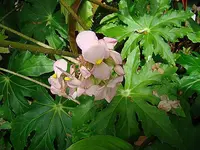
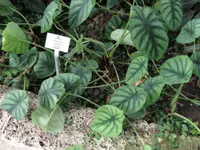
Starleaf begonia (Begonia heracleifolia) is a rhizomatous perennial grown mainly for its dramatic foliage rather than its flowers. It forms a low, spreading clump from thick, creeping stems that store water and nutrients.
Leaves are large, star-shaped, and often deeply lobed, with textured surfaces and contrasting veins that give a bold, architectural look indoors. Native to Mexico and Central America, it typically grows on the forest floor in warm, shaded, and humid habitats.
These origins explain its preference for bright, indirect light, lightly moist but airy soil, and stable, mild temperatures. With attention to humidity and watering, it is reasonably manageable for home growers who want to learn how to care for starleaf begonia.

Care Difficulty
Moderate Care

Light Preference
Bright Indirect Light

Water Requirements
Keep Soil Moist

Temperature Preference
Tropical / Frost Sensitive

Hardiness Zone
10–11

Soil Texture
Loamy, Peaty, Organic-rich

Soil pH
Acidic (5.5–6.5), Slightly acidic (6.5–7.0)

Soil Drainage
Moist but well-drained

Fertilization
Light (every 4–6 weeks)
Scan your plant to receive care tips personalized for your specific plant
Available on iOS and Android
Begonia heracleifolia prefers bright, indirect light that mimics a forest understory.
Begonia heracleifolia prefers evenly moist but not waterlogged soil.
This species prefers consistently warm, frost-free conditions for stable growth.
This species benefits from elevated humidity compared to typical indoor air.
Begonia heracleifolia prefers a loose, airy, organic-rich mix that drains quickly yet retains some moisture.
This species is well suited to container cultivation for controlled moisture and root protection.
Begonia heracleifolia benefits from light, consistent feeding during active growth but is sensitive to excess salts.
Begonia heracleifolia responds well to light pruning that maintains a compact, healthy clump.
This rhizomatous begonia prefers snug pots and only needs repotting when clearly crowded.
This species is commonly multiplied by division and stem or rhizome cuttings.
This tropical begonia is frost tender and needs mild conditions over winter.

Plant Health Check
Not sure what's wrong with your plant? Check your plant's health inside the app.
This species develops large, star-shaped leaves with deeply cut lobes, an adaptation that increases leaf surface for photosynthesis while allowing better air movement around the blade in humid forest understories.
It grows from creeping rhizomes, which are horizontal underground or surface stems that store water and carbohydrates, helping the plant survive short dry periods on forest floors or rocky outcrops.
This species occurs naturally in Mexico, especially in warm, shaded forests and limestone-influenced areas, where it often grows in leaf litter pockets with well-drained but moisture-retentive soils.

Historical records from 19th‑century horticulture show that this species was among the earlier Mexican begonias introduced into European collections, contributing to the popularity of rhizomatous begonias in glasshouse displays.
Brown, crispy edges usually result from low humidity, excess fertilizer salts, or inconsistent moisture. Flush the pot occasionally, keep humidity moderate, avoid letting the mix fully dry, and protect the plant from hot or cold drafts.
Keep your plants happy and healthy with plant identification, disease detection, and easy care guidance.