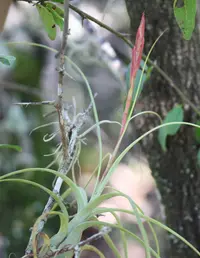
healing croton Care (Croton argyranthemus)

Also known as: Silver Croton
healing croton

About healing croton

Healing croton (Croton argyranthemus) is a tropical shrub known for its narrow, often variegated leaves and compact, bushy growth. It is usually grown as an ornamental foliage plant rather than for flowers. In nature, it occurs in warm, humid regions of Southeast Asia and nearby Pacific islands, where it grows in bright, filtered light at forest edges. The plant tends to be moderately demanding, reacting to drafts, sudden temperature changes, or irregular watering with leaf drop. Understanding how to care for healing croton starts with providing stable warmth, good light, and a freely draining, consistently but lightly moist soil mix.

Main Plant Requirements

Care Difficulty

Moderate Care

Light Preference

Partial Sun

Water Requirements

Moderate Water

Temperature Preference

Tropical / Frost Sensitive

Hardiness Zone

10–12

Soil Texture

Loamy, Sandy, Organic-rich

Soil pH

Acidic (5.5–6.5), Slightly acidic (6.5–7.0)

Soil Drainage

Moist but well-drained

Fertilization

Light (every 4–6 weeks)

Get Personalized Care Plan

Scan your plant to receive care tips personalized for your specific plant

Available on iOS and Android

How to Care for the healing croton

Croton argyranthemus develops best color in bright, indirect light with some gentle direct sun.

  • Provide 4–6 hours of bright, filtered light daily, such as morning sun with light shade or dappled light in the afternoon.
  • Healing croton tolerates light partial shade, but variegation may fade and growth may slow if light stays low for many weeks.
  • Avoid harsh midday summer sun, which can scorch leaves; in winter, move plants closer to brighter windows or lighter outdoor spots.

Croton argyranthemus prefers evenly moist, well-drained soil that never stays soggy.

  • Water when the top 2–3 cm of soil feel dry, allowing excess to drain fully so roots receive air as well as moisture.
  • Reduce watering slightly in cooler months, but do not let the root zone dry out completely for more than 1–2 days.
  • Watch leaves: drooping and crisp edges suggest underwatering, while yellowing, mushy stems, or a sour smell point to overwatering.

This croton thrives in consistently warm, frost-free conditions.

  • Aim for 65–80°F (18–27°C) for steady growth, with only small day–night temperature swings.
  • Protect from cold; leaf damage starts near 50°F (10°C), and the plant can be killed by frost below 32°F (0°C).
  • It tolerates brief heat up to 90–95°F (32–35°C) if humidity and watering are adequate, but avoid hot, drying winds and reflective heat.

This species benefits from moderately high, stable humidity for steady foliage growth.

  • Aim for 50–60% humidity; it tolerates brief dips but prolonged very dry indoor air leads to leaf-edge browning.
  • Watch for crisp tips, curling leaves, and slow growth as signs of low-humidity stress in healing croton.
  • Increase humidity with a nearby humidifier, grouped plants, or a pebble tray, rather than misting leaves directly.

Croton argyranthemus prefers a loose, aerated, well-draining mix that still holds moderate moisture.

  • Use a base of peat- or coco-coir potting mix with 30–40% perlite or pumice to create a lightly loamy, airy structure.
  • Ensure fast drainage so water runs through in seconds; the mix should feel springy, not compact or sticky after watering.
  • Keep pH slightly acidic to neutral, around 6.0–7.0, by avoiding heavy additions of wood ash or strongly alkaline amendments.
  • Avoid dense garden soil, heavy clay, or mixes dominated by unamended compost, which reduce aeration and promote root rot.

This species grows well in containers when the pot supports its vertical, often top-heavy habit.

  • Choose a pot slightly wider than the root ball with more depth than width to anchor upright growth securely.
  • Select a heavy ceramic or clay container to counterbalance the plant’s tall canopy and reduce tipping risk outdoors.
  • Ensure large, unobstructed drainage holes so excess water exits rapidly and does not accumulate around the lower root zone.

This shrub responds well to modest feeding, which supports foliage color and steady growth in healing croton indoor care.

  • Use a balanced liquid fertilizer (around 10-10-10 or 20-20-20) diluted to 1/2 strength for container plants.
  • Feed every 4–6 weeks during the warm growing season when the plant is actively producing new leaves.
  • Apply a slow-release fertilizer or light compost top-dressing in spring for in-ground specimens.
  • Stop or reduce feeding to 1 light application for the entire period in late fall–winter when growth slows.

Pruning Croton argyranthemus helps maintain a compact, leafy shape and removes weak or unhealthy growth.

  • Plan main pruning for late winter to early spring, just before strong new growth begins.
  • Cut out dead, diseased, or storm-damaged stems first, then remove crossing or crowded interior branches.
  • Shorten overly tall or leggy shoots to an outward-facing leaf node to encourage bushier branching.
  • Use clean, sharp hand pruners; make angled cuts and avoid removing more than 25–30% of foliage at one time.

Repotting or transplanting helps this shrub maintain healthy roots and stable top growth.

  • Check for roots circling the pot, pushing through drainage holes, or noticeably slowed growth as signs it needs more space.
  • Plan to repot container plants every 2–3 years in spring, moving up only 1 pot size with a well-draining mix.
  • Water thoroughly 1–2 days before repotting, then gently loosen the root ball and trim only tightly circling roots.
  • After transplanting, keep the plant shaded and evenly moist for 1–2 weeks to limit transplant shock and leaf drop.

New plants are most often raised from stem cuttings, which keep the traits of the parent Croton argyranthemus.

  • Take semi-hardwood tip cuttings in late spring–summer, 8–12 cm long, with 3–4 leaves retained.
  • Allow the cut end to dry briefly, then dip in rooting hormone to improve root formation.
  • Insert cuttings into a sterile, moist, well-draining medium and keep at 70–80°F with bright, indirect light.
  • Cover with a clear dome or plastic bag for high humidity, venting daily, and keep the medium just slightly moist until rooted.

This plant is frost-tender and needs protection in regions with cold winters.

  • Keep outdoor plants only in frost-free climates or grow in containers that can be moved indoors before temperatures drop below 50°F.
  • Indoors, place in bright light away from drafts, and maintain 60–70°F with moderate humidity.
  • For in-ground shrubs in marginal climates, mulch the root zone with 5–8 cm of organic material to reduce temperature swings.

Care Tips

Rotate For Symmetry

Turn the pot 90° every 1–2 weeks so all sides receive similar light, which reduces leaning and keeps the plant’s variegated foliage evenly developed.

Use Sturdy Stakes

Insert a slim, coated stake near the main stem and attach it loosely with soft ties if the plant becomes top-heavy, which helps prevent breakage and keeps the canopy upright in bright indoor locations.

Leaf Cleaning Routine

Wipe leaves gently with a damp, soft cloth every 2–4 weeks to remove dust, improve light capture, and allow earlier detection of pests on the patterned foliage.

Seasonal Pest Checks

Inspect the undersides of leaves and leaf axils with a hand lens every 2–3 weeks, especially in late spring and summer, to catch early signs of spider mites and scale before they spread.

Stress Recovery Strategy

After repotting or transport shock, hold fertilizer, keep the root zone slightly on the drier side, and avoid changing its position for 2–3 weeks to support a stable environment when caring for healing croton.

Common Pests and Diseases

Spider mites

This pest thrives on croton foliage in warm, dry indoor air, causing fine stippling, dulling of leaf color, and webbing on leaf undersides and between stems.

Solution

Rinse leaves thoroughly with a strong, lukewarm water spray, then wipe both sides with a damp cloth; increase humidity and isolate the plant, and use insecticidal soap or a neem oil spray every 5–7 days for several cycles to break the life cycle.

Scale insects

These insects appear as tan, brown, or gray bumps on stems and leaf veins, sucking sap and leading to yellowing leaves and sticky honeydew that can attract sooty mold.

Solution

Scrape or wipe visible scales off with a cotton swab dipped in isopropyl alcohol, prune heavily infested stems, then apply horticultural oil to thoroughly coat stems and leaf undersides and repeat after 7–10 days.

Mealybugs

This pest forms white, cottony clusters in leaf axils and along stems, weakening the plant and distorting new growth as it feeds on sap.

Solution

Physically remove clusters with cotton swabs dipped in isopropyl alcohol, shower the plant to dislodge remaining insects, then apply insecticidal soap or neem oil to all foliage and repeat treatments weekly until no new mealybugs appear; inspect nearby plants to prevent reinfestation while following basic Croton argyranthemus care to keep growth vigorous.

Bacterial leaf spot

This disease causes water-soaked, translucent spots that turn dark and may develop yellow halos, often starting on lower leaves where water lingers.

Solution

Remove and discard affected leaves, avoid wetting foliage, improve air circulation, and water at the soil level; in persistent cases, apply a copper-based bactericide according to label directions and keep tools clean to limit spread.

Corynespora leaf spot

Symptoms include irregular brown or dark purple spots with lighter centers on mature leaves, which can lead to premature leaf drop under warm, humid conditions.

Solution

Trim and discard spotted leaves, increase spacing and airflow, avoid overhead watering, and use a labeled ornamental fungicide if new spots continue to appear, while keeping the plant in stable conditions that support healthy, resilient foliage as part of healing croton indoor care.

Interesting Facts

Naturally narrow leaves

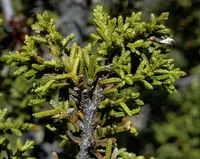
This species has long, narrow, ribbon-like leaves with pale midrib and vein markings, which distinguishes it from the broader-leaved ornamental crotons more common in cultivation.

Subtropical Pacific origins

Croton argyranthemus is native to Pacific island and coastal habitats, including parts of New Caledonia and nearby regions, where it grows as a shrub or small tree in warm, humid climates.

Silver-patterned foliage

The name argyranthemus refers to its silver-toned or pale markings on the leaf surface, creating a distinct contrast against the darker green background.

FAQs about healing croton

Brown tips or margins usually come from low humidity, underwatering, or accumulated salts from fertilizer. Flush the soil occasionally, adjust watering so it stays lightly moist, and increase ambient humidity to reduce further browning.

Grow Healthy Plants with Botan Care

Keep your plants happy and healthy with plant identification, disease detection, and easy care guidance.

Botan plant care app — identify plants on mobile

Explore More Plants