Encourage Bushy Shape
Pinch back the soft tips of new shoots in late winter or early spring to promote branching and a denser, more wind-stable shrub.

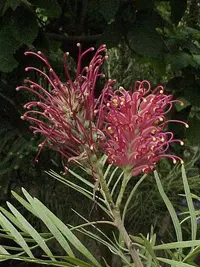
Bank's grevillea (Grevillea banksii) is an evergreen shrub or small tree from coastal eastern Australia, especially Queensland. It is grown mainly for its bright, brush-like flower clusters and fine, divided foliage.
Plants usually have an upright, open habit and can bloom for long periods in mild climates, attracting birds and pollinators. The species is often used in warm gardens and landscapes, and some regions consider it potentially invasive.
This plant prefers full sun, fast-draining soil, and relatively low to moderate moisture. It suits gardeners in mild, frost-free areas who want to care for Bank's Grevillea with a focus on light, drainage, and pruning.

Care Difficulty
Moderate Care

Light Preference
Full Sun

Water Requirements
Low Water

Temperature Preference
Warm Climate

Hardiness Zone
9–11

Soil Texture
Sandy, Loamy, Rocky

Soil pH
Acidic (5.5–6.5), Slightly acidic (6.5–7.0)

Soil Drainage
Well-drained

Fertilization
Minimal (feed rarely)
Scan your plant to receive care tips personalized for your specific plant
Available on iOS and Android
This shrub thrives in bright, open positions with many hours of direct sun.
This species prefers slightly dry conditions and is sensitive to excess moisture around the roots.
This plant favors warm, mild climates and does not tolerate hard frost.
This species handles low atmospheric moisture well, so humidity rarely limits Grevillea banksii performance.
Grevillea banksii needs sharply drained, low-phosphorus soil to prevent root damage and maintain long-term vigor.
This species can be grown in containers if the potting setup prioritizes rapid drainage and root stability.
This nutrient-sensitive Australian native prefers lean conditions and only light feeding in containers or poor soils.
Thoughtful pruning helps maintain shape and flowering performance in Grevillea banksii.
This species is more often transplanted into the landscape than kept long term in containers.
New plants are commonly raised from semi-hardwood cuttings or seeds, though cuttings give truer-to-type Grevillea banksii.
This subtropical shrub dislikes hard frost and needs protection in regions with cold winters.

Plant Health Check
Not sure what's wrong with your plant? Check your plant's health inside the app.
Grevillea banksii produces large amounts of nectar-rich flowers that feed honeyeaters and insects for an extended season, making it a key food source in its native coastal Queensland habitats.
This species is one of the most commonly used parents in breeding modern ornamental grevillea cultivars, contributing its long flower spikes, strong color, and repeat blooming to many garden hybrids.
Wild populations show striking leaf variation, from deeply divided, fern-like forms to almost entire, narrow leaves, reflecting adaptation to different light and exposure conditions within its natural range.

A white-flowered form of Grevillea banksii, often called the white silky oak, is naturalized and sometimes invasive in parts of Hawaii and other tropical regions, where it can outcompete native vegetation and alter local plant communities.
Poor flowering is often caused by excess phosphorus fertilizer, heavy pruning of new growth, or insufficient light intensity. Use low-phosphorus products, prune lightly after flowering only, and ensure strong sun exposure to support next season’s buds when caring for Bank's Grevillea.
Keep your plants happy and healthy with plant identification, disease detection, and easy care guidance.