Early framework training
In the first 2–3 years, tie flexible young canes to a sturdy support at a shallow, horizontal angle to build a permanent framework that will carry heavy flowering growth later.

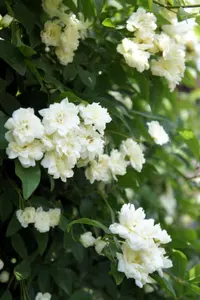
Lady Banks' rose, Rosa banksiae, is a vigorous, long-lived climbing rose known for its masses of small, lightly scented spring flowers. It is usually grown on trellises, fences, or walls, forming a large, arching shrub or climber with almost thornless, green stems and fine-textured foliage.
This species is native to central and western China but is now widely grown in mild climates. It is valued for its resistance to common rose diseases and its ability to tolerate some neglect, which makes it relatively easy to grow once established.
In general, it prefers full sun, well-drained soil, and moderate moisture, and those conditions make it simpler to care for Lady Banks' Rose over the long term.

Care Difficulty
Easy Care

Light Preference
Full Sun

Water Requirements
Moderate Water

Temperature Preference
Warm Climate

Hardiness Zone
6–9

Soil Texture
Sandy, Loamy, Clay

Soil pH
Acidic (5.5–6.5), Slightly acidic (6.5–7.0)

Soil Drainage
Well-drained

Fertilization
Minimal (feed rarely)
Scan your plant to receive care tips personalized for your specific plant
Available on iOS and Android
This vigorous climbing rose prefers abundant direct sun for strongest flowering and healthy growth.
This rose prefers deep, infrequent watering once its roots are established in well-drained soil.
This species thrives in mild to warm climates and tolerates a range of outdoor temperatures once established.
This climbing rose tolerates a wide humidity range and rarely needs special humidity management outdoors.
This vigorous rose prefers deep, well-structured, freely draining ground to support extensive root growth.
This species can be grown in large containers if the pot is managed to support its vigorous, climbing habit.
Rosa banksiae benefits from light, balanced feeding in nutrient-poor soils but often needs little input in fertile ground.
Thoughtful pruning keeps Rosa banksiae flowering well and within bounds on arbors or fences.
This vigorous climber is usually grown in the ground, so focus on thoughtful transplanting rather than frequent repotting.
Rosa banksiae is commonly propagated by semi-ripe cuttings or simple layering for reliable cloning of named forms.
In mild climates this rose is broadly hardy and needs only modest winter care once established.

Plant Health Check
Not sure what's wrong with your plant? Check your plant's health inside the app.
This species is often among the first roses to flower in spring, producing a single, heavy flush of blooms before many other rose species have even started leafing out fully.
Unlike most shrub and climbing roses, typical Rosa banksiae forms have smooth, nearly thornless canes, which reflects its separate evolutionary line within the rose family.
The species has been cultivated in China for several centuries, with historical records and horticultural texts describing its use on walls and trellises long before it was introduced to Western gardens in the early 19th century.

Some old specimens of Rosa banksiae in mild climates can develop into massive, woody structures that sprawl over buildings and trees, with the famous Tombstone, Arizona plant often cited as one of the largest rose plants in the world.
Poor flowering often comes from pruning at the wrong time, excessive shade, or very young age. This species flowers on old wood, so heavy winter pruning removes buds. Mild stress after flowering can sometimes improve bud formation next season.
Keep your plants happy and healthy with plant identification, disease detection, and easy care guidance.