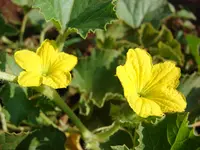
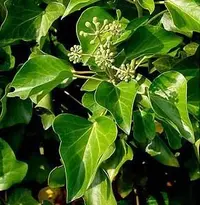
Boerne Bean Care (Phaseolus texensis)

About Boerne Bean

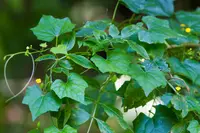
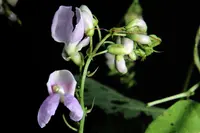
Boerne bean, Phaseolus texensis, is a perennial climbing bean native to rocky canyons and stream margins in central Texas. It grows as a twining vine with attractive trifoliate leaves and showy flowers followed by slender pods. In the wild it anchors itself among rocks and shrubs, forming a scrambling, sometimes dense cover. The plant is adapted to heat and seasonal dryness, which can make it resilient once established. It prefers sun to light shade, well-drained soils, and moderate moisture. These traits make it interesting for gardeners who want to care for Boerne Bean in tough, warm conditions with limited irrigation.

Main Plant Requirements

Care Difficulty

Moderate Care

Light Preference

Full Sun

Water Requirements

Moderate Water

Temperature Preference

Warm Climate

Hardiness Zone

8–11

Soil Texture

Sandy, Loamy, Rocky

Soil pH

Acidic (5.5–6.5), Slightly acidic (6.5–7.0)

Soil Drainage

Well-drained

Fertilization

Minimal (feed rarely)

Get Personalized Care Plan

Scan your plant to receive care tips personalized for your specific plant

Available on iOS and Android

How to Care for the Boerne Bean

This sun-loving bean thrives in open, bright conditions typical of its native range.

  • Provide 6–8 hours of direct sun daily; morning sun with light afternoon shade is ideal in hot summers.
  • It tolerates light partial shade (around 4–5 hours direct sun) but flowering and pod set decline with less light.
  • Monitor leaves for stress: scorched, crispy edges indicate too much intense afternoon sun, while weak, stretched vines signal insufficient light for Boerne Bean.

This species prefers evenly moist but never waterlogged soil during active growth.

  • Outdoors in well-drained ground, water when the top 3–5 cm of soil feels dry, aiming for a thorough soak that reaches the root zone.
  • In hot, dry periods, expect to water more often, while in cool or rainy weather reduce watering to avoid saturated soil around Phaseolus texensis.
  • Watch for signs: yellowing, soft stems suggest overwatering and poor drainage, while dull, curling leaves and slow pod development suggest underwatering.

This warm-season climber grows best in stable, frost-free conditions.

  • Optimal growth occurs at 70–85°F (21–29°C), with good flowering and pod set in this range during late spring and summer.
  • Seeds and young plants should not be exposed below 55°F (13°C); growth slows sharply under 60°F (16°C) and plants are killed by frost.
  • Mature plants tolerate short spikes up to about 95°F (35°C) if soil moisture is adequate, but prolonged heat above this can reduce flowering and stress vines.

This species handles a wide humidity range and usually needs no special humidity control.

  • Target 30–60% humidity, which most homes and outdoor conditions already provide.
  • Dry air is tolerated, but prolonged hot, windy exposure can cause leaf edges to crisp and curling.
  • Increase humidity only in very arid climates by grouping plants or using a nearby water tray, which is usually enough for Boerne Bean.

Phaseolus texensis grows best in loose, well-aerated, fast-draining soil.

  • Use a sandy or sandy-loam mix with plenty of coarse particles so water drains within minutes after watering.
  • Aim for slightly acidic to neutral pH around 6.2–7.0 to support nutrient uptake and root activity.
  • Combine 50–60% compost or worm castings with 40–50% coarse sand or perlite to balance nutrients and drainage.
  • Avoid compacted clay, consistently waterlogged spots, or peat-heavy mixes that stay wet and exclude oxygen from roots.

This species can be grown successfully in containers when provided with enough depth and support.

  • Choose a container at least 25–30 cm deep to accommodate the taproot and prevent restricted growth.
  • Use a heavy or weighted pot if placed outdoors so the vine and support structure do not tip in wind.
  • Select a breathable material such as unglazed terracotta if overwatering is a risk, as it allows moisture to evaporate faster from the root zone.

This North American native bean generally needs minimal feeding in the ground, but light nutrition supports stronger growth in poor soils.

  • Use a balanced, low‑nitrogen NPK granular fertilizer or well‑finished compost if foliage is pale or growth weak.
  • Apply once at planting, then 1–2 times during the main growing season, especially when growing Boerne Bean in lean soils.
  • Dilute liquid feeds to 1/2 strength to avoid soft, overly lush growth that is prone to pests.
  • Stop fertilizing in late summer so plants can harden off before cool weather and dormancy.

Pruning needs for Phaseolus texensis are light and mainly focused on tidiness and plant health.

  • Trim in late winter or early spring before new growth, removing dead, damaged, or disease‑marked stems.
  • Thin out crowded or tangled vines to improve air movement and light penetration along the trellis or support.
  • Head back excessively long stems to manage spread and keep flowering growth where it is visible and supported.
  • Use clean, sharp hand pruners and make angled cuts just above a healthy bud or side shoot.

This vining native is most often direct‑sown or transplanted outdoors rather than maintained long term in containers.

  • Transplant seedlings after frost once soils warm and roots lightly fill starter cells without tight circling.
  • Move plants promptly in the first growing season; older vines resent disturbance and recover slowly.
  • Handle the root ball gently, keeping soil intact, and water thoroughly to settle roots and reduce transplant shock.
  • Space plants to allow climbing support and airflow, and shade roots lightly during the first week if sun is intense.

New Phaseolus texensis plants are most reliably raised from seed under warm, bright conditions.

  • Sow seeds in late spring when soil reaches about 65–70°F and frost risk has passed.
  • Scarify hard seed coats lightly with sandpaper, then soak 4–8 hours to speed germination.
  • Plant seeds 2–3 cm deep in well‑drained soil or trays, keeping moisture even but not waterlogged.
  • Provide full sun and mild air movement; thin or transplant seedlings before they become root‑bound.

This warm‑season bean is frost‑tender and usually grown as an annual in most regions.

  • Expect top growth to die back after the first hard frost; harvest remaining pods beforehand.
  • Mulch the soil lightly if roots are expected to overwinter in mild climates with brief cold spells.
  • For container specimens, shift pots indoors or to a cold‑free greenhouse before temperatures drop below 40°F.

Care Tips

Sturdy trellis setup

Install a 1.8–2.1 m tall, rigid trellis or cattle panel before sowing so vines can latch on from the start and are kept off the ground for better airflow and easier harvest.

Timed sowing strategy

In hot-summer regions, sow in early spring and again in late summer so flowering avoids peak heat above about 95°F, which improves pod set and overall yield.

Targeted pest scouting

Inspect the undersides of leaves and young pods every 3–4 days for beetles, caterpillars, and aphids, and remove them by hand or with a strong water spray before populations build up.

Mulch for pod quality

Apply a 5–8 cm layer of clean straw or shredded bark under the vines to reduce soil splash, keep pods cleaner, and limit weed competition around the root zone.

Seed saving protocol

For long-term growing Boerne Bean, allow some pods to fully dry and rattle on the vine, then harvest, dry indoors for 7–10 days in a single layer, and store seeds in a labeled, airtight container in a cool, dark place.

Common Pests and Diseases

Cowpea curculio

This pest is a small snout beetle whose larvae develop inside pods, causing misshapen, scarred, or prematurely dropping seeds and pods. Symptoms include small feeding punctures on young pods and poor seed set.

Solution

Hand-pick and crush adults from plants in early morning, and promptly remove and destroy infested pods after harvest to break the life cycle. In small plantings, floating row covers during flowering and pod set, plus thorough cleanup of crop debris, help reduce future populations when growing Boerne Bean outdoors in the southern US.

Mexican bean beetle

This pest feeds on leaves, leaving a lace-like appearance and reducing plant vigor and yield. These insects are yellow to copper beetles and their spiny yellow larvae cluster on leaf undersides.

Solution

Inspect leaf undersides regularly and crush egg masses and larvae by hand, removing heavily infested leaves. For heavier pressure, use floating row covers early in the season and, if needed, apply a labeled insecticidal soap or neem product directed at the undersides of leaves, avoiding applications during peak pollinator activity.

Bean rust

This disease produces small, reddish-brown pustules on both sides of leaves, which can merge and cause yellowing and premature leaf drop. Symptoms include reduced pod production and plants that defoliate early under warm, humid conditions.

Solution

Remove and discard infected leaves as soon as symptoms appear and avoid overhead watering to keep foliage dry. Space plants to improve airflow, rotate away from bean crops for at least 2–3 years, and use a sulfur or copper-based fungicide only if the disease is spreading and label directions allow use on beans.

Halo blight

This disease causes small, water-soaked leaf spots surrounded by pale green halos and can lead to distorted leaves, blemished pods, and overall stunting. Symptoms include yellowing and drop of older foliage in cool, wet conditions.

Solution

Start with certified disease-free seed and avoid working among plants when foliage is wet to limit spread. Remove and destroy infected plants, do not save seed from affected pods, rotate plantings, and use drip irrigation rather than overhead watering to keep leaves dry.

Interesting Facts

Hill Country endemic

This wild bean is native to a very limited area in the Texas Hill Country, especially around Boerne, and is considered a narrow-range endemic adapted to local limestone-derived soils.

Rocky habitat specialist

It typically grows in thin, rocky soils on limestone outcrops, ledges, and disturbed calcareous slopes, showing strong adaptation to high drainage and periodic drought.

Distinctive trifoliate leaves

The plant has characteristic three-part (trifoliate) leaves and small flowers and pods that help botanists distinguish it in the field from more widespread North American Phaseolus species.

Botan icon

Did you know?

The species name texensis reflects its strong geographic association with Texas, and it has drawn botanical interest as a rare, localized wild bean that may hold genetic traits valuable for breeding more drought-tolerant cultivated Phaseolus crops.

FAQs about Boerne Bean

This species grows as a twining vine that climbs rather than creeping along the ground. It wraps around nearby stems, trellises, or fences, so vertical support helps keep growth controlled and foliage off the soil surface.

Grow Healthy Plants with Botan Care

Keep your plants happy and healthy with plant identification, disease detection, and easy care guidance.

Botan plant care app — identify plants on mobile

Explore More Plants