Early vine training
Once vines reach 20–30 cm, gently direct the main stem along rows or trellis wires and pinch off very weak side shoots so air and light penetrate the canopy and fruit set is easier to manage.

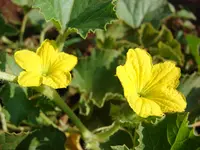
Melon, Cucumis melo, is a warm-season annual vine grown for its sweet, aromatic fruits. It belongs to the cucumber family and has trailing stems with large, rough-textured leaves and tendrils for climbing or sprawling. Flowers are typically yellow and unassuming, but fruits develop into rounded or oval shapes with varying rind patterns and flesh colors. Cucumis melo originated in parts of Africa and Southwest Asia and is now widely cultivated in warm and semi-arid regions worldwide. It is considered moderately easy to grow where summers are long, warm, and sunny. The plant prefers full sun, consistent moisture, and well-drained, fertile soil, and these basics are the foundation of how to care for melon.

Care Difficulty
Moderate Care

Light Preference
Full Sun

Water Requirements
Regular Water

Temperature Preference
Tropical / Frost Sensitive

Hardiness Zone
4–11

Soil Texture
Sandy, Loamy, Organic-rich

Soil pH
Acidic (5.5–6.5), Slightly acidic (6.5–7.0)

Soil Drainage
Moist but well-drained

Fertilization
Moderate (every 2–4 weeks)
Scan your plant to receive care tips personalized for your specific plant
Available on iOS and Android
Cucumis melo needs strong, consistent sun to produce sweet, well-ripened fruit.
This species prefers steadily moist but not saturated soil during its active growing and fruiting period.
Consistent warmth is essential for strong Cucumis melo growth and reliable fruiting.
This species grows best in fairly dry, open air with only moderate humidity needs.
This plant needs loose, well-drained, nutrient-rich soil to support rapid vining and fruiting.
This species can be grown successfully in containers if the pot is large, stable, and drains very efficiently.
Cucumis melo responds well to moderate, consistent feeding during its active growing season.
Pruning helps Cucumis melo focus energy on fruit production and maintain manageable vine growth.
Cucumis melo is usually started in small pots or cells, then transplanted outdoors once conditions are suitable.
New Cucumis melo plants are most commonly raised from seed for reliable fruit quality and vigor.
Cucumis melo is a warm-season annual and does not survive hard frost, so plants are managed seasonally rather than overwintered.

Plant Health Check
Not sure what's wrong with your plant? Check your plant's health inside the app.
Cucumis melo includes many cultivated groups such as cantaloupe, honeydew, galia, and casaba, all belonging to a single species but selected over centuries for different flavors, aromas, and rinds.
On a single Cucumis melo vine, male and female flowers are separate but on the same plant, so insect pollinators such as bees are essential for effective fruit set and full-sized melons.
The characteristic fragrance of many melons comes from a complex mix of volatile organic compounds, including esters and aldehydes, which change in composition as the fruit ripens and signal optimal eating quality.

Domestication evidence suggests Cucumis melo was independently cultivated in several regions of the Old World, including parts of Africa and Southwest–Central Asia, making it one of the earliest fruit crops to be spread widely along ancient trade routes.
Yellowing leaves often result from natural aging, nitrogen deficiency, compacted or waterlogged soil, or root damage from pests like nematodes or cucumber beetles. Check older vs newer leaves, adjust nutrition, and improve drainage before assuming disease.
Keep your plants happy and healthy with plant identification, disease detection, and easy care guidance.