Sturdy trellis support
Install a strong trellis or overhead wire system before planting and space main vertical supports 1.5–2 m apart so heavy fruits hang freely and develop straight, unblemished shapes without kinking or ground rot.

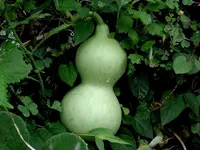
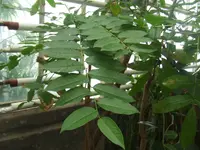
Bottle gourd, Lagenaria siceraria, is a fast-growing annual vine grown for its long, smooth fruits and vigorous climbing habit. It belongs to the cucurbit family, like squash and cucumbers. Native to Africa but now cultivated in many warm regions worldwide, it is often trained on trellises or pergolas to support its heavy fruits. The plant has large, soft leaves and white, night-blooming flowers that attract pollinators. It is generally easy to grow in warm conditions but needs consistent moisture, fertile soil, and space to spread. Gardeners who learn how to care for bottle gourd usually find it productive in a sunny, sheltered spot.

Care Difficulty
Moderate Care

Light Preference
Full Sun

Water Requirements
Regular Water

Temperature Preference
Tropical / Frost Sensitive

Hardiness Zone
10–12

Soil Texture
Loamy, Sandy, Organic-rich

Soil pH
Acidic (5.5–6.5), Slightly acidic (6.5–7.0)

Soil Drainage
Moist but well-drained

Fertilization
Moderate (every 2–4 weeks)
Scan your plant to receive care tips personalized for your specific plant
Available on iOS and Android
This vigorous climber needs abundant direct sun to flower and fruit well.
This fast-growing vine demands steady soil moisture but is sensitive to waterlogging.
This warm-season annual thrives in stable, frost-free conditions.
Humidity is a minor factor for Lagenaria siceraria, which adapts well to typical outdoor ranges.
Soil for Lagenaria siceraria should be deep, loose, and moderately rich to support fast vine and fruit growth.
This species can be grown in containers if the pot is large, stable, and supports vigorous vine growth.
Lagenaria siceraria benefits from moderate feeding during its fast warm-season growth.
Lagenaria siceraria responds well to light, timely pruning to manage vigor and fruiting.
Lagenaria siceraria is usually started in small containers, then transplanted outdoors once conditions are warm and stable.
New Lagenaria siceraria plants are most commonly produced from seeds rather than vegetative methods.
Lagenaria siceraria is a warm-season annual that does not survive hard frost, so plants are usually replaced each year.

Plant Health Check
Not sure what's wrong with your plant? Check your plant's health inside the app.
Archaeological evidence shows that bottle gourd was one of the earliest domesticated plants, used by humans thousands of years ago primarily as containers and tools rather than food.
The mature hard-shelled gourds are lightweight and buoyant, which likely helped the species spread across oceans as floating fruits before and during early human migrations.
While the fully mature fruits are used as dry vessels, the young tender fruits are widely eaten as a vegetable in many cuisines, showing an unusual dual use within a single crop species.

Genetic studies suggest that some ancient populations of bottle gourd reached the Americas long before widespread transoceanic travel, likely drifting across the Atlantic or Pacific, making it one of the few crops with a probable natural intercontinental dispersal route.
Yellowing leaves usually result from nitrogen deficiency, water stress, or root problems. Check for soggy or very dry soil, compacted roots, and lack of feeding. Remove badly affected leaves and adjust watering and nutrition to stabilize growth.
Keep your plants happy and healthy with plant identification, disease detection, and easy care guidance.