


Timed deadheading
Remove spent flower heads every few days before seeds mature to extend blooming and limit self-seeding into surrounding beds or pathways.

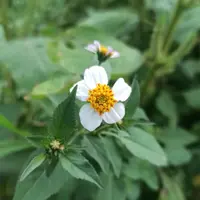
Hairy beggarticks (Bidens pilosa) is a fast-growing annual herb in the daisy family, often found as a wild plant in disturbed soils and gardens. It forms upright, branching stems with narrow, toothed leaves and small, daisy-like flower heads followed by barbed seeds that cling to fur and clothing.
This species is native to the Americas but now occurs widely in tropical and warm temperate regions around the world. It adapts easily to different soils and light levels, which makes it resilient but also somewhat weedy. Understanding how to care for hairy beggarticks starts with recognizing its vigorous growth and strong self-seeding habit.

Care Difficulty
Easy Care

Light Preference
Full Sun

Water Requirements
Moderate Water

Temperature Preference
Tropical / Frost Sensitive

Hardiness Zone
9–12

Soil Texture
Sandy, Loamy, Organic-rich

Soil pH
Acidic (5.5–6.5), Slightly acidic (6.5–7.0)

Soil Drainage
Well-drained

Fertilization
Minimal (feed rarely)
Scan your plant to receive care tips personalized for your specific plant
Available on iOS and Android
Bidens pilosa grows best in open, bright conditions with plenty of direct sun.
Bidens pilosa prefers evenly moist, well-drained soil and tolerates short dry spells once established.
This species thrives in warm, frost-free conditions and behaves as an annual where winters are cold.
Bidens pilosa tolerates a wide humidity range and rarely needs special humidity management.
Bidens pilosa prefers light, well-drained soil that does not stay waterlogged.
This species is suitable for container growing outdoors.
Bidens pilosa grows well in modest soils and usually needs only light feeding in cultivation.
Pruning Bidens pilosa helps control its spread and maintain a compact, flowering shape.
This species is usually grown in the ground, so care focuses more on transplanting young plants than routine repotting.
Bidens pilosa is most commonly propagated from seed, which establishes quickly in suitable conditions.
In mild climates this annual or short-lived perennial needs little deliberate winter care.

Plant Health Check
Not sure what's wrong with your plant? Check your plant's health inside the app.
The seeds have barbed awns that easily cling to fur, feathers, and clothing, which allows the plant to spread efficiently along human and animal movement routes.
This species uses C4 photosynthesis, a pathway that improves carbon fixation in high light and warm conditions, helping it grow rapidly in disturbed and open habitats.
It is considered an invasive or troublesome weed in many tropical and subtropical regions, where its fast growth and dense stands can compete strongly with crops and native vegetation.

Genetic and ecological studies show that this species has evolved multiple herbicide-resistant populations in different parts of the world, making it an important model for understanding rapid weed adaptation in modern agriculture.
This species spreads very aggressively through prolific seed production and sticky seeds that cling to animals, clothing, and tools. In many regions it behaves as a noxious weed and requires strict monitoring and regular removal before seed set.
Keep your plants happy and healthy with plant identification, disease detection, and easy care guidance.

Chamomile-leaved Lavender-cotton
Achillea cretica
dwarf bilberry
Vaccinium cespitosum

jointed goatgrass
Aegilops cylindrica
white rocklettuce
Pinaropappus roseus
-200x150.webp)
pickling melon
Cucumis melo var. conomon
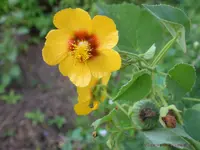
Florida Keys Indian mallow
Abutilon hirtum

giant hogweed
Heracleum mantegazzianum

American black elderberry
Sambucus canadensis