Deep root training
During the first growing season, water less often but more deeply so the plant is forced to send roots down rather than staying shallow, which improves long‑term drought tolerance when growing Syrian beancaper in poor, dry sites.


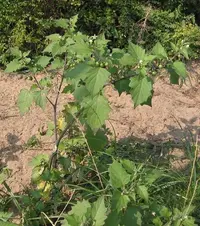
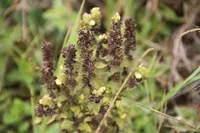
Syrian beancaper (Zygophyllum fabago) is a hardy, shrubby perennial from the dry regions of the eastern Mediterranean and western Asia. It often grows on disturbed ground, roadsides, and arid fields. The plant forms a bushy clump with many branching stems, fleshy paired leaves, and small yellow flowers that later produce distinctive seed pods. It has a deep root system and a strong ability to tolerate drought and poor, often alkaline soils, which makes it resilient but also potentially invasive in some areas. Those traits mean it is generally tough once established but needs space and careful monitoring. Anyone wanting to know how to care for Syrian beancaper should focus on providing full sun, very well-drained soil, and low to moderate moisture.

Care Difficulty
Easy Care

Light Preference
Full Sun

Water Requirements
Low Water

Temperature Preference
Warm Climate

Hardiness Zone
5–9

Soil Texture
Sandy, Loamy, Rocky

Soil pH
Neutral (7.0), Alkaline (7.5–8.5)

Soil Drainage
Well-drained

Fertilization
Minimal (feed rarely)
Scan your plant to receive care tips personalized for your specific plant
Available on iOS and Android
This sun-loving shrub thrives in open, bright sites typical of dry, temperate regions.
This species is drought-tolerant and prefers infrequent, deep watering over frequent light applications.
This hardy perennial prefers warm, dry conditions but tolerates a broad outdoor temperature range.
This species is highly drought-adapted and humidity is rarely a limiting factor for Syrian beancaper.
Zygophyllum fabago prefers very lean, fast-draining, sandy or gravelly soil that mimics dry, open habitats.
This species can be grown in containers outdoors if drainage and root space are carefully managed.
This tough wild species generally needs no fertilizer in the ground, but light feeding supports container-grown Syrian beancaper during active growth.
Zygophyllum fabago benefits from light, targeted pruning to keep plants compact and healthy.
This deep-rooted shrub is rarely grown in pots, so care usually focuses on careful transplanting when necessary.
Zygophyllum fabago is most often propagated by seed, which suits its natural life cycle in dry, open sites.
This species is cold hardy in many temperate regions and usually needs minimal winter care once established.

Plant Health Check
Not sure what's wrong with your plant? Check your plant's health inside the app.
This species thrives in saline, disturbed soils such as roadsides, railways, and overgrazed fields, where many other plants struggle to survive. Its ability to handle high salt levels helps it spread in semi-arid and steppe regions across Eurasia and parts of North America.
Roots form symbioses with nitrogen-fixing microorganisms that convert atmospheric nitrogen into usable forms in the soil. This gives the plant a competitive advantage in nutrient-poor habitats and can gradually alter soil fertility around dense stands.
Leaves and young shoots contain strongly bitter compounds that make them unpalatable to most grazing animals. This chemical defense allows the plant to persist and sometimes dominate in heavily grazed landscapes where more palatable species are removed.

The species is considered a noxious or problematic invasive weed in several regions, particularly in parts of western North America, because dense stands can displace native vegetation and are difficult to control once established.
This species spreads readily by both seed and root fragments. In open, disturbed sites it can form dense patches and behave aggressively, especially in semi-arid climates, so regular monitoring and removal of unwanted seedlings are important.
Keep your plants happy and healthy with plant identification, disease detection, and easy care guidance.