chamomile Care (Matricaria chamomilla)

Also known as: wild chamomile, scented mayweed, blue chamomile, German Chamomile, Annual Chamomile, false chamomile
chamomile

About chamomile

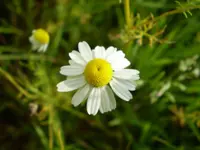
Chamomile, Matricaria chamomilla, is a small, aromatic annual herb in the daisy family. It forms branching, slender stems with fine, feathery leaves and small white flowers with yellow centers.

In the wild it grows in open, sunny places such as fields, roadsides, and disturbed soils across Europe and western Asia, and is now naturalized in many regions. It is generally easy to grow, as it tolerates poor soils and light disturbance.

It prefers full sun, moderately moist but well-drained soil, and does best where conditions are not consistently wet. These adaptable traits make it straightforward for most home gardeners to care for chamomile.

Main Plant Requirements

Care Difficulty

Easy Care

Light Preference

Full Sun

Water Requirements

Moderate Water

Temperature Preference

Cool Climate

Hardiness Zone

3–9

Soil Texture

Sandy, Loamy, Organic-rich

Soil pH

Slightly acidic (6.5–7.0), Neutral (7.0)

Soil Drainage

Well-drained

Fertilization

Minimal (feed rarely)

Get Personalized Care Plan

Scan your plant to receive care tips personalized for your specific plant

Available on iOS and Android

How to Care for the chamomile

This plant prefers bright, direct sun for strong growth and flowering.

  • Provide 6–8 hours of direct sun daily; morning to early afternoon sun is ideal for chamomile in most temperate gardens.
  • It tolerates light partial shade, especially in hot climates, but flowering and oil content decline with less than 4–5 hours of sun.
  • In very hot summers, protect from harsh late-afternoon sun to reduce leaf scorch and drying of shallow roots.

Matricaria chamomilla prefers moderately moist, well-drained soil and does not like prolonged saturation.

  • Water when the top 3–5 cm of soil feels dry, letting water soak through, then drain fully to avoid standing water around the roots.
  • Reduce watering once established, relying more on rainfall; increase slightly during hot, windy periods that dry the soil faster.
  • Watch for yellowing, soft stems as signs of overwatering and limp, crisp foliage as signs of underwatering, then adjust volume and frequency.

This species thrives in cool to warm conditions and performs best in mild, temperate climates.

  • Optimal growth occurs at 60–75°F (16–24°C), with steady temperatures supporting strong stems and consistent flowering.
  • Plants tolerate down to about 25°F (-4°C) once hardened, but repeated hard frosts can damage buds and reduce yield.
  • In heat above 85–90°F (29–32°C), flowering can slow and plants may bolt or decline, so use mulch and occasional shade where summers are intense.

This species handles a wide humidity range and rarely needs special air-moisture management.

  • Performs reliably in 30–60% humidity, similar to most household and outdoor conditions.
  • Tolerates dry air well, with leaf scorch or crispy margins appearing only under prolonged hot, very arid conditions.
  • If air is extremely dry, group pots together or place near a shallow tray of water and stones to slightly raise local humidity.

Matricaria chamomilla prefers light, well-drained soil that does not stay wet for long.

  • Use a sandy or loamy mix with a loose, crumbly structure to keep roots aerated and prevent waterlogging.
  • Aim for slightly acidic to neutral pH, roughly 6.0–7.0, which supports nutrient availability and healthy root growth.
  • Blend standard potting mix with 30–40% coarse sand or fine grit plus a small portion of compost to improve drainage and steady nutrient supply.
  • Avoid heavy clay, compacted ground, or mixes rich in water-retentive peat that hold moisture and increase the risk of root rot.

This species grows well in containers when provided with stable, well-drained conditions.

  • Choose a pot at least 20–25 cm wide to allow the plant to spread and develop a branching root system without crowding.
  • Select a relatively shallow but broad container, as the roots are more fibrous than deeply taprooted, which improves stability in wind.
  • Use a porous material like unglazed terracotta if outdoor conditions are cool and damp, so excess moisture can evaporate more quickly from the potting mix.

This annual herb has modest nutrient needs but responds well to light, targeted feeding during the active season.

  • Use a balanced NPK liquid fertilizer at 1/2 strength or a light top-dressing of fine compost in spring.
  • Feed every 3–4 weeks while plants are actively growing and flowering, especially in poorer soils.
  • Avoid heavy, high-nitrogen products, which cause lush foliage but fewer chamomile flowers.
  • Stop feeding in late summer to early fall, as plants naturally decline and do not need winter fertilization.

Pruning Matricaria chamomilla is simple and mainly supports extended flowering and tidy growth.

  • Deadhead spent blooms throughout summer to encourage new flower production and reduce self-seeding.
  • Cut back weak, leggy, or storm-damaged stems with clean scissors or hand pruners to maintain a compact shape.
  • Remove any diseased or discolored growth promptly to improve airflow and reduce fungal issues.
  • At season’s end, shear plants close to the ground once flowering stops and seeds have been collected, if desired.

This fast-growing annual is more often transplanted than repotted and dislikes major root disturbance once established.

  • Start seeds in small cells or modules, then transplant seedlings outdoors after frost when they have 2–3 true leaves.
  • Move plants promptly if roots fill the starter cells or circle a small pot, to prevent stunting.
  • Transplant on a cool, overcast day, handling roots gently and planting at the same depth into loose, well-drained soil.
  • Water thoroughly after transplanting and keep soil evenly moist for 7–10 days to reduce transplant shock.

New plants are most commonly raised from seed, making Matricaria chamomilla straightforward to multiply each year.

  • Sow seeds indoors late winter to early spring or direct-sow outdoors after frost for best germination.
  • Press tiny seeds onto the soil surface; they need light to germinate, so do not bury them deeply.
  • Maintain 65–70°F and lightly moist, not waterlogged, soil until seedlings emerge in 7–14 days.
  • Thin or transplant seedlings to avoid crowding, spacing plants to allow airflow and strong flowering stems.

As a cool-season annual, this species usually completes its life cycle before deep winter and needs minimal winter care.

  • In mild climates, late sowings may overwinter; apply a light mulch to buffer soil temperature swings.
  • Container plants in colder zones can be moved into an unheated, bright shelter to avoid deep freezes.
  • Allow seed heads to mature and drop before hard frosts if natural reseeding and growing chamomile are desired next year.

Care Tips

Staggered Succession Sowing

Sow small batches every 2–3 weeks during spring to keep flower production continuous and avoid the entire planting finishing at once.

Timed Harvest For Oil

Harvest flower heads when the yellow disc is fully open but before petals start to droop, as this is when essential oil and active compounds are at their highest.

Clean, Frequent Deadheading

Pinch or snip off spent flower heads every few days to reduce reseeding, keep plants compact, and direct energy into new buds rather than seed production.

Prevent Lodging With Light Support

In windy or exposed sites, run a low string line or use short, unobtrusive stakes along rows to support flexible stems and reduce breakage before peak bloom.

Drying Setup Optimization

Spread harvested flowers in a single layer on mesh or paper in a dark, well-ventilated room at 70–86°F, turning them once daily so they dry evenly and retain color and aroma when growing chamomile.

Common Pests and Diseases

Aphids

This pest often colonizes young shoots and flower stalks, sucking sap and causing distortion, curling, and sticky honeydew on foliage and buds.

Solution

Prune off heavily infested shoot tips, then wash remaining stems and leaves with a strong stream of water. For ongoing control, use insecticidal soap or neem oil directed at the undersides of stems and buds, and encourage natural predators like lady beetles by avoiding broad-spectrum insecticides nearby.

Powdery mildew

This disease produces white to gray powdery patches on leaves and stems, often appearing in dense chamomile stands during warm, dry days with cool, humid nights.

Solution

Thin plants to improve airflow, avoid overhead watering, and remove and discard affected leaves or whole plants if coverage is heavy. In persistent cases, apply a sulfur or potassium bicarbonate-based fungicide labeled for herbs, starting at the first sign of infection and following interval directions closely.

Alternaria leaf spot

This disease causes small brown to dark spots on lower leaves that may enlarge, develop concentric rings, and lead to premature leaf drop in humid conditions.

Solution

Remove and destroy spotted leaves and plant debris to reduce spore sources, and water at soil level to keep foliage dry. Increase spacing between plants, rotate plantings away from previous chamomile or carrot family beds for at least 2–3 years, and use a copper-based fungicide only if spots spread rapidly.

Chamomile rust

This disease leads to yellowing on upper leaf surfaces and orange-brown pustules on undersides, and can weaken plants and reduce flowering when humidity remains high.

Solution

Promptly remove infected leaves or entire plants that show heavy rust pustules, and dispose of them in the trash, not compost. Provide good air circulation, avoid prolonged leaf wetness, and in severe cases protect new growth with a labeled rust-control fungicide, applied preventively when conditions favor disease.

Thrips

These insects feed by rasping and sucking on flower petals and young foliage, causing silvery streaks, flecking, and deformed flower heads that may fail to open properly, which can interfere with growing chamomile for teas or harvest.

Solution

Shake flowering stems over white paper to confirm presence, then remove and discard heavily damaged flower heads. Use blue or yellow sticky traps near plants, rinse foliage and flowers with water, and apply insecticidal soap or spinosad in the evening, targeting flower clusters and undersides of leaves.

Interesting Facts

Hollow flower receptacle

The flower heads have a hollow, cone-shaped receptacle, which helps distinguish German chamomile (Matricaria chamomilla) from similar daisies with solid centers such as Anthemis species.

Self-seeding annual strategy

This species is an annual that relies on heavy self-seeding; individual plants die after one season, but the seed bank in the soil allows populations to persist for many years in the same location.

Distinct apple-like aroma

When crushed, the flowers and foliage release a characteristic apple-like scent, produced mainly by volatile oils such as bisabolol and chamazulene precursors in the essential oil.

Botan icon

Did you know?

Matricaria chamomilla has a long-documented history in European agriculture as a so-called companion plant, where it has been traditionally interplanted with crops like onions and cabbages because farmers observed improved vigor and aroma in nearby plants, a practice now studied under allelopathy and plant–plant interaction research.

FAQs about chamomile

Lack of flowers often comes from insufficient light, overly rich or heavily fertilized soil, or stress from heat, drought, or root disturbance. Deadhead spent blooms, avoid high-nitrogen fertilizer, and keep conditions stable to restore flowering.

Grow Healthy Plants with Botan Care

Keep your plants happy and healthy with plant identification, disease detection, and easy care guidance.

Botan plant care app — identify plants on mobile

Explore More Plants