Contain The Roots
Grow the plant in a buried pot or bottomless container in the ground to prevent aggressive root spread and make long-term patch management easier.

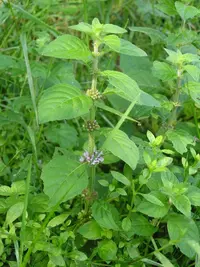
Corn mint, Mentha arvensis, is a hardy perennial herb in the mint family, grown for its strong, cooling aroma and flavor. It forms low, spreading clumps with square stems and toothed, bright green leaves. In summer it bears small, pale flowers in tight whorls along the stems.
This species is native to Europe and Asia but is now naturalized in many temperate regions, often found in moist meadows, ditches, and field margins. It grows quickly and can spread aggressively by underground stems, which makes it easy to establish but sometimes invasive in gardens. It prefers sun to light shade, consistently moist soil, and good drainage, and gardeners often look up how to care for corn mint before planting it near other herbs.

Care Difficulty
Easy Care

Light Preference
Full Sun

Water Requirements
Keep Soil Moist

Temperature Preference
Cold Hardy

Hardiness Zone
3–9

Soil Texture
Loamy, Silty, Organic-rich

Soil pH
Acidic (5.5–6.5), Slightly acidic (6.5–7.0)

Soil Drainage
Moist but well-drained

Fertilization
Light (every 4–6 weeks)
Scan your plant to receive care tips personalized for your specific plant
Available on iOS and Android
Mentha arvensis needs consistent light to produce dense, aromatic foliage.
This mint prefers evenly moist soil and reacts quickly to both drought and saturation.
Stable, moderate temperatures support strong vegetative growth and oil production in this species.
Mentha arvensis grows well in typical outdoor humidity but benefits from moderately moist air.
Mentha arvensis prefers loose, moist, organic-rich soil that drains freely but never stays waterlogged.
This species is very suitable for container growing, which helps control its spreading roots.
Mentha arvensis is moderately hungry and responds well to light, consistent feeding in active growth.
Pruning Mentha arvensis maintains dense, leafy growth and limits invasiveness.
Mentha arvensis spreads fast, so containers and garden patches need periodic division and transplanting.
Mentha arvensis is commonly propagated, as it roots and spreads well by vegetative methods.
Mentha arvensis is generally cold hardy, but simple winter care helps maintain vigorous plants.

Plant Health Check
Not sure what's wrong with your plant? Check your plant's health inside the app.
This species typically has a higher natural menthol concentration than spearmint and many peppermint strains, which is why it is a major source plant for commercial menthol extraction worldwide.
It is native across much of temperate Eurasia, from Western Europe through Central Asia to East Asia, showing strong ecological flexibility in soils, moisture levels, and climate.
The plant spreads vigorously through underground rhizomes, forming dense clonal patches that can dominate moist open habitats and riverbanks when conditions are favorable.

Mentha arvensis has been independently domesticated and selected in several regions, leading to distinct high-menthol cultivars that underpin parts of the flavor, fragrance, and pharmaceutical industries in countries such as India and Japan.
This plant spreads quickly by underground runners and self-seeding, especially in moist soil. It can become invasive in garden beds. Use containers, root barriers, or regular edging and division to keep patches under control.
Keep your plants happy and healthy with plant identification, disease detection, and easy care guidance.