Structured branch training
In the first 3–4 years, use spreaders or soft ties to set scaffold branches at 45–60° from the leader, which increases light penetration and supports heavier fruit loads with less breakage.

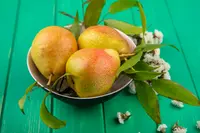
Bartlett pear, Pyrus communis 'Bon Chretien', is a classic fruiting tree grown for its sweet, aromatic pears and reliable cropping habit. It is a medium to large deciduous tree with an upright form, white spring blossoms, and smooth green fruits that turn yellow as they ripen.
This cultivar traces back to European pears but is now widely grown in orchards and home gardens across temperate regions, including much of North America. It is usually considered easy to moderate to grow, as it needs full sun, well-drained soil, and regular moisture, plus pruning for good shape and fruiting.
Understanding how to care for Bartlett Pear mainly involves supporting healthy growth, managing potential diseases, and providing adequate pollination where needed.

Care Difficulty
Moderate Care

Light Preference
Full Sun

Water Requirements
Moderate Water

Temperature Preference
Cold Hardy

Hardiness Zone
5–8

Soil Texture
Loamy, Sandy, Clay

Soil pH
Acidic (5.5–6.5), Slightly acidic (6.5–7.0)

Soil Drainage
Moist but well-drained

Fertilization
Minimal (feed rarely)
Scan your plant to receive care tips personalized for your specific plant
Available on iOS and Android
Pyrus communis 'Bon Chretien' performs best in full sun for strong growth and reliable fruiting.
This pear prefers consistent soil moisture without prolonged saturation.
This pear tree is adapted to temperate climates with cool winters and warm summers.
Humidity is rarely critical for Pyrus communis 'Bon Chretien', which is adapted to outdoor temperate conditions.
Pyrus communis 'Bon Chretien' performs best in deep, well-structured mineral soil with reliable drainage.
This pear cultivar can be grown in containers when managed as a dwarf or cordon form outdoors.
Pyrus communis 'Bon Chretien' benefits from moderate, targeted feeding to support fruiting rather than heavy vegetative growth.
Thoughtful pruning keeps Pyrus communis 'Bon Chretien' productive, well-shaped, and easier to manage.
This pear is usually grown in the ground, so focus on careful planting and occasional transplanting of young or container-grown trees.
Pyrus communis 'Bon Chretien' is usually propagated by grafting for reliable fruit quality rather than from seed.
Mature Pyrus communis 'Bon Chretien' trees are cold hardy in most temperate regions and need only modest winter care.

Plant Health Check
Not sure what's wrong with your plant? Check your plant's health inside the app.
This pear is one of the traditional European cultivars used for canning and preserving because its aromatic, fine-textured flesh holds flavor well after heat processing.
Its fruit produces relatively high levels of ethylene gas, which promotes rapid softening after harvest and allows controlled ripening in storage when handled correctly.
Although often partially self-fertile, it sets heavier and more regular crops when grown near compatible European pear cultivars that provide cross-pollination.

Historical records indicate that this pear type was already well known in Europe centuries ago and later became one of the foundational cultivars used in breeding many modern dessert and processing pears, contributing its characteristic aroma and texture to their genetics.
Poor flowering usually comes from insufficient winter chill, heavy pruning of young wood, nutrient imbalance, or lack of pollination partners. Check local chill hours, avoid removing short spurs, maintain balanced fertilization, and plant a compatible pear for cross‑pollination.
Keep your plants happy and healthy with plant identification, disease detection, and easy care guidance.