Rubber Tree Care (Ficus elastica 'Tineke')

About Rubber Tree

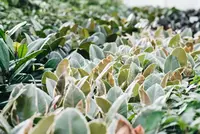
Ficus elastica 'Tineke' is a variegated form of the rubber tree, grown mainly as an indoor foliage plant. It is valued for its thick, glossy leaves marked with cream, green, and often soft pink tones.

In nature, rubber trees are tall evergreens from tropical regions of Southeast Asia, where they can reach tree size. Indoors, 'Tineke' grows more compactly with an upright, branching habit and can form a small indoor tree over time.

Its sturdy leaves, moderate growth, and tolerance of typical indoor conditions make it relatively straightforward to care for Rubber Tree, as long as it receives bright light, well-drained soil, and steady, not soggy, moisture.

Main Plant Requirements

Care Difficulty

Moderate Care

Light Preference

Bright Indirect Light

Water Requirements

Moderate Water

Temperature Preference

Tropical / Frost Sensitive

Hardiness Zone

10–12

Soil Texture

Loamy, Sandy, Organic-rich

Soil pH

Acidic (5.5–6.5), Slightly acidic (6.5–7.0)

Soil Drainage

Moist but well-drained

Fertilization

Light (every 4–6 weeks)

Get Personalized Care Plan

Scan your plant to receive care tips personalized for your specific plant

Available on iOS and Android

How to Care for the Rubber Tree

This variegated Ficus elastica 'Tineke' prefers bright, indirect light to maintain strong growth and clear leaf patterns.

  • Provide 6–8 hours of bright, filtered light daily, such as near an east or bright north window, or under light shade outdoors.
  • Tolerates light to medium shade, but variegation may fade and new growth may slow if light stays low for several weeks.
  • Avoid harsh midday or strong afternoon sun, which can scorch pale areas; increase light gradually in spring after darker winter conditions.

Ficus elastica 'Tineke' prefers moderately moist, well-drained soil rather than constant wetness.

  • Water once the top 3–5 cm of soil feels dry, using this touch test instead of a fixed schedule.
  • Reduce watering in fall and winter when growth slows, but never let the root zone stay dry and hard for long periods.
  • Watch for yellowing, mushy leaves as a sign of overwatering, and crisp, drooping leaves or soil pulling from the pot edge as underwatering.

This plant grows best in stable, warm conditions without sudden temperature swings.

  • Aim for 65–80°F (18–27°C) for active growth, keeping it away from cold drafts, air conditioners, and frequently opened exterior doors.
  • Tolerates short dips to about 55°F (13°C) but should be protected from anything near 40°F (4°C) or lower to prevent leaf damage.
  • Handles brief heat up to 90°F (32°C) if shaded from intense sun and given slightly higher humidity, but avoid placing it near hot radiators or heaters.

This plant prefers moderate indoor humidity but usually adapts to typical home conditions.

  • Target 40–60% humidity; it copes with brief dips lower but may show stress in heated, very dry rooms.
  • Dry air stress shows as crispy leaf edges, browning tips, and slower new growth on Rubber Tree.
  • Increase humidity with a nearby tray of water and pebbles, grouping plants, or using a small room humidifier.

This plant needs a well-aerated, fast-draining, organic-rich potting mix.

  • Use a peat- or coco-based houseplant mix amended with perlite and medium orchid bark to create a loose, chunky structure.
  • Aim for slightly acidic to neutral pH around 6.0–7.0, which supports nutrient availability for Ficus elastica 'Tineke'.
  • Ensure water drains through in seconds; soil should feel springy, not compacted or clay-like, to keep roots oxygenated.
  • Avoid heavy garden soil, mixes that stay soggy for days, or very fine sand that can collapse and suffocate roots.

This species is well suited to container growing due to its upright, controllable root system.

  • Choose a pot with a wide, heavy base to counterbalance its tall, top-heavy growth and prevent tipping.
  • Select a container material that matches your watering style; porous terracotta dries faster, while glazed ceramic retains moisture longer.
  • Use a pot just 2–5 cm wider than the root ball so the mix does not stay wet for extended periods around unused space.

Ficus elastica 'Tineke' benefits from light, consistent feeding during its active growing season.

  • Use a balanced liquid fertilizer (around 10-10-10 or 20-20-20) diluted to 50% strength every 4–6 weeks in spring and summer.
  • Alternatively, apply a slow-release granular fertilizer at the start of spring, following label rates for container plants.
  • Reduce feeding in fall and stop during winter dormancy, resuming only when new growth appears.
  • Compost or worm castings can be added as a thin top-dressing once a year for gentle, long-term nutrition when caring for Rubber Tree.

Pruning helps keep Ficus elastica 'Tineke' compact, stable, and well-shaped in indoor spaces.

  • Carry out main pruning in late winter or early spring before vigorous new growth starts.
  • Remove dead, damaged, or crossing stems first, then thin crowded branches to improve light penetration.
  • Shorten tall stems above a node to control height and encourage bushier side shoots.
  • Use clean, sharp pruners, wipe blades with alcohol between cuts, and avoid removing more than 25–30% of foliage at once.

Repotting maintains root health and stability for this slow-to-moderate growing indoor tree.

  • Plan to repot every 2–3 years in spring when roots circle the pot, push through drainage holes, or growth slows despite good care.
  • Choose a container 2–5 cm wider with drainage holes and use a well-draining mix such as peat or coco coir with perlite and bark.
  • Water the plant a day before repotting, gently loosen the rootball, trim only rotten roots, and keep as much healthy root mass as possible.
  • After shifting Ficus elastica 'Tineke' to the new pot, water thoroughly once, then keep in bright, indirect light and avoid heavy fertilizing for 4–6 weeks to limit stress.

New Ficus elastica 'Tineke' plants are most often produced from stem cuttings rather than seed.

  • Take 10–15 cm semi-hardwood stem cuttings with at least 1–2 leaves in late spring or early summer.
  • Allow latex sap to dry, then dip the cut end in rooting hormone to improve root initiation.
  • Insert cuttings into a moist, well-draining medium such as perlite and peat or coco coir, keeping nodes buried.
  • Maintain bright, indirect light, 70–80°F warmth, and high humidity with a loose plastic cover until firm new growth indicates rooting.

This tropical species is frost-sensitive and needs indoor conditions in cold climates during winter.

  • Keep plants above 55°F; ideal indoor winter temperatures are 60–75°F away from drafts and heating vents.
  • Move container plants indoors before outdoor nights drop below 50°F, giving them bright, indirect light.
  • Water less often in winter, letting the top 3–5 cm of soil dry to avoid root rot under slower growth.
  • Avoid cold window glass contact and sudden temperature swings, which can cause leaf drop in Ficus elastica 'Tineke'.

Care Tips

Rotate For Even Variegation

Turn the pot 90° every 2–3 weeks so all sides receive similar light, which reduces lopsided growth and helps maintain even variegation on the leaves.

Early Height Control

Once the plant reaches the desired height, pinch or cut the main tip just above a node in spring to encourage side branching instead of continuous upward growth.

Use Discreet Support

Install a slim stake and soft ties when the plant is still under 60–80 cm tall, so the developing trunk stays straight and stable as it gains height and weight.

Leaf Cleaning Routine

Wipe both sides of the leaves with a slightly damp, soft cloth every 3–4 weeks to remove dust, improve light absorption, and let you spot pests at an early stage while caring for Rubber Tree.

Seasonal Light Adjustment

In late fall, move the plant 0.5–1 m closer to a bright window or a grow light to compensate for shorter, weaker days and reduce the risk of leaf drop.

Everything About Rubber Tree

Common Pests and Diseases

Scale insects

This pest attaches along stems and leaf veins, appearing as small brown or tan bumps that cause sticky honeydew and leaf yellowing. Symptoms include slowed growth and a general decline in vigor.

Solution

Remove heavily infested leaves or stems and gently scrape or rub off visible scale with a cotton pad dipped in 70% isopropyl alcohol, then rinse the foliage. For larger infestations, use repeated applications of a mild insecticidal soap or neem oil, ensuring leaf undersides and stem joints are thoroughly coated every 7–10 days until no new scale appears.

Spider mites

These insects are tiny and often go unnoticed until fine webbing appears between leaves and stems, along with stippled, dull foliage. This pest thrives in warm, dry indoor air, especially on variegated leaves like those of Tineke.

Solution

Shower the plant with lukewarm water to physically remove mites, focusing on leaf undersides, then allow excess water to drain well. Increase humidity around the plant and apply insecticidal soap or neem oil in several cycles 5–7 days apart, monitoring closely for new webbing or pale speckling.

Mealybugs

This pest appears as white, cottony clusters in leaf axils, along stems, and sometimes on roots, causing distorted new growth and sticky residue. Symptoms include weak, yellowing leaves and slowed growth if populations build up.

Solution

Isolate the plant, then dab visible mealybugs with a cotton swab soaked in 70% isopropyl alcohol and wipe affected areas, repeating weekly as needed. For more widespread issues, use a gentle insecticidal soap or neem oil spray, ensuring good coverage in leaf axils and along stems while keeping the plant out of direct sun until leaves are dry.

Leaf spot (bacterial or fungal)

This disease causes irregular brown or black spots, often with yellow halos, that may merge and lead to premature leaf drop. Symptoms include more pronounced spotting on older leaves or those kept consistently wet.

Solution

Remove and discard affected leaves, sterilizing pruning tools before and after use, and avoid wetting foliage when watering. Improve airflow, reduce overcrowding, and if spotting continues, apply a suitable copper-based or sulfur-based fungicide according to label directions, monitoring new growth for clean, unspotted leaves.

Edema

This physiological disorder appears as small, corky, blister-like bumps on the undersides of leaves when roots absorb water faster than the plant can use it. Symptoms include rough patches or scarring that remain even after conditions improve, but new growth appears normal once corrected.

Solution

Allow the top 3–5 cm of soil to dry between waterings, ensure the pot has drainage holes, and empty any standing water from saucers. Maintain stable temperatures, avoid sudden overwatering after a dry period, and adjust the watering schedule based on season and light level as part of thoughtful Ficus elastica 'Tineke' plant care.

Interesting Facts

Stable leaf variegation

The cream and green patterns on its leaves come from a stable chimeric mutation, meaning the variegation is genetically built into the growing tissue rather than caused by temporary environmental stress.

Selected from common rubber tree

This cultivar originated as a naturally variegated sport of the standard green Ficus elastica and was selected and propagated vegetatively so that every plant today is essentially a clone of that original mutation.

Thicker cuticle, slower growth

Compared with many other variegated houseplants, its leaves have a relatively robust cuticle, which helps reduce water loss but, together with the paler leaf areas, contributes to slower overall growth than non-variegated rubber trees.

Botan icon

Did you know?

In its juvenile indoor form, this cultivar can show noticeably different leaf color balance and variegation pattern from one leaf to the next, and as the plant matures the proportion of cream, green, and blush tones often stabilizes, which is why mature specimens can look quite different from the same plant a few years earlier.

FAQs about Rubber Tree

Brown, crispy edges usually result from low humidity, underwatering, or salt buildup from fertilizer. Check soil moisture, flush the pot occasionally, and increase humidity slightly. Sudden temperature swings or dry heater air can worsen the problem.

Grow Healthy Plants with Botan Care

Keep your plants happy and healthy with plant identification, disease detection, and easy care guidance.

Botan plant care app — identify plants on mobile

Explore More Plants