Mounting technique
Mount the rhizomes on cork bark or tree fern board using sphagnum moss and soft ties, keeping the growing points exposed so the fern can form a natural creeping mat over time.

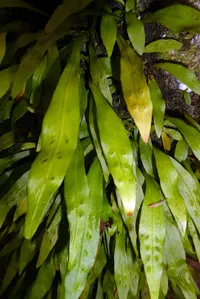
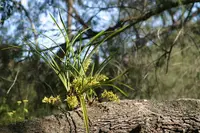
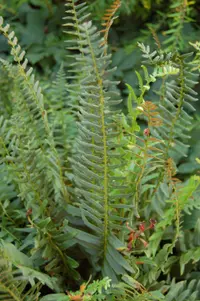
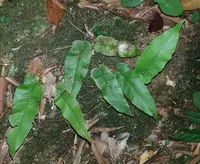
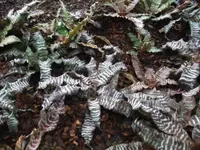
Lance fern, Loxogramme dictyopteris, is a small epiphytic fern that often grows on tree trunks or rocks in warm, humid forests. It forms neat clumps of narrow, strap-shaped fronds.
This species is native to parts of tropical and subtropical Asia, where it benefits from filtered light and constant moisture. Its tidy growth habit and moderate size make it suitable for terrariums or sheltered indoor displays.
The plant prefers stable humidity, gentle airflow, and a loose, well-drained substrate that mimics mossy bark or leaf litter. Understanding these natural conditions helps owners care for lance fern without overwatering or exposing it to harsh sun.

Care Difficulty
Moderate Care

Light Preference
Partial Shade

Water Requirements
Keep Soil Moist

Temperature Preference
Tropical / Frost Sensitive

Hardiness Zone
10–11

Soil Texture
Loamy, Peaty, Organic-rich

Soil pH
Acidic (5.5–6.5)

Soil Drainage
Moist but well-drained

Fertilization
Minimal (feed rarely)
Scan your plant to receive care tips personalized for your specific plant
Available on iOS and Android
This fern prefers soft, filtered light that mimics a shaded forest understory.
Watering should keep the root zone evenly moist without becoming waterlogged.
Stable, mild temperatures support steady growth and healthy fronds.
This fern prefers consistently moist air and benefits from moderate to high humidity indoors.
This species prefers a loose, humus-rich, well-aerated mix that stays lightly moist but never stagnant.
This fern adapts well to container culture when given stable moisture and careful pot selection.
Loxogramme dictyopteris benefits from light, consistent nutrition rather than heavy feeding.
Pruning needs for Loxogramme dictyopteris are minimal and focus on cleanliness and frond quality rather than reshaping.
This fern prefers stable conditions, so repotting Loxogramme dictyopteris is done only when clear signs of crowding appear.
Propagation of Loxogramme dictyopteris is usually done by careful division of rhizomes rather than by spores in home conditions.
Loxogramme dictyopteris is not strongly frost hardy and needs some attention in colder climates.

Plant Health Check
Not sure what's wrong with your plant? Check your plant's health inside the app.
The fronds have a distinctively leathery, almost plastic-like surface with a glossy upper side and a finely reticulate (net-like) venation pattern visible when held to the light, which helps distinguish it from many other strap-shaped ferns.
In its native habitats of eastern Asia, this species typically grows as a lithophyte on shaded rocks or as an epiphyte on decaying logs, anchoring in thin mossy or humus layers rather than deep soil.
The fertile fronds bear narrow, elongated sori arranged in parallel rows along the length of the frond underside, a feature that gives the genus its characteristic patterned look and aids in reliable identification.
Yellowing fronds usually indicate chronic overwatering, poor drainage, or a recent repotting shock. Check that the root zone is moist but not soggy, improve aeration, trim worst-affected fronds, and allow the substrate surface to dry slightly between waterings.
Keep your plants happy and healthy with plant identification, disease detection, and easy care guidance.