Roxburgh fig Care (Ficus auriculata)

Also known as: Elephant ear fig
Roxburgh fig

About Roxburgh fig

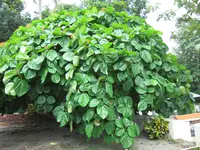
Roxburgh fig, Ficus auriculata, is a subtropical fig tree grown for its large leaves and distinctive rounded fruits that appear on older wood and trunks. It has a bushy, spreading habit when young and can form a small tree in warm climates or a large container specimen in cooler regions.

This species occurs naturally in parts of South and Southeast Asia, where it grows in moist, warm valleys and forest edges. It prefers bright light, regular moisture, and well-drained, fertile soil, which influences how easy it is to care for Roxburgh fig in gardens and large containers.

Main Plant Requirements

Care Difficulty

Moderate Care

Light Preference

Partial Sun

Water Requirements

Moderate Water

Temperature Preference

Tropical / Frost Sensitive

Hardiness Zone

10–11

Soil Texture

Loamy, Silty, Organic-rich

Soil pH

Acidic (5.5–6.5), Slightly acidic (6.5–7.0)

Soil Drainage

Moist but well-drained

Fertilization

Minimal (feed rarely)

Get Personalized Care Plan

Scan your plant to receive care tips personalized for your specific plant

Available on iOS and Android

How to Care for the Roxburgh fig

Ficus auriculata prefers bright, indirect light that mimics light woodland edges.

  • Provide 4–6 hours of filtered or dappled sun daily, such as morning sun with light afternoon shade, especially in hotter climates.
  • Tolerates partial shade, but dense shade reduces growth and leaf size; move gradually to a brighter spot if new leaves emerge small or sparse.
  • Avoid harsh midday and late-afternoon sun, which can scorch large leaves; use light shade cloth or site on the east or north side in summer.

This species prefers evenly moist but not saturated soil, with slight drying between waterings.

  • Allow the top 3–5 cm of soil to dry before deep watering, then moisten the root zone thoroughly so water drains out rather than pooling.
  • Reduce watering in cooler months when growth slows, but do not let soil become dust-dry; leaves drooping and curling inward indicate underwatering.
  • Yellowing lower leaves, soft stems, or a sour soil smell suggest overwatering or poor drainage; improve drainage with coarse material and adjust frequency.

This fig thrives in warm, frost-free conditions similar to a tropical or warm subtropical climate.

  • Optimal growth occurs around 68–86°F (20–30°C), supporting active shoot and leaf production during the main growing season.
  • Avoid exposure below 45°F (7°C); brief dips to 40°F (4°C) may be survived, but repeated chills slow growth and can damage young tissue.
  • Protect from frost and cold winds, and in hot regions provide some shade and consistent soil moisture during spells above 95°F (35°C) to prevent stress.

This species appreciates moderately high humidity but adapts to typical indoor levels.

  • Aim for 50–70% humidity to reduce leaf edge browning and improve growth when caring for Roxburgh fig.
  • In very dry air below 40%, watch for crispy margins, dull leaves, and slowed new growth as humidity stress signs.
  • Increase humidity locally with a pebble tray under the pot or by grouping plants, rather than misting leaves directly.

Ficus auriculata prefers deep, well-structured soil that drains freely yet retains steady moisture.

  • Use a loose loam rich in organic matter, with a mix such as 50% composted bark or garden loam, 30% compost, 20% perlite or coarse sand.
  • Ensure rapid drainage so water does not pool; the soil should feel moist but never stay soggy for more than a few hours after watering.
  • Target a slightly acidic to neutral pH around 6.0–7.0, which supports root nutrient uptake and steady vegetative growth.
  • Improve aeration by incorporating chunky bark and perlite, and avoid heavy clay-based mixes that compact and suffocate roots.

This fig can be grown in containers if the pot provides enough root volume and stability.

  • Choose a wide, heavy container to counterbalance the tree’s spreading canopy and reduce tipping in wind or on balconies.
  • Select a pot depth that allows a broad, fibrous root system to expand laterally rather than forcing roots to coil tightly.
  • Use a container material that moderates moisture swings, such as thick terracotta or double-walled plastic, to keep root-zone conditions more stable.

Ficus auriculata responds well to moderate feeding during its active growing season, especially in containers.

  • Use a balanced liquid fertilizer (for example 10-10-10) at 1/2 strength every 4–6 weeks in spring and summer.
  • For in-ground Roxburgh fig, apply a light layer of well-rotted compost around the drip line once in spring.
  • Avoid feeding in late fall and winter when growth slows, to prevent weak, tender shoots.
  • Flush the soil with plain water a few times each season to limit salt buildup in pots.

Pruning Ficus auriculata helps manage size, structure, and light penetration through the canopy.

  • Carry out main pruning at the end of winter or very early spring before strong new growth begins.
  • Remove dead, diseased, crossing, or inward-growing branches first to improve airflow and reduce pest problems.
  • Shorten overly long shoots to shape the crown and maintain a single strong leader if training as a tree.
  • Use clean, sharp bypass pruners or loppers and make smooth cuts just outside the branch collar.

This species is more often planted in the ground than grown long term in containers, but young plants still benefit from timely moves.

  • Transplant or up-pot in late spring when temperatures are stable and growth is active.
  • Look for roots circling the container, slow growth, or the plant drying out quickly as signs it needs a larger space.
  • Step up only 1–2 pot sizes or into a slightly larger planting hole with well-drained, fertile soil.
  • Water thoroughly after moving and keep in bright, sheltered conditions for 1–2 weeks to reduce transplant shock.

Ficus auriculata is commonly propagated by semi-hardwood cuttings, air layering, or fresh seed where conditions allow.

  • Take 10–15 cm semi-hardwood stem cuttings in late spring to summer and remove lower leaves.
  • Insert cuttings into a moist, well-drained mix, keep at 70–80°F, and maintain high humidity for rooting.
  • For air layering, girdle a healthy branch, wrap with moist sphagnum moss and plastic, then detach once strong roots form.
  • Sow fresh seed on the surface of a sterile mix, keep evenly moist, warm, and in bright, indirect light.

This tropical fig is frost-sensitive and needs thoughtful winter management in cooler regions.

  • In USDA zones colder than 10, grow in containers and move indoors before temperatures drop below 40°F.
  • Outdoors in marginal climates, apply a 5–8 cm mulch layer over the root zone, keeping it away from the trunk.
  • Use frost cloth or similar covers during brief cold snaps to reduce damage to young stems and foliage.

Care Tips

Train Low Branches

Select 3–4 strong basal shoots and lightly tie them outward to a low support frame so the plant develops a broad, accessible canopy that carries heavy fruit without splitting.

Support Heavy Crops

As figs begin to swell, prop loaded branches with padded stakes or soft ties to prevent limb breakage under the weight of fruit, especially in young trees with narrow crotch angles.

Mulch For Root Cooling

Apply a 5–8 cm layer of coarse organic mulch out to the drip line to keep shallow roots cool, reduce moisture swings, and protect the trunk from mechanical damage during mowing or trimming.

Manage Suckers Regularly

Inspect the base every 4–6 weeks and cut unwanted root suckers flush with the trunk to direct energy into the main framework and keep access clear around the plant.

Sanitation Around Fruit Drop

During fruiting season, collect and dispose of dropped figs at least weekly to limit fruit fly buildup and fungal issues, which is an important part of caring for Roxburgh fig in warm, humid climates.

Common Pests and Diseases

Fig leaf beetle

This pest feeds on the soft foliage, leaving large irregular holes and sometimes skeletonizing young leaves. Symptoms include rapid defoliation on tender shoots, especially in warm, wet periods.

Solution

Hand-pick and destroy beetles and larvae on small trees, and prune off heavily infested shoots. For larger plants, use a strong water spray to dislodge larvae, then apply a targeted neem oil or spinosad product to new growth, repeating after heavy rain as needed.

Scale insects

These insects attach firmly to stems and leaf undersides, appearing as small bumps and excreting sticky honeydew that encourages sooty mold. Symptoms include yellowing leaves, poor growth, and black fungal coating on surfaces below the plant.

Solution

Wipe stems and leaves with a cloth or cotton pads dipped in diluted insecticidal soap or horticultural oil, then repeat every 7–10 days until no new scales appear. Improve light and airflow around the plant and prune out heavily infested twigs to reduce reinfestation and support overall Ficus auriculata plant care.

Mealybugs

This pest forms white, cottony clusters in leaf axils, on young shoots, and around fig stalks, sucking sap and weakening growth. Symptoms include distorted new leaves, sticky honeydew, and sooty mold development.

Solution

Isolate affected plants, then dab visible mealybugs with cotton swabs soaked in isopropyl alcohol and follow with an insecticidal soap or neem oil spray to reach hidden insects. Inspect crevices and the base of leaves weekly and remove any new clusters promptly to break the life cycle.

Anthracnose leaf spot

This disease causes irregular brown or tan spots on leaves that may merge into larger dead areas, often with a darker border. Symptoms include premature leaf drop during warm, humid weather and weakened overall vigor.

Solution

Prune and discard infected leaves and twigs, avoiding overhead watering to keep foliage as dry as possible. Improve spacing and airflow, and when conditions remain humid, apply a copper-based or chlorothalonil fungicide according to label directions at the first sign of new spotting.

Fig rust

This disease produces small yellow spots on the upper leaf surface and rusty-orange pustules on the underside, leading to early leaf drop. Symptoms include thinning foliage and reduced growth when infections are repeated each season.

Solution

Remove and destroy all fallen and heavily affected leaves to reduce spore levels, and avoid wetting foliage when irrigating. In areas with a history of rust, begin preventive copper or sulfur fungicide sprays at the start of warm, humid weather and repeat at labeled intervals until conditions dry out.

Interesting Facts

Unusually large fig leaves

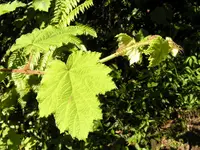
This species develops very large, rounded leaves that can reach more than 30 cm across in mature outdoor plants, giving it the common name roxburgh fig or elephant ear fig. The broad leaf surface helps the plant capture light efficiently in bright but partially shaded forest edges.

Cauliflorous fruiting habit

The tree produces its figs directly on older branches and sometimes on the main trunk, a trait known as cauliflory. This growth pattern makes the fruit more accessible to ground-dwelling animals that help disperse its seeds.

Specialized fig–wasp mutualism

Like other figs, this species relies on tiny wasps in the genus Ceratosolen for pollination, and the wasps can complete their life cycle only inside its figs. This tight mutualism means each depends on the other for long-term survival.

Botan icon

Did you know?

In parts of its native range in South and Southeast Asia, the young leaves and ripe figs of this species are commonly used as traditional food ingredients, and the tree is sometimes planted near villages as a multipurpose fruit and shade tree.

FAQs about Roxburgh fig

The figs and young leaves are edible when fully ripe or cooked and are used in some regional cuisines. Unripe fruits can be astringent. Always identify the plant correctly and avoid eating plant parts treated with chemicals.

Grow Healthy Plants with Botan Care

Keep your plants happy and healthy with plant identification, disease detection, and easy care guidance.

Botan plant care app — identify plants on mobile

Explore More Plants