Salinity management
If grown away from the coast, mix small amounts of marine salt into the irrigation water a few times per season to maintain moderate salinity and prevent the plant from becoming weak and chlorotic.

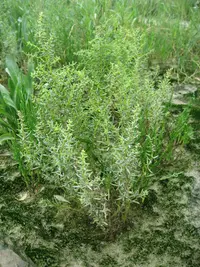
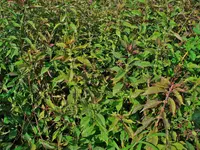
Herbaceous seepweed, Suaeda maritima, is a low, bushy annual halophyte, meaning it naturally tolerates salty conditions. It has fleshy, narrow leaves and often develops a reddish tint toward the end of the season.
This species commonly grows along coastal salt marshes, estuaries, and salty mudflats in Europe, North America, and other temperate regions. It forms loose clumps that adapt well to changing water levels and saline soils.
In cultivation, it suits specialized gardens that mimic coastal or salt-affected habitats. Anyone wanting to care for herbaceous seepweed should understand its preference for full sun, moist conditions, and mineral-rich, often saline substrates.

Care Difficulty
Moderate Care

Light Preference
Full Sun

Water Requirements
Aquatic

Temperature Preference
Cool Climate

Hardiness Zone
5–9

Soil Texture
Sandy, Silty, Loamy

Soil pH
Neutral (7.0), Alkaline (7.5–8.5)

Soil Drainage
Waterlogged tolerant

Fertilization
Minimal (feed rarely)
Scan your plant to receive care tips personalized for your specific plant
Available on iOS and Android
This coastal halophyte prefers strong light and copes well with exposed, sunny sites.
This salt-marsh annual is adapted to fluctuating moisture but not to stagnant, low-oxygen soils.
This species thrives in mild maritime climates but tolerates a fairly wide temperature range.
This coastal halophyte tolerates a wide humidity range and rarely needs special humidity control.
Suaeda maritima thrives in very free-draining, often saline substrates that mimic coastal or saltmarsh conditions.
This species can be grown in containers if drainage and salt levels are managed carefully.
Suaeda maritima usually needs little added nutrition when grown in naturally saline, nutrient-poor soils.
Pruning Suaeda maritima is light and mainly for tidiness and plant health rather than strict shaping.
Suaeda maritima is more often transplanted in coastal beds than repotted long term in containers.
New Suaeda maritima plants are most commonly raised from seed under controlled moisture and salinity.
In many mild coastal climates Suaeda maritima is reasonably cold tolerant and often needs minimal winter care.

Plant Health Check
Not sure what's wrong with your plant? Check your plant's health inside the app.
This species actively takes up salt from seawater-influenced soils and stores it in its succulent leaves, which is why older leaves can taste distinctly salty. The plant later sheds these salt-loaded leaves, helping it avoid toxic internal salt levels.
Suaeda maritima often colonizes newly exposed tidal mudflats and saline disturbed land, stabilizing the surface and beginning soil development before less salt-tolerant plants arrive.
In late summer to autumn, many populations turn striking red or purple as pigments called betalains accumulate in the tissues, which may help protect the plant from high light and salt stress.

Fossil pollen and macrofossil remains of Suaeda maritima show that this halophyte has been part of European coastal salt-marsh vegetation since at least the mid-Holocene, making it a long-standing component of ancient shoreline ecosystems.
Tender young shoots and leaves are edible and mildly salty, often foraged in coastal areas and occasionally cooked as a vegetable. Always harvest from unpolluted sites, as this halophyte can accumulate contaminants from saline or disturbed soils.
Keep your plants happy and healthy with plant identification, disease detection, and easy care guidance.