swamp morning-glory Care (Ipomoea aquatica)

Also known as: Water Morning Glory, Water spinach, Swamp cabbage
swamp morning-glory

About swamp morning-glory

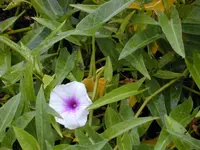
Swamp morning-glory (Ipomoea aquatica) is a fast-growing, semi-aquatic vine commonly grown as a leafy vegetable in tropical and subtropical regions. It has hollow, trailing stems and smooth, arrow-shaped leaves, often forming dense mats along slow-moving water.

In the wild it naturally occurs in wetlands, ditches, rice paddies, and pond margins across Southeast Asia and other warm climates. It is generally considered easy to grow where conditions are warm and frost-free.

This plant prefers full sun, consistently moist to waterlogged conditions, and nutrient-rich soil or shallow water. Understanding these natural wetland preferences helps guide how to care for swamp morning-glory at home or in small-scale food gardens.

Main Plant Requirements

Care Difficulty

Moderate Care

Light Preference

Full Sun

Water Requirements

Aquatic

Temperature Preference

Tropical / Frost Sensitive

Hardiness Zone

9–13

Soil Texture

Loamy, Silty, Organic-rich

Soil pH

Slightly acidic (6.5–7.0), Neutral (7.0)

Soil Drainage

Waterlogged tolerant

Fertilization

Moderate (every 2–4 weeks)

Get Personalized Care Plan

Scan your plant to receive care tips personalized for your specific plant

Available on iOS and Android

How to Care for the swamp morning-glory

Ipomoea aquatica grows best with strong, consistent light in warm seasons.

  • Provide 6–8 hours of direct sun daily, ideally with morning sun and light afternoon shade in very hot climates.
  • Allow partial shade (3–4 hours sun) in midsummer to reduce leaf scorch and wilting, especially in shallow water or containers.
  • In cooler seasons, maximize exposure by avoiding shade from buildings or trees, as low light reduces growth and leaf size in swamp morning-glory.

This semi-aquatic plant prefers consistently wet conditions without long dry periods.

  • For plants in soil, water whenever the top 2–3 cm feels just moist, not dry, aiming for evenly damp but not stagnant conditions.
  • In very hot or windy weather, check moisture daily; leaves drooping and soil pulling from the edges signal underwatering.
  • Yellowing, soft stems and a sour smell from poorly drained beds suggest overwatering and low oxygen; improve drainage channels or reduce standing depth.

This warm-season plant grows vigorously in consistently warm, frost-free conditions.

  • Optimal growth occurs at 77–90°F (25–32°C); growth slows noticeably below 70°F (21°C).
  • Plants are very frost sensitive; tissue damage can occur near 40°F (4°C), and freezing temperatures quickly kill stems and leaves.
  • In hot spells above 95°F (35°C), growth may stall; provide slightly deeper water or light shade to buffer root and stem temperatures.

This semi-aquatic plant prefers consistently moist air but usually adapts to typical home humidity if roots stay wet.

  • Aim for 50–70% humidity, especially in heated or air-conditioned rooms.
  • Tolerates brief drier air, but leaf edges may brown or curl when humidity stays low.
  • Increase humidity by grouping plants near open water trays or aquariums, not by misting leaves heavily.

Ipomoea aquatica naturally grows in saturated, nutrient-rich substrates rather than standard potting soil.

  • Use a heavy, organic-rich mix such as 2 parts garden loam, 1 part compost, and 1 part coarse sand for structure.
  • Allow soil to stay waterlogged or even under shallow water; drainage is less important than constant moisture for this species.
  • Keep pH slightly acidic to neutral, around 6.0–7.0, to support nutrient uptake and vigorous leafy growth.
  • Avoid peat-heavy, very light mixes that float, dry out quickly, or cause stems to topple in the container.

This species is very suitable for container growing, especially in tubs or water-filled pots.

  • Choose a wide, relatively shallow container to give spreading stems room while keeping water depth manageable.
  • Use a stable, heavier pot material so the container does not tip as foliage becomes dense and top-weighted.
  • If using a pot with drainage holes, stand it inside a larger outer tub that can hold several centimeters of water for constant saturation.

Ipomoea aquatica benefits from steady nutrients, especially in warm, fast-growing conditions.

  • Use a balanced, water-soluble fertilizer (for example 10-10-10) at 1/4–1/2 strength for Ipomoea aquatica plant care.
  • Feed every 2–3 weeks during the main growing season when growth and leaf production are strong.
  • In rich soil or ponds, supplement lightly with compost instead of frequent synthetic feeding.
  • Reduce or stop fertilizing in cooler months or when growth slows to avoid weak, soft tissue.

Pruning keeps Ipomoea aquatica compact, productive, and easy to harvest.

  • Trim soft shoot tips during the warm growing season to encourage branching and more tender leaves.
  • Remove yellowing, damaged, or tangled stems to maintain airflow and reduce disease risk.
  • Use clean scissors or pruning snips to make sharp cuts just above a node.
  • Harvest stems in stages rather than all at once to maintain plant vigor and shape.

This fast-growing aquatic vine is usually transplanted rather than repotted long term.

  • Transplant seedlings or cuttings outdoors after frost, once water and soil stay above about 65°F.
  • Move plants when roots begin circling small starter containers or growth slows despite good conditions.
  • Shift into wider, shallow containers or flooded beds that allow roots to spread freely.
  • Water thoroughly after transplanting, keep roots consistently moist, and shade lightly for a few days to limit stress.

Ipomoea aquatica is commonly propagated from stem cuttings and also grown from seed in warm conditions.

  • Take 10–15 cm soft stem cuttings in late spring or summer, removing lower leaves.
  • Root cuttings in clean water or saturated soil, keeping temperatures around 70–85°F and light bright but indirect.
  • Once strong white roots form, transplant gently into shallow, consistently wet soil or aquatic beds.
  • Sow seeds in warm, moist seed mix, barely covered, and keep evenly damp until germination.

This tropical species is very frost sensitive and needs protection in cooler climates.

  • In regions below 50°F, grow Ipomoea aquatica as a warm-season annual or overwinter only indoors.
  • Before first frost, move container plants into a bright, warm room or heated greenhouse.
  • Maintain water above roughly 65°F and reduce harvesting so plants can recover energy.

Care Tips

Shallow Water Setup

Use a wide, shallow container or bed with 5–15 cm of water above the substrate so stems can root along their length and you can easily harvest young shoots without disturbing the whole plant.

Regular Tip Harvesting

Pinch or cut 10–15 cm shoot tips every 5–7 days during active growth to encourage bushier plants, delay flowering, and keep foliage tender for longer harvest windows.

Staggered Succession Planting

Sow or plant small batches every 2–3 weeks so older, woody plants can be removed and replaced without interrupting a continuous supply of young, fast-growing stems.

Oxygenation And Flow

In container or tank culture, use a small aquarium pump or frequent water changes to keep water gently moving and oxygenated, which reduces root rot and algal buildup when growing swamp morning-glory.

Clean, Edible-Safe Systems

If harvesting for food, use only food-safe containers, avoid galvanized metal in standing water, and rinse plants in clean water before use to minimize contamination from algae, debris, or biofilm on stems and leaves.

Common Pests and Diseases

Leaf beetles

This pest feeds on tender leaves and shoots, creating irregular holes and sometimes skeletonizing the foliage, especially in warm, wet conditions. Severe infestations can slow growth and reduce edible leaf quality.

Solution

Hand-pick adults and larvae in small plantings, and use floating row covers to exclude beetles where practical. Reduce nearby weed hosts, especially in the Convolvulaceae family, and if needed apply a targeted insecticide labeled for edible leafy greens, focusing sprays on the undersides of leaves in the late afternoon.

Aphids

These insects cluster on young stems and leaf undersides, sucking sap and causing curling, distortion, and sticky honeydew that can attract sooty mold. Populations often increase rapidly in warm, sheltered sites or on heavily fertilized plants.

Solution

Dislodge colonies with a firm stream of water and remove heavily infested shoots. Encourage natural predators such as lady beetles, and if needed use insecticidal soap or neem oil, ensuring thorough coverage of new growth and repeating applications according to label directions as part of Ipomoea aquatica care.

Flea beetles

This pest creates many small, round shot holes in leaves and can stunt young plants, particularly in dry, hot weather. Seedlings and very young vines are most vulnerable and may fail to establish if damage is heavy.

Solution

Use fine mesh covers to protect young plants until they are well established and maintain good soil moisture, since vigorous growth tolerates damage better. Remove plant debris and nearby weeds to reduce overwintering sites, and where necessary apply a residual soil-safe product such as spinosad, targeting peak adult activity periods.

Cercospora leaf spot

This disease causes small, water-soaked spots that enlarge into circular brown or gray lesions, sometimes with a pale center and darker edge, leading to yellowing and premature leaf drop in humid conditions. Symptoms include more severe spotting on older leaves and under dense canopies with poor airflow.

Solution

Remove and discard infected leaves promptly and avoid overhead watering, especially late in the day, to keep foliage as dry as possible. Provide wider spacing to improve air circulation, rotate out of host crops for at least 2–3 years, and use a copper-based or other labeled fungicide when conditions strongly favor infection.

Downy mildew

This disease produces yellow to light-green angular patches on upper leaf surfaces and grayish to purplish mold on the undersides during humid weather, leading to leaf curling and collapse. Outbreaks are common in warm, wet environments and can spread quickly through dense stands in water or flooded beds.

Solution

Improve air movement over the planting by reducing crowding and orienting rows to prevailing winds, and water at the base rather than overhead when possible. Remove and destroy heavily affected foliage to reduce spore load, and in recurrent problem areas consider using a downy mildew–specific fungicide labeled for leafy vegetables, applied preventively when weather favors disease development.

Interesting Facts

Semi-aquatic physiology

This species can grow with its stems and roots fully submerged, partly submerged, or in saturated mud, using hollow, air-filled stems to move oxygen to underwater tissues.

Rapid vegetative growth

In warm, nutrient-rich water it can elongate quickly from stem cuttings, which helps it dominate ditches, canals, and rice paddies and is one reason it is regulated as a noxious weed in parts of the southern United States.

Flood-adapted reproduction

The plant spreads mainly through stem fragments that root at the nodes, but it also produces floating, water-dispersed seeds that allow it to colonize new waterways over time.

Botan icon

Did you know?

This species has been independently domesticated as a leafy vegetable in multiple regions of tropical Asia, where different cultivated forms are grown either in flooded aquatic systems or on drier, upland beds depending on local cuisine and farming traditions.

FAQs about swamp morning-glory

Yes, this species is widely eaten as a leafy vegetable in many Asian cuisines. Young shoots and leaves are used cooked or lightly stir-fried. Always harvest from clean, uncontaminated water to avoid pathogens, parasites, or heavy metals.

Grow Healthy Plants with Botan Care

Keep your plants happy and healthy with plant identification, disease detection, and easy care guidance.

Botan plant care app — identify plants on mobile

Explore More Plants