anisescented goldenrod Care (Solidago odora)

Also known as: sweet-scented goldenrod, Sweet Goldenrod, licorice goldenrod, Anise Goldenrod
anisescented goldenrod

About anisescented goldenrod

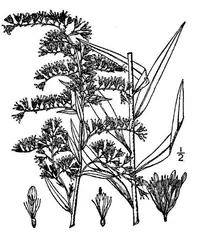
Anisescented goldenrod (Solidago odora) is a perennial wildflower in the aster family, valued for its aromatic foliage and late-season yellow flower clusters. It forms upright clumps with slender stems and narrow leaves that release a sweet anise-like scent when crushed. In nature it occurs mainly in sandy, well-drained soils of the eastern United States, often in open woods, roadsides, and dry clearings. The species is generally easy to grow if given full sun, low to moderate moisture, and soil that does not stay wet. Gardeners who understand how to care for anisescented goldenrod usually find it a durable, low-input plant for naturalistic borders and pollinator gardens.

Main Plant Requirements

Care Difficulty

Easy Care

Light Preference

Full Sun

Water Requirements

Moderate Water

Temperature Preference

Cold Hardy

Hardiness Zone

5–9

Soil Texture

Sandy, Loamy, Organic-rich

Soil pH

Acidic (5.5–6.5), Slightly acidic (6.5–7.0)

Soil Drainage

Well-drained

Fertilization

Minimal (feed rarely)

Get Personalized Care Plan

Scan your plant to receive care tips personalized for your specific plant

Available on iOS and Android

How to Care for the anisescented goldenrod

This sun-loving perennial thrives in open, bright sites with stable light through the growing season.

  • Provide 6–8 hours of direct sun daily; morning sun with light afternoon shade works well in hot summer regions.
  • Plant anisescented goldenrod where it receives at least 4 hours of unshaded midday or afternoon light; in dense partial shade stems stretch and flowering declines.
  • Avoid deep shade and heavily reflected heat; foliage may scorch on dry, exposed sites without enough soil moisture, especially during late-summer heat waves.

This species prefers evenly moist, well-drained soil but tolerates short dry spells once established.

  • In the first growing season, water when the top 3–5 cm of soil feels dry, aiming for a deep soak rather than frequent light sprinkling.
  • For mature Solidago odora in the ground, rely on rainfall where possible and supplement only after 5–7 rain-free days if leaves begin to droop slightly.
  • Use soil that drains freely; persistent sogginess, yellowing lower leaves, and soft stems indicate overwatering, while crisp leaf edges and slow growth suggest underwatering.

This hardy perennial handles a wide thermal range but grows best in moderate, stable temperatures during the growing season.

  • Active growth is strongest around 65–80°F (18–27°C), with good performance through typical spring and fall conditions.
  • The plant is cold-hardy in much of the US, tolerating winter lows near 0°F (−18°C) or below once established and dormant.
  • Summer heat up to 90–95°F (32–35°C) is usually tolerated if soil moisture is maintained; late frosts may nip new shoots but rarely cause lasting damage.

This species handles a wide humidity range and rarely needs special humidity management outdoors.

  • Optimal humidity is about 30–60%, similar to typical outdoor air in most temperate regions.
  • Plants tolerate dry air well; leaf scorch usually reflects drought in the root zone rather than low humidity.
  • If foliage tips brown in prolonged hot, very dry wind, group plants and use a thick mulch layer to reduce moisture loss.

Solidago odora performs best in light, well-drained mineral soils that do not stay wet after rain.

  • Use sandy or sandy-loam soil with moderate organic matter; aim for a mix of roughly 60–70% mineral topsoil and 30–40% compost.
  • Ensure rapid drainage; on heavy clay, build a raised bed or amend the top 20–30 cm with coarse sand and compost to improve structure.
  • Target a slightly acidic to neutral pH of about 6.0–7.0, avoiding strongly alkaline sites that can limit nutrient availability.
  • Avoid compacted, waterlogged, or constantly irrigated beds, which tend to cause root decline and lodging of tall stems.

This species can be grown in containers if the pot is large, stable, and drains quickly.

  • Choose a deep, heavy container at least 30–40 cm in diameter to support the tall, upright stems against wind.
  • Use a gritty mix such as 50% peat- or coir-based potting soil with 30% coarse sand and 20% perlite to prevent waterlogging.
  • Place the container where it cannot tip easily, such as braced against a wall or rail, because flowering stems become top-heavy.

Solidago odora grows well in lean soils and usually needs only light feeding in garden settings.

  • Apply a thin layer of compost around clumps in early spring to boost soil organic matter.
  • If growth seems weak, use a balanced slow-release fertilizer (such as 10-10-10) at half strength once in spring.
  • Avoid high-nitrogen products that encourage floppy growth and reduced flowering.
  • Skip feeding in late fall and winter, as the plant is entering or in dormancy.

Pruning Solidago odora is mainly used to manage height, encourage bushiness, and remove old flowering stems.

  • Cut back spent flower stems in late fall or very early spring using clean hand pruners.
  • In late spring, pinch or shear back the top 5–10 cm of new growth to promote branching and denser plants.
  • Remove dead, diseased, or wind-damaged stems at the base whenever noticed to maintain plant health.
  • Thin crowded shoots from the center of dense clumps every 1–2 years to improve air circulation and reduce mildew.

This species is most often grown in the ground, so focus on dividing and transplanting mature clumps rather than container repotting.

  • Plan transplanting or division for early spring or early fall when temperatures are mild and soil is moist.
  • Lift and divide clumps every 3–4 years if flowering declines, centers die out, or plants spread beyond their space.
  • Replant divisions at the same depth in well-drained soil, spacing clumps to allow airflow and future spread.
  • Water deeply after transplanting, then keep soil evenly moist for 1–2 weeks to limit root stress and support reestablishment.

Solidago odora is commonly propagated by division and by seed for maintaining or expanding plantings.

  • Divide established clumps in early spring or early fall, ensuring each division has several shoots and a healthy root mass.
  • Replant divisions promptly in loose, well-drained soil and water thoroughly to settle roots and close air pockets.
  • For seeds, sow outdoors in fall or cold-stratify for 4–6 weeks, then provide bright light and lightly moist substrate.
  • Thin or transplant seedlings once they have several true leaves, spacing to allow good air circulation and strong root development.

This species is cold hardy in much of its range and usually needs only minimal winter care outdoors.

  • After hard frost, allow stems to stand or cut them back to 5–10 cm above ground, depending on desired appearance.
  • Apply a 5–8 cm layer of mulch around the root zone in colder areas to moderate freeze–thaw cycles.
  • Move container plants to a sheltered, unheated but frost-free spot or heel pots into the ground in cold climates.

Care Tips

Staggered Planting Blocks

Plant in small blocks with 30–45 cm spacing rather than a single row to improve pollinator access, reduce lodging from wind, and make harvesting aromatic foliage easier.

Timed Foliage Harvest

For the strongest anise scent and best tea quality, harvest leaves in the morning once dew has dried, choosing non-flowering stems and cutting no more than 1/3 of each stem to avoid stressing the plant.

Flower Stalk Management

Pinch out a few early flower buds on vigorous stems to encourage branching and more uniform flowering, which results in a denser, more self-supporting clump later in the season.

Self‑Seeding Control

If you want to limit spread, shear or deadhead seed heads just as the fluff begins to form, leaving only selected stems to mature seed where you want new plants.

Low‑Input Pest Strategy

Encourage natural predators by avoiding broad-spectrum insecticides and leaving some adjacent native vegetation, since this plant usually stays healthy and benefits from a balanced insect community when caring for anisescented goldenrod.

Common Pests and Diseases

Goldenrod gall fly

This pest causes round or oval swellings (galls) on stems, usually midway up the plant, where larvae feed inside the tissue. Symptoms include thickened stems and sometimes slight bending or reduced flowering above the gall.

Solution

Cut off and destroy galled stems in late fall or very early spring before adults emerge to break the life cycle. In garden settings, no chemical control is usually needed, as plants typically tolerate some galling without serious harm.

Goldenrod bunch gall midge

This pest triggers tight clusters of short, deformed leaves at stem tips, giving a broomed or bunchy appearance instead of normal elongating shoots. This reduces flowering on affected stems but rarely kills the plant.

Solution

Prune out and discard galled shoot tips as soon as the bunching is noticed, preferably before mid-summer, to remove larvae. Encourage plant vigor with full sun and well-drained soil so unaffected stems still flower well.

Rust fungus

This disease produces yellow to orange powdery pustules on leaf undersides and sometimes small yellow spots on upper surfaces. Symptoms include premature leaf yellowing and early leaf drop in humid or crowded plantings.

Solution

Remove and discard heavily infected leaves to reduce spore spread, and avoid overhead watering to keep foliage dry. Increase spacing and airflow, and if rust recurs severely, apply a labeled sulfur or copper-based fungicide according to solid, science-based Solidago odora care instructions.

Powdery mildew

This disease appears as white to gray, powdery patches on upper leaf surfaces, often late in the season, and can cause leaf distortion or early senescence. Symptoms include dull, faded foliage and reduced ornamental quality.

Solution

Improve air circulation by thinning nearby vegetation and avoid frequent light overhead watering that keeps foliage damp. Remove the most affected leaves and, in persistent cases, use a labeled low-impact fungicide such as potassium bicarbonate or horticultural oil applied in the evening to avoid leaf burn.

Leaf miners

These insects create pale, winding tunnels or blotches inside leaves as larvae feed between leaf surfaces. Damage is mainly cosmetic but can reduce photosynthesis if many leaves are affected.

Solution

Remove and discard mined leaves as soon as damage appears to physically remove larvae. Encourage natural predators and avoid broad-spectrum insecticides; for heavy, repeated infestations, use a targeted, systemic product containing spinosad applied according to label directions.

Interesting Facts

Anise-like leaf aroma

When the leaves are crushed, they release a sweet anise or licorice scent, which is unusual among goldenrod species and comes from volatile aromatic compounds in the foliage.

Tea and flavoring use

Indigenous peoples and early European settlers in North America used the dried leaves to make a mild aromatic tea and as a flavoring, a practice that led to common names like anisescented goldenrod and sweet goldenrod.

Sandy soil specialist

This species naturally occurs on dry, sandy, nutrient-poor soils in the eastern United States, showing strong adaptation to environments where many other herbaceous perennials struggle.

Botan icon

Did you know?

During the American Revolutionary period, colonists reportedly used the leaves of this species as a local tea substitute after boycotting imported tea, contributing to its historic nickname Liberty tea.

FAQs about anisescented goldenrod

This species spreads by short rhizomes and self-seeding but is usually clump-forming rather than aggressively running. In average garden conditions it expands gradually. Deadheading flower heads before seeds ripen limits spread in smaller or more formal beds.

Grow Healthy Plants with Botan Care

Keep your plants happy and healthy with plant identification, disease detection, and easy care guidance.

Botan plant care app — identify plants on mobile

Explore More Plants