Flooded-bed setup
In bog gardens or near ponds, create a shallow, edged planting basin that can be periodically flooded to 2–5 cm above the rhizomes during active growth, then drained in late summer to reduce rot risk.

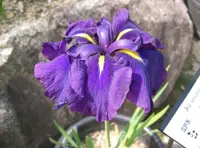
Japanese iris, Iris ensata, is a hardy, rhizomatous perennial grown mainly for its large, flat flowers in rich shades of purple, blue, pink, and white. The fans of upright, sword-like leaves form dense clumps that suit garden borders, pond margins, and moist meadow-style plantings.
This species is native to wet areas of Japan and parts of East Asia, where it grows in seasonally flooded soils. It prefers consistently moist, slightly acidic soil and cool to mild summer conditions, so gardeners in hotter or very dry regions may find it more demanding. With proper siting and moisture, it is straightforward to care for Japanese iris.

Care Difficulty
Moderate Care

Light Preference
Full Sun

Water Requirements
Aquatic

Temperature Preference
Cold Hardy

Hardiness Zone
4–9

Soil Texture
Loamy, Clay, Organic-rich

Soil pH
Strongly acidic (4.5–5.5), Acidic (5.5–6.5)

Soil Drainage
Waterlogged tolerant

Fertilization
Light (every 4–6 weeks)
Scan your plant to receive care tips personalized for your specific plant
Available on iOS and Android
This species prefers bright conditions with consistent moisture at the roots and moderate sun on the foliage.
This iris is adapted to very moist to shallowly flooded conditions, especially during its active growing season.
This plant is cold hardy yet appreciates moderate temperatures during active growth for best flowering and foliage quality.
This species prefers consistently moist air but usually manages in typical outdoor humidity if soil stays wet.
This moisture-loving iris needs deep, organic-rich, slightly acidic soil that stays wet without turning anaerobic.
This species can grow in containers if the setup supports constant moisture and root depth.
Iris ensata benefits from moderate feeding to support strong clumps and reliable flowering.
Pruning Japanese iris mainly focuses on cleanliness and maintaining healthy, flowering clumps.
Dividing and transplanting established Iris ensata clumps keeps them vigorous and flowering well.
Division is the most reliable method for propagating Iris ensata while maintaining cultivar traits.
Established Iris ensata in the ground is generally cold hardy in much of the US but benefits from simple winter preparation.

Plant Health Check
Not sure what's wrong with your plant? Check your plant's health inside the app.
This species naturally grows along streams, ponds, and rice paddies in Japan, and its rhizomes tolerate prolonged waterlogging that would quickly damage many other irises.
Unlike most bearded irises, Iris ensata prefers acidic, low-lime soils and can decline in neutral to alkaline conditions due to reduced nutrient availability and potential iron deficiency.
Cultivated forms have been selectively bred for very broad, flat outer petals called falls, creating large, almost circular flowers that can appear more like single dahlias than typical irises.

In Japan, Iris ensata has been selectively bred for several centuries, with some traditional cultivars historically restricted to noble or samurai gardens and celebrated in seasonal iris-viewing festivals that coincide with the rainy season bloom.
Lack of flowers often comes from plants being too young, overcrowded clumps, or insufficient winter chill. Heavy shade and low nutrients also reduce buds. Divide crowded rhizomes and apply a balanced, low-nitrogen fertilizer after flowering to restore bloom.
Keep your plants happy and healthy with plant identification, disease detection, and easy care guidance.