strawcolored flatsedge Care (Cyperus strigosus)

Also known as: False nutsedge
strawcolored flatsedge

About strawcolored flatsedge

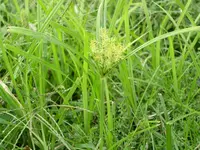
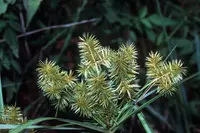
Strawcolored flatsedge (Cyperus strigosus) is a clump-forming sedge, related to grasses, with upright, triangular stems and flat, narrow leaves. It produces golden straw-colored seed heads that give the plant its common name.

This species is native to North America and is commonly found in moist fields, ditches, shorelines, and disturbed wet areas. It spreads by seed and short rhizomes, forming loose colonies in suitable sites.

Cyperus strigosus is generally easy to grow in consistently moist soil and full sun to light shade, especially in rain gardens or naturalized plantings. Gardeners who learn how to care for strawcolored flatsedge can use it in habitat restoration, erosion control, or as a low-maintenance, water-loving accent.

Main Plant Requirements

Care Difficulty

Easy Care

Light Preference

Full Sun

Water Requirements

Aquatic

Temperature Preference

Cold Hardy

Hardiness Zone

3–10

Soil Texture

Sandy, Loamy, Silty

Soil pH

Acidic (5.5–6.5), Slightly acidic (6.5–7.0)

Soil Drainage

Waterlogged tolerant

Fertilization

Minimal (feed rarely)

Get Personalized Care Plan

Scan your plant to receive care tips personalized for your specific plant

Available on iOS and Android

How to Care for the strawcolored flatsedge

This wetland sedge prefers abundant light but tolerates some shade, depending on climate and moisture.

  • Provide 6–8 hours of sun daily in cool to mild climates; in hotter regions, favor morning sun with light afternoon shade to reduce stress.
  • Site strawcolored flatsedge where soil stays moist; in full sun it needs consistently wet conditions, while in partial shade it manages with slightly less moisture.
  • Watch for weak, elongated stems and sparse seedheads as signs of insufficient light, and for scorched leaf tips in dry, exposed afternoon sun.

This species thrives in consistently wet conditions and is more tolerant of excess water than dryness.

  • Maintain soil that is saturated or very moist; do not let the top layer dry beyond 1–2 cm, especially during active growth in spring and summer.
  • In natural or garden settings, place Cyperus strigosus near ponds, ditches, or low spots where water collects and drainage is slow to moderate.
  • Yellowing, limp foliage with foul-smelling, black roots indicates standing water without oxygen, while browning tips and drooping stems suggest the soil is drying too much.

This sedge is adapted to temperate climates with warm summers and cold, dormant winters.

  • Optimal growth occurs around 70–85°F (21–29°C) during the growing season, especially when combined with high soil moisture.
  • Plants tolerate winter lows down to about 0–10°F (-18 to -12°C) once established, dying back aboveground and resprouting from the root system in spring.
  • Short heat waves up to 95°F (35°C) are tolerated if soil remains saturated, but repeated hard frosts without insulating mulch can damage young or newly planted clumps.

This wetland sedge prefers consistently humid conditions and does poorly in very dry air.

  • Aim for 60–80% humidity, especially in heated homes or dry climates.
  • Leaves curling, browning at tips, or drying along edges indicate low humidity stress in strawcolored flatsedge.
  • Increase humidity by grouping pots in trays with water and pebbles or placing containers near outdoor water features.

This species prefers consistently moist, rich, fine-textured soil that never fully dries out.

  • Use a loamy, organic-rich mix, such as 2 parts compost or peat, 1 part garden loam, and 1 part fine sand.
  • Soil should hold water yet stay soft and unsaturated, mimicking a marshy margin rather than a submerged bog.
  • Aim for slightly acidic to neutral pH around 6.0–7.0, which suits Cyperus strigosus in most garden settings.
  • To improve aeration while maintaining moisture, avoid heavy clay alone and blend in coarse sand or fine grit.

This species can be grown in containers if moisture needs are carefully managed.

  • Choose a deep, heavy pot that resists tipping as tall stems catch wind and become top-heavy.
  • Select plastic or glazed containers, which slow evaporation and help keep the root zone consistently damp.
  • Stand the pot in a shallow outer tray of water to maintain a wet profile without flooding the crown.

This native sedge usually needs minimal feeding, especially in reasonably fertile, moist soil.

  • For container-grown Cyperus strigosus, apply a balanced liquid fertilizer at 1/4–1/2 strength every 4–6 weeks in spring and summer.
  • Use a low-rate slow-release or compost-based fertilizer for in-ground clumps only if growth appears weak or pale.
  • Avoid feeding in fall and winter when growth slows, to limit soft, weak tissue and nutrient leaching.
  • Always water before and after applying fertilizer to reduce root burn and improve nutrient uptake.

Pruning focuses on keeping Cyperus strigosus tidy and preventing unwanted spread rather than shaping.

  • Cut back dead, yellowing, or storm-damaged stems at the base throughout the growing season using clean hand pruners or scissors.
  • In late fall or early spring, shear or cut back spent flowering stems to reduce self-seeding and maintain a cleaner stand.
  • Thin out crowded clumps by removing some outer stems, which improves air flow and reduces disease risk.
  • Dispose of seed heads if spread is a concern, rather than composting them in open piles.

This species is more often transplanted in the landscape than repotted long term in containers.

  • Plan transplanting for early spring or early fall, when temperatures are mild and soil stays evenly moist.
  • Move plants when clumps become crowded, growth slows, or roots circle the pot or emerge from drainage holes.
  • Lift the clump with a spade, keep as much root ball and surrounding moist soil as possible, and replant at the same depth.
  • Water thoroughly after transplanting, then maintain consistent moisture and light shade for 1–2 weeks to limit root stress.

Cyperus strigosus is commonly propagated by division or seed for restoration and habitat plantings.

  • Divide mature clumps in early spring, separating sections with several shoots and healthy roots, then replant immediately in moist soil.
  • Collect ripe seed from dry seed heads, then sow on the soil surface; light helps germination in warm, consistently damp conditions.
  • Use shallow trays or nursery pots with a fine, moisture-retentive medium and avoid covering seed deeply.
  • Maintain high humidity and 65–75°F temperatures to support uniform germination and strong early growth.

This cold-hardy native typically needs little special winter care in most temperate climates.

  • Established in-ground plants tolerate normal winter frost and freezing down to the root zone.
  • Allow foliage of strawcolored flatsedge to die back naturally; it insulates crowns and can be cut in late winter if desired.
  • In very exposed or newly planted sites, add a light 5–7 cm mulch layer around the base, keeping it off the crowns.

Care Tips

Water-Level Management

In containers or lined beds, keep the water level just at or slightly above the soil surface during active growth, then lower it by 2–3 cm in late fall to reduce rot risk as temperatures drop.

Controlled Colonization

Install rhizome barriers or grow this sedge in buried pots without drainage holes (with an overflow notch) to contain its spread while still providing consistently wet conditions.

Seed Bank Stimulation

For habitat or restoration use, lightly disturb the top 0.5–1 cm of soil in early spring to expose buried seeds to light, which can significantly increase germination and stand density.

Cut-And-Regrow Management

In nutrient-rich wet sites, mow or cut plants back to 5–8 cm after seed set to reduce self-seeding and encourage a fresh flush of greener, denser foliage.

Targeted Stand Renewal

Every 2–3 years in managed plantings, selectively remove older, woody clumps and replant divisions from vigorous younger sections to maintain an even, healthy stand when growing strawcolored flatsedge.

Common Pests and Diseases

Leaf spot

This disease causes small water-soaked or tan to dark-brown lesions on leaves and culms that may merge in wet conditions. Symptoms include thinning stands and premature leaf yellowing in dense or poorly ventilated patches.

Solution

Remove and dispose of heavily spotted foliage and avoid overhead irrigation where possible so leaves dry quickly. Improve air movement, reduce overcrowding, and if growing Cyperus strigosus in a nursery or restoration setting, use a labeled copper- or chlorothalonil-based fungicide only as directed when wet, humid conditions persist and spotting spreads.

Rust

This disease shows as orange to reddish-brown pustules or streaks on leaves and stems, often on plants in warm, humid sites. Symptoms include gradual leaf yellowing and reduced vigor in dense stands.

Solution

Cut back and discard infected foliage to reduce spore load, and avoid working through wet plants to limit spread. Improve spacing and air circulation, keep irrigation at soil level, and in managed plantings consider a labeled systemic fungicide rotation if rust recurs each season.

Aphids

These insects cluster on young stems and leaf bases, sucking sap and excreting sticky honeydew that can attract sooty mold. Symptoms include distorted new growth and weakened clumps, especially in container or nursery plants.

Solution

Rinse plants with a firm stream of water to dislodge aphids, repeating as needed, and remove heavily infested shoots. Support natural predators such as lady beetles, and in small-scale Cyperus strigosus plant care use insecticidal soap or a light horticultural oil spray, applied in the early morning and kept off open blooms of nearby plants.

Spider mites

These pests thrive in hot, dry conditions and feed on the undersides of leaves, causing fine stippling and a dull, gray-green look. Symptoms include very fine webbing and gradual leaf drying, especially on plants grown in containers or away from consistently wet soil.

Solution

Increase humidity around container plants and hose down foliage thoroughly, focusing on leaf undersides, to remove mites and webbing. Repeat washings every few days, and if populations remain high use a labeled miticidal soap or horticultural oil, making sure plants are well hydrated and not stressed by heat at the time of treatment.

Interesting Facts

Native wetland colonizer

This sedge is a short-lived perennial native to much of North America, where it naturally colonizes moist fields, ditches, and shorelines, often appearing early after soil disturbance and helping stabilize wet soils.

Distinctive straw-colored spikes

Mature seed heads turn a pale straw color and radiate from the top of the stem in tight clusters, a feature that makes it easy to distinguish from many other Cyperus species in the field.

Food source for wildlife

Its small seeds are eaten by various wetland birds and small mammals, and dense stands provide cover for invertebrates, contributing to local wetland food webs.
Botan icon

Did you know?

Cyperus strigosus can accumulate nutrients from moist, disturbed soils and is sometimes used in small-scale restoration or biofiltration plantings to help capture runoff and reduce erosion in wetland-edge environments.

FAQs about strawcolored flatsedge

This species spreads by seed and short rhizomes, forming dense clumps in moist, open ground. In garden settings it can self-seed freely, so remove seed heads before they ripen if you need to limit spread.

Grow Healthy Plants with Botan Care

Keep your plants happy and healthy with plant identification, disease detection, and easy care guidance.

Botan plant care app — identify plants on mobile

Explore More Plants