Rhizome Containment
Plant tubers in a bottomless container or root barrier sunk into the ground 20–30 cm deep to prevent aggressive spread and make future lifting and division much easier.

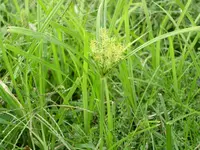
Yellow nutsedge (Cyperus esculentus) is a perennial sedge, not a true grass, often found in lawns, fields, and disturbed ground. It spreads by underground tubers that form dense patches.
Plants have stiff, glossy, yellow-green leaves and triangular stems that grow in tight clumps, with small umbrella-like flower heads. In some regions the edible tubers, known as tiger nuts, are cultivated as a crop.
This species favors full sun, moist soils, and thrives in warm conditions, which makes it persistent and sometimes invasive. Understanding how to care for yellow nutsedge mainly helps with control and management rather than ornamental use.

Care Difficulty
Moderate Care

Light Preference
Full Sun

Water Requirements
Regular Water

Temperature Preference
Warm Climate

Hardiness Zone
8–11

Soil Texture
Sandy, Loamy, Clay

Soil pH
Slightly acidic (6.5–7.0), Neutral (7.0)

Soil Drainage
Waterlogged tolerant

Fertilization
Minimal (feed rarely)
Scan your plant to receive care tips personalized for your specific plant
Available on iOS and Android
Cyperus esculentus grows best in bright, open sites with strong direct sun.
This species prefers consistently moist conditions and does poorly in dry soil.
This warm-season sedge thrives in mild to hot climates and declines in cold conditions.
Cyperus esculentus grows well in typical outdoor humidity but benefits from slightly moist air in hot, dry regions.
Cyperus esculentus prefers loose, moist, aerated soil that allows rhizomes and tubers to expand easily.
This species can be grown in containers, especially where spread in open ground is a concern.
Cyperus esculentus benefits from modest feeding but does not require heavy fertilization for healthy growth.
Pruning Cyperus esculentus is mainly cosmetic and helps maintain tidy growth in managed plantings.
Cyperus esculentus is usually grown in the ground, so transplanting tubers is more relevant than container repotting.
Cyperus esculentus is commonly propagated by tubers rather than by seed in garden settings.
This species is fairly cold tolerant in its hardy range, with underground tubers surviving moderate frosts.

Plant Health Check
Not sure what's wrong with your plant? Check your plant's health inside the app.
This species was cultivated as a food source in ancient Egypt and around the Mediterranean, where its small underground tubers, called tiger nuts or chufa, were eaten raw, roasted, or ground into flour.
Its tubers have an unusually high oil content for a sedge, similar to some oil seeds, which has led to their use for plant-based beverages and specialty oils in some regions.
In modern agriculture it is one of the most troublesome weeds in warm-temperate and subtropical crops, yet the same species is intentionally grown in parts of Europe and Africa for its edible tubers and for products like Spanish horchata de chufa.

Genetic and archaeological evidence suggests that this plant’s tubers may have been a significant and reliable carbohydrate source for early humans in some African habitats, because they could be dug up year-round and store substantial energy in a small, durable package.
This species spreads very aggressively through underground tubers and rhizomes, forming dense patches that outcompete many garden and lawn plants. Regular removal of tubers and strict containment are needed if you choose to keep it in cultivated areas.
Keep your plants happy and healthy with plant identification, disease detection, and easy care guidance.