Use strong supports
Install a sturdy trellis, fence, or wire system before rapid spring growth, as this vine twines tightly and can deform weak wooden stakes or thin plastic netting over time.

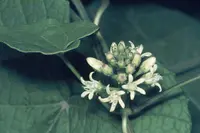
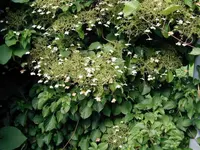
Honeyvine, Cynanchum laeve, is a fast-growing, twining perennial vine in the dogbane family. It is most often found scrambling over shrubs, fences, or other supports. The plant has smooth, heart-shaped leaves and produces clusters of small, greenish-white flowers, followed by slender pods filled with silky, wind-dispersed seeds. It is native to much of central and eastern North America, where it often occurs in fields, roadsides, woodland edges, and along streams. Honeyvine grows vigorously and can spread quickly, which makes it resilient but sometimes invasive in garden settings. Those who want to care for honeyvine should allow space for its climbing habit and provide moderately moist, well-drained soil with good sun exposure.

Care Difficulty
Easy Care

Light Preference
Full Sun

Water Requirements
Moderate Water

Temperature Preference
Cold Hardy

Hardiness Zone
4–9

Soil Texture
Sandy, Loamy, Clay

Soil pH
Slightly acidic (6.5–7.0), Neutral (7.0)

Soil Drainage
Moist but well-drained

Fertilization
Minimal (feed rarely)
Scan your plant to receive care tips personalized for your specific plant
Available on iOS and Android
This vigorous native vine performs best in open, bright conditions with access to direct sun.
This deep-rooted vine prefers consistent but not saturated soil once established in the ground.
This hardy vine tolerates a wide temperature range typical of temperate climates.
This species grows well in typical outdoor humidity and rarely needs special humidity management.
This twining perennial prefers moderately fertile, well-drained soil that still retains some moisture.
This species can be grown in containers where space or spread must be controlled.
This vigorous native vine usually needs no fertilizer in the ground, but light feeding can support container-grown honeyvine.
Pruning helps keep Cynanchum laeve within bounds and encourages manageable, healthy growth.
This vine is most often grown in the ground, so focus on careful transplanting rather than frequent repotting.
Cynanchum laeve is most often propagated by seed, with additional options for layering in garden settings.
This perennial vine is cold hardy in much of its native range and usually needs minimal winter care in the ground.

Plant Health Check
Not sure what's wrong with your plant? Check your plant's health inside the app.
This species is a twining vine in the Apocynaceae (milkweed) family and produces a white, milky latex sap typical of the group, which helps deter many herbivores from feeding on it.
Its flowers supply nectar to a range of pollinators, including bees and butterflies, and larvae of some milkweed-feeding insects can use its foliage as a host, similar to how related milkweeds support specialized caterpillars.
The plant occurs naturally in moist, nutrient-rich habitats such as floodplains, stream banks, and wet thickets across much of eastern and central North America, where it climbs over shrubs and small trees to reach full sun.
This species spreads vigorously by both seed and underground rhizomes. In many regions it is considered weedy or invasive, especially in disturbed soils and sunny sites. Regular removal of seed pods and cutting new shoots helps limit spread when growing honeyvine.
Keep your plants happy and healthy with plant identification, disease detection, and easy care guidance.