Use sturdy trellising
Install a strong wire or net trellis before vines start to run so you can keep fruits off the soil surface, which reduces rot and makes monitoring for pests and fruit set easier.

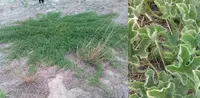
Gooseberry gourd (Cucumis myriocarpus) is a small, scrambling annual vine in the cucumber family. It produces tiny, round, green fruits covered in soft spines that resemble gooseberries. The plant often grows along the ground or over low supports and has delicate, lobed leaves and small yellow flowers. It is native to southern Africa but has naturalized in some warmer regions, where it can spread quickly and behave like a weed. The fruits and other parts are considered poisonous, which is the main concern when people care for gooseberry gourd near children or pets. It generally prefers sunny, open sites with well-drained soil and moderate moisture.

Care Difficulty
Moderate Care

Light Preference
Full Sun

Water Requirements
Moderate Water

Temperature Preference
Tropical / Frost Sensitive

Hardiness Zone
9–11

Soil Texture
Sandy, Loamy, Organic-rich

Soil pH
Acidic (5.5–6.5), Slightly acidic (6.5–7.0)

Soil Drainage
Well-drained

Fertilization
Light (every 4–6 weeks)
Scan your plant to receive care tips personalized for your specific plant
Available on iOS and Android
This species prefers strong light and thrives in open, sunny positions during the growing season.
Cucumis myriocarpus prefers evenly moist but not saturated soil during its active growth period.
This warm-season annual performs best in consistently mild to hot conditions without frost exposure.
This species tolerates low humidity and does not need special humidity control.
This plant prefers light, well-drained mineral soil that dries quickly between waterings.
This species is suitable for container growing when given ample root space and firm support.
This annual vine needs only light feeding, as Cucumis myriocarpus naturally grows in lean soils.
Pruning Cucumis myriocarpus is mainly done to manage vigor and keep growth in bounds.
This fast-growing annual is usually direct-sown, so transplanting focuses on young starts rather than long-term containers.
Reproduction of Cucumis myriocarpus is almost always done by seed.
This tender annual is not frost hardy and usually completes its life cycle before winter.

Plant Health Check
Not sure what's wrong with your plant? Check your plant's health inside the app.
The small striped green fruits contain cucurbitacins, bitter compounds that can cause severe poisoning in humans and livestock if ingested.
Native to southern Africa, this species has become an invasive weed in parts of Australia and the United States, spreading rapidly in disturbed sites, rangelands, and agricultural fields.
The fruits are covered in soft, spiny projections with tiny hooked tips that help them cling to animal fur, aiding seed dispersal over long distances.

Despite belonging to the cucumber family, this species is not domesticated for food use and is mainly studied for its toxic chemistry and ecological impact as a noxious weed.
All parts, especially the fruits, are considered toxic if eaten. Ingestion can cause nausea, vomiting, diarrhea, and abdominal pain in humans and pets. Contact a poison control center or veterinarian immediately if consumption is suspected.
Keep your plants happy and healthy with plant identification, disease detection, and easy care guidance.