Mulch For Roots
Apply a 5–8 cm layer of coarse organic mulch around the drip line, keeping it 5 cm away from the trunk, to keep the shallow roots cool, moist, and protected from mechanical damage when mowing or edging.

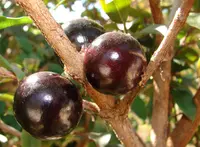
Jaboticaba, Plinia cauliflora, is a slow-growing, evergreen fruit tree native to the Atlantic Forest regions of Brazil. It is usually grown as a small tree or large shrub in cultivation. Its most distinctive feature is the way fruits and flowers emerge directly from the trunk and older branches, giving a sculptural, textured appearance. The leaves are small, glossy, and dense, forming a neat canopy. The plant prefers warm, humid conditions, regular moisture, and slightly acidic, well-drained soil. It tolerates pruning and container culture but demands patience due to its slow growth. For those learning how to care for Jaboticaba, the main challenges are providing stable warmth, adequate water without waterlogging, and avoiding extended drought or cold stress.

Care Difficulty
Moderate Care

Light Preference
Full Sun

Water Requirements
Keep Soil Moist

Temperature Preference
Warm Climate

Hardiness Zone
9–11

Soil Texture
Loamy, Sandy, Organic-rich

Soil pH
Strongly acidic (4.5–5.5), Acidic (5.5–6.5)

Soil Drainage
Moist but well-drained

Fertilization
Light (every 4–6 weeks)
Scan your plant to receive care tips personalized for your specific plant
Available on iOS and Android
This species prefers bright, gentle light similar to a lightly shaded forest edge.
This plant prefers consistently moist but not waterlogged soil.
This subtropical tree thrives in warm, stable conditions without frost exposure.
This species benefits from moderately high, stable humidity for steady growth and fruiting.
Plinia cauliflora prefers deep, well-structured, moist but free-draining soil that does not compact easily.
This species adapts well to container growing when given ample root space and careful moisture management.
Plinia cauliflora responds well to thoughtful feeding, especially in containers and poor soils.
Plinia cauliflora benefits from light, structured pruning to maintain a healthy, productive canopy.
This species grows slowly and dislikes rough root disturbance, so repotting or transplanting should be planned carefully.
Plinia cauliflora is most often propagated from seed, which can be slow but reliable under warm, stable conditions.
This subtropical tree is only mildly frost tolerant and needs thoughtful winter care in cooler climates.

Plant Health Check
Not sure what's wrong with your plant? Check your plant's health inside the app.
This species is cauliflorous, meaning its flowers and grape-like fruits emerge directly from the trunk and older branches instead of from young shoots, which gives mature trees a very distinctive appearance.
Jaboticaba trees grow slowly and can take many years to reach full size, but individual trees are known to live for several decades under suitable conditions, producing fruit repeatedly on the same woody framework.
This tree is native to Brazil’s Atlantic Forest biome, where it grows in warm, humid, subtropical to tropical conditions and plays a role in local food webs as birds and mammals eat the fruits and disperse the seeds.

Early European descriptions of this species from Brazil in the 17th–19th centuries remarked on how its trunk appeared to be covered with dark grapes, and the unusual look of the fruiting bark helped make jaboticaba a recognizable symbol of certain regions in southeastern Brazil.
This species adapts well to large containers with good drainage and regular root pruning. Growth is slower than in-ground, but container culture allows easier protection from cold and better control of water and fertilizer.
Keep your plants happy and healthy with plant identification, disease detection, and easy care guidance.