willow oak Care (Quercus phellos)

willow oak

About willow oak

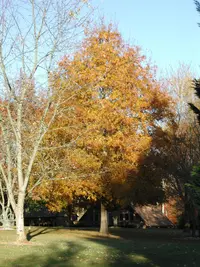
Willow oak, Quercus phellos, is a fast-growing deciduous tree in the oak family, valued for its narrow, willow-like leaves and fine-textured crown. It typically develops a straight trunk with a rounded to oval canopy, making it a common choice for streets, parks, and large gardens.

This species is native to the southeastern and south-central United States, where it grows along rivers, floodplains, and low woodlands. It adapts well to urban conditions but needs space for its extensive root system, which influences how to care for willow oak.

Willow oak prefers full sun, consistent moisture, and deep, well-drained soils, especially slightly acidic ones. Its durability and relatively low maintenance make it suitable for many landscape settings when planted in an appropriate location.

Main Plant Requirements

Care Difficulty

Moderate Care

Light Preference

Full Sun

Water Requirements

Moderate Water

Temperature Preference

Cold Hardy

Hardiness Zone

5–9

Soil Texture

Sandy, Loamy, Clay

Soil pH

Acidic (5.5–6.5), Slightly acidic (6.5–7.0)

Soil Drainage

Moist but well-drained

Fertilization

Minimal (feed rarely)

Get Personalized Care Plan

Scan your plant to receive care tips personalized for your specific plant

Available on iOS and Android

How to Care for the willow oak

Quercus phellos thrives as a full-sun tree once established, but young plants benefit from some protection.

  • Provide 6–8 hours of direct sun daily; 4–6 hours plus light afternoon shade suits young or newly transplanted trees.
  • Allow light to medium partial shade, especially with hot afternoon sun, but expect slower growth and a more open crown in shadier sites.
  • Monitor leaves for stress: scorched, crispy edges suggest intense, reflected heat, while sparse canopies and long, weak shoots suggest insufficient light.

This species is naturally adapted to moist bottomlands but tolerates moderate dryness once established.

  • For new landscape trees, water deeply when the top 5–8 cm of soil feels dry, soaking the root zone to 20–30 cm, then allow partial drying.
  • Reduce supplemental watering in fall and usually stop in winter unless there is a prolonged drought and soil becomes very dry and cracked.
  • Ensure soil drains freely; persistent puddling, moss on the trunk base, or sour odor indicates overwatering, while dull, curling leaves and twig dieback point to drought stress in Quercus phellos.

This oak is a hardy, outdoor tree adapted to temperate to warm climates.

  • Optimal growing temperatures are about 65–85°F (18–29°C), with strongest shoot extension and leaf production in late spring and early summer.
  • Mature trees tolerate winter lows near -10°F (-23°C) once acclimated, but young saplings benefit from protection from drying winter winds.
  • During heat waves above 95°F (35°C), provide a mulch layer 5–8 cm deep to moderate soil temperature and reduce stress from hot, dry conditions.

Humidity is not a major limiting factor for Quercus phellos.

Quercus phellos prefers deep, moist, well-aerated mineral soils that do not stay waterlogged.

  • Aim for a loamy or sandy-loam texture with moderate organic matter to balance moisture retention and drainage.
  • Maintain slightly acidic to neutral pH around 5.0–7.0, avoiding strongly alkaline or saline conditions.
  • In planting beds, incorporate compost and coarse sand or fine gravel to improve structure, drainage, and root aeration.
  • Avoid compacted clay, standing water, or heavily disturbed fill soils that restrict root expansion and oxygen availability.

This species is generally unsuitable for long-term container growing, except as a very short-term seedling or nursery specimen.

Mature Quercus phellos in the ground usually need little fertilizer if soil is moderately fertile.

  • For young or stressed trees, apply a slow-release, balanced NPK fertilizer (such as 10-10-10) once in early spring.
  • Keep total annual nitrogen modest; follow label rates and avoid lawn fertilizers with very high nitrogen near the root zone.
  • On poorer soils, 2–5 cm of compost over the root area each spring supports steady growth without overfeeding.
  • Stop fertilizing by late summer and never feed in winter, and always water well after application.

Pruning Quercus phellos focuses on structural safety rather than frequent shaping.

  • Carry out main pruning in late winter to very early spring, before active growth begins.
  • Remove dead, diseased, crossing, or storm-damaged branches using clean, sharp bypass pruners or a pruning saw.
  • Select and maintain a single strong leader and well-spaced scaffold branches to develop a stable crown.
  • Avoid heavy topping cuts; use gradual thinning cuts back to branch collars to preserve natural form and reduce stress.

Willow oak is usually transplanted from field or nursery containers rather than kept long term in pots.

  • Transplant in late fall or early spring when the tree is dormant to minimize stress and water loss.
  • Choose a site with full sun and well-drained soil, and dig a hole 2–3× wider but no deeper than the root ball.
  • For container stock, check for roots circling the pot; tease or slice them lightly to encourage outward growth.
  • Water deeply after planting, apply a 5–8 cm mulch layer, and keep soil evenly moist for the first 1–2 growing seasons.

Sexual propagation of Quercus phellos relies mainly on acorns, with vegetative methods used less often.

  • Collect mature acorns in fall, discarding any that float in water, as these are often non-viable.
  • Stratify acorns in moist peat or sand at 34–41°F for 6–12 weeks to break dormancy and improve germination.
  • Sow in deep containers or nursery beds with well-drained medium, planting acorns on their side about 2–3 cm deep.
  • Provide bright light, consistent moisture, and protection from rodents and birds while young seedlings establish.

Established Quercus phellos trees are cold hardy in much of their range and usually need minimal winter care.

  • Young trees benefit from 5–8 cm of mulch over the root zone, kept a few cm away from the trunk.
  • In areas with severe freeze–thaw, use trunk guards to limit sunscald and rodent damage on juvenile bark.
  • Container-grown specimens in colder zones should be moved to a sheltered, unheated but frost-moderated location.

Care Tips

Early leader training

In the first 3–5 years, select one strong central leader and remove competing upright shoots in late winter so the tree develops a stable, single trunk less prone to storm damage as it matures.

Wind and stake strategy

Stake only very young transplants in windy sites using 2–3 flexible ties placed low on the trunk, and remove all staking after 1–2 years so the tree can sway and build natural trunk strength.

Root flare protection

Keep the root flare visible and slightly above soil level, and pull mulch and soil away from the trunk base to prevent bark rot and girdling roots that can shorten the tree’s life.

Canopy lifting schedule

Starting once the tree is well established, gradually remove only the lowest branches over several years to raise the canopy, ensuring each cut leaves a small branch collar intact for proper healing.

Long-term space planning

When growing willow oak in urban or suburban yards, place the tree at least 20–30 ft from buildings and 10–15 ft from hardscapes or pipes to allow for its wide root system and large mature canopy.

Common Pests and Diseases

Oak wilt

This disease causes rapid leaf wilting, bronzing, and premature leaf drop, often starting at the top of the crown and moving downward. Symptoms include brown streaks in the sapwood and sudden decline in otherwise established trees.

Solution

Limit pruning to dormant seasons to avoid attracting sap-feeding beetles that spread the fungus, and immediately remove and destroy infected willow oaks and any interconnected roots if possible. Avoid moving firewood from unknown sources, and consult a certified arborist for trunk injections or containment strategies if oak wilt is confirmed, since Quercus phellos care in affected regions often requires coordinated management across nearby properties.

Bacterial leaf scorch

This disease leads to marginal leaf browning that progresses from the leaf edge inward, often leaving a yellow band between brown and green tissue, and can cause gradual canopy thinning over several years. Symptoms include early fall color, twig dieback, and a slow decline rather than sudden death.

Solution

Prune out dead or severely affected branches to reduce stress and improve appearance, and irrigate deeply during drought to support the remaining vascular tissue. Avoid excessive nitrogen fertilization, monitor tree vigor long term, and consult an arborist about trunk injections where this treatment is regionally recommended, since infected trees usually require ongoing stress reduction rather than a single cure.

Oak leaf blister

This disease produces raised, yellow-green to brown blisters on the upper leaf surface, causing leaves to look puckered or distorted but rarely leading to serious long-term damage in willow oak. Symptoms include scattered affected leaves throughout the canopy, often worse in cool, wet springs.

Solution

Rake and dispose of fallen leaves in autumn to reduce overwintering spores, and maintain good tree vigor with proper watering and mulch to help the tree outgrow minor damage. In locations with a history of severe infections, a single preventive fungicide spray applied by a professional just before budbreak in spring can greatly reduce new blisters.

Gouty oak gall

This pest issue causes woody, tumor-like swellings (galls) on small branches and twigs, often in clusters that can girdle and kill affected shoots over time. These galls are formed in response to tiny wasps developing inside the plant tissue.

Solution

Prune out and destroy galled twigs during dormant seasons, cutting several inches below each gall, and avoid heavy, repeated topping cuts that stress the tree and may encourage more gall formation. For large trees with extensive galls, focus on long-term health through regular watering during drought, proper mulching, and structural pruning, since chemical control is rarely effective once galls are established.

Oak lace bug

These insects feed on the undersides of leaves, causing tiny pale stippling above and fine black varnish-like spots of excrement below, which can give the canopy a washed-out, gray-green appearance. Heavy infestations may lead to early leaf drop but usually do not kill established willow oaks.

Solution

Wash the undersides of infested leaves with a strong but controlled stream of water to dislodge nymphs and adults, especially on smaller trees, and encourage natural predators by minimizing broad-spectrum insecticide use. For repeated severe infestations, consider horticultural oil or insecticidal soap sprays targeted to leaf undersides in spring, following label directions and avoiding application in very high temperatures.

Interesting Facts

Semi-evergreen oak

In warmer parts of its range, willow oak often keeps a significant portion of its narrow leaves through winter, making it functionally semi-evergreen even though it is botanically deciduous.

Acorn specialist wildlife

Its small, shallow-capped acorns mature in a single season and are a preferred food source for many ducks, turkeys, and small mammals, supporting diverse wildlife in wetland and bottomland ecosystems.

Urban-tolerant native tree

This species is widely planted as a street and park tree in the eastern United States because it tolerates compacted soils, air pollution, and reflected heat better than many other native oaks, which is important for Quercus phellos care in cities.

Botan icon

Did you know?

Mature willow oaks can develop very wide, spreading root systems that stabilize riverbanks and floodplain soils, making them important natural engineers in controlling erosion along streams and bottomlands.

FAQs about willow oak

This species is considered relatively fast-growing for an oak, typically adding about 30–60 cm, sometimes up to 90 cm, per year in youth if sited in full sun, with adequate moisture, and reasonably fertile, uncompacted soil.

Grow Healthy Plants with Botan Care

Keep your plants happy and healthy with plant identification, disease detection, and easy care guidance.

Botan plant care app — identify plants on mobile

Explore More Plants